


Listen to the article
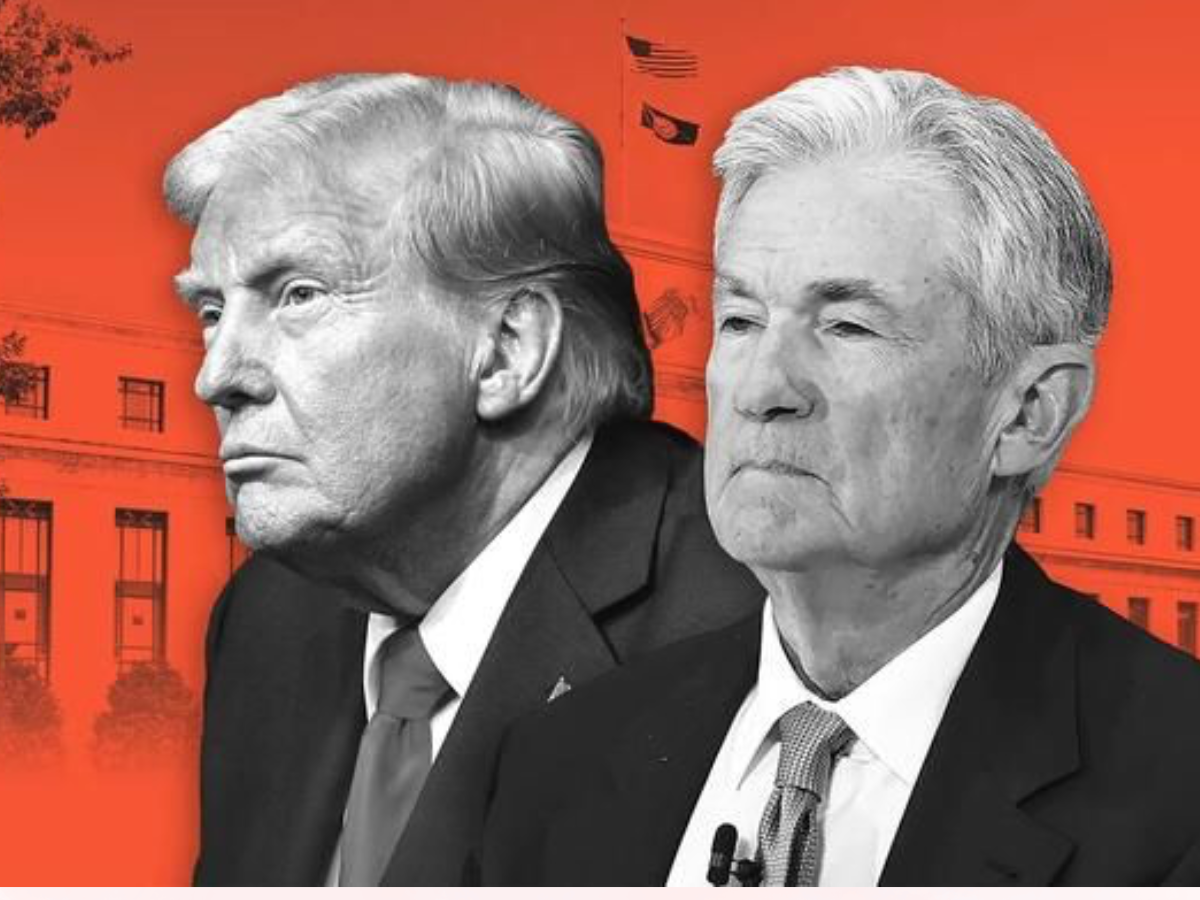
Trump Reignites Tensions with Fed Chair Powell, Raising Questions About Central Bank Independence
Tensions between President Donald Trump and Federal Reserve Chair Jerome Powell have flared up once again, sparking renewed debate over the central bank’s independence and the boundaries of presidential authority in monetary policy matters.
In recent comments that have rattled financial circles, Trump expressed frustration over the Federal Reserve’s interest rate policies and suggested he might consider removing Powell from his position if he remains beyond his term. “If he is not leaving on time, I will have to fire him,” Trump reportedly stated, highlighting his preference for lower interest rates to stimulate economic growth.
The conflict comes at a particularly sensitive juncture for the U.S. economy, with policymakers balancing concerns about inflation, which has fluctuated between 2% and 3% in recent months, against economic growth projections and employment stability.
The Federal Reserve, under Powell’s leadership, has maintained a cautious approach to monetary policy, keeping interest rates above 4% to guard against potential inflation risks. This stance directly contradicts Trump’s well-documented preference for aggressive rate cuts, which he believes would further boost economic expansion.
As chair of the Federal Reserve, Powell occupies one of the most influential economic positions globally. His responsibilities extend beyond setting interest rates to include controlling inflation, promoting maximum employment, and guiding overall monetary policy for the world’s largest economy. With influence over a $25 trillion economic landscape, the Fed chair’s decisions reverberate through global markets and financial systems.
The legal reality of the situation presents significant obstacles to Trump’s apparent threats. Federal Reserve chairs serve four-year terms, with Powell’s current term as chair expected to end in mid-May. However, constitutional and legislative protections make it difficult for presidents to remove Fed chairs without substantial cause, as central bank independence is deliberately protected by law to insulate monetary policy from political pressure.
“The Federal Reserve’s independence from direct political influence is a cornerstone of its credibility in global markets,” noted one financial analyst who requested anonymity due to the sensitivity of the topic. “Any attempt to remove a chair for policy disagreements rather than malfeasance would likely trigger immediate legal challenges and market instability.”
This is not the first instance of friction between Trump and Powell. Despite having appointed Powell to the position in 2018, Trump frequently criticized the Fed chair during his presidency for interest rate increases that he felt undermined economic growth. Powell was later reappointed by President Joe Biden in 2022, reflecting bipartisan confidence in his leadership despite the political pressures he has faced.
Reports indicate that Trump has considered Kevin Warsh, a former Federal Reserve governor, as a potential replacement for Powell. However, such an appointment would require Senate confirmation, a process that would likely face significant political resistance and could extend over months.
The ongoing dispute raises broader concerns about the relationship between political leadership and monetary policy in the United States. Financial markets have historically reacted negatively to perceived political interference in central bank operations, as it undermines confidence in the stability and predictability of economic policy.
Even if Powell’s term as chair concludes, he could legally remain on the Federal Reserve Board of Governors, where he holds a separate appointment that extends until 2028. This arrangement would create an unusual dynamic within the Fed’s leadership structure.
Financial experts emphasize that central bank independence has been a critical factor in maintaining long-term economic stability across developed economies. Political pressure on interest rate decisions, they argue, often reflects short-term political considerations rather than sound economic principles.
As this situation develops, investors and economic analysts are closely monitoring both the political rhetoric and the Fed’s policy statements for signs of how this tension might affect monetary policy decisions in the coming months. For now, Trump’s comments appear to represent political positioning rather than an immediate threat to Powell’s position, but the implications for central bank independence remain a significant concern for market participants.
Fact Checker
Verify the accuracy of this article using The Disinformation Commission analysis and real-time sources.

32 Comments
Uranium names keep pushing higher—supply still tight into 2026.
Good point. Watching costs and grades closely.
Good point. Watching costs and grades closely.
Silver leverage is strong here; beta cuts both ways though.
Good point. Watching costs and grades closely.
Good point. Watching costs and grades closely.
Exploration results look promising, but permitting will be the key risk.
Production mix shifting toward Fact Check might help margins if metals stay firm.
Good point. Watching costs and grades closely.
Nice to see insider buying—usually a good signal in this space.
The cost guidance is better than expected. If they deliver, the stock could rerate.
I like the balance sheet here—less leverage than peers.
Good point. Watching costs and grades closely.
Uranium names keep pushing higher—supply still tight into 2026.
Good point. Watching costs and grades closely.
Production mix shifting toward Fact Check might help margins if metals stay firm.
Good point. Watching costs and grades closely.
Good point. Watching costs and grades closely.
Production mix shifting toward Fact Check might help margins if metals stay firm.
Good point. Watching costs and grades closely.
Good point. Watching costs and grades closely.
Exploration results look promising, but permitting will be the key risk.
Good point. Watching costs and grades closely.
Good point. Watching costs and grades closely.
If AISC keeps dropping, this becomes investable for me.
Good point. Watching costs and grades closely.
Uranium names keep pushing higher—supply still tight into 2026.
Good point. Watching costs and grades closely.
Good point. Watching costs and grades closely.
The cost guidance is better than expected. If they deliver, the stock could rerate.
Good point. Watching costs and grades closely.
Good point. Watching costs and grades closely.