


Listen to the article
Russian Court Fines News Agency for Review of LGBTQ+ Hockey Series “Heated Rivalry”
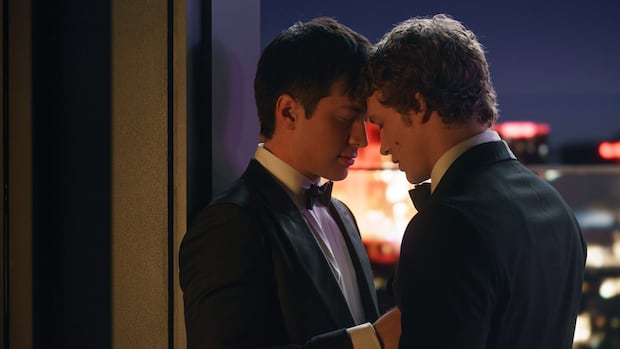
A Russian court has imposed substantial fines on a local news agency and one of its directors for publishing a review of the popular series “Heated Rivalry,” which Russian authorities have classified as LGBTQ+ propaganda under the country’s stringent anti-gay laws.
According to reports first published by independent Russian news outlet Mediazona and subsequently verified by CBC News, SaratovBusinessConsulting was fined 500,000 rubles (approximately $9,000 Canadian) for the review. A director of the agency received an additional fine of 50,000 rubles (about $900 Canadian).
The Oktyabrsky District Court in Saratov, located approximately 800 kilometers southeast of Moscow, confirmed to CBC News that the penalties were imposed because the review, published in February, included a link with information on how to stream the series. The court’s press officer explicitly stated that the fines were levied because the content was deemed LGBTQ+ propaganda. The article has since been removed from the website.
Despite viewing restrictions in Russia, “Heated Rivalry” has developed a significant following in the country. The series, produced for Bell Media’s streaming platform Crave and distributed internationally through HBO Max, is only accessible in Russia through VPNs or pirated sites. Nevertheless, Russian fans have embraced the show, creating tribute content across social media platforms. On Kinopoisk, Russia’s equivalent to IMDb, the series has garnered an impressive 8.3 out of 10 rating based on votes from more than 60,000 users.
The drama centers on the romantic relationship between Russian hockey player Ilya Rozanov and Canadian player Shane Hollander. In a pointed reflection of current Russian politics, one of the series’ plot points involves Rozanov’s fear that publicly coming out as gay would prevent him from returning to his homeland. This storyline has resonated deeply with Russian viewers, many of whom have connected with Rozanov’s personal struggles.
The fines highlight Russia’s increasingly severe stance against LGBTQ+ content. In 2022, Russian President Vladimir Putin expanded and signed into law comprehensive legislation prohibiting the dissemination of information about LGBTQ+ people in media and banning any material promoting what Russian lawmakers consider “non-traditional” relationships.
The impact of this legislation has been far-reaching. Books and films have been pulled from shelves and streaming platforms. Earlier this year, Russian media reported on a list of banned literary works circulating among retailers, including classics by Oscar Wilde and contemporary novels by Haruki Murakami. Russia’s media regulator has also blocked websites from offering pirated streams of films with LGBTQ+ themes, such as “Brokeback Mountain.”
In a further escalation of its anti-LGBTQ+ policies, Russia has officially designated what it considers the LGBTQ+ movement as an “extremist organization.” Individuals have been convicted merely for posting images of the Pride flag on social media platforms.
This crackdown on media coverage of LGBTQ+ content reflects a broader trend of increasing censorship in Russia, particularly concerning topics that challenge traditional values as defined by the state. For media outlets operating within the country, navigating these restrictions has become increasingly perilous, with substantial financial penalties awaiting those who run afoul of the government’s regulations.
The case of “Heated Rivalry” demonstrates the stark contrast between growing global acceptance of LGBTQ+ representation in mainstream entertainment and Russia’s regressive policies that actively suppress such content, even when it merely appears in the form of a review.
Fact Checker
Verify the accuracy of this article using The Disinformation Commission analysis and real-time sources.

10 Comments
While I understand Russia’s desire to uphold traditional values, fining a news agency for reviewing a TV series seems like an overreach. Artistic expression, even on sensitive topics, should be protected. This raises concerns about the state of free speech in Russia.
Censorship often does more harm than good. The Russian government should reconsider this heavy-handed approach and focus on more constructive ways to address social issues.
This news is troubling. Imposing fines for reviewing a TV series, even one with LGBTQ+ themes, seems like an excessive and counterproductive response from the Russian government. They should focus on more pressing issues rather than censoring harmless cultural content.
I agree, this is a concerning development. Protecting free speech and artistic expression should be a priority, even on sensitive topics. The Russian authorities need to rethink this approach.
This is an unfortunate situation for free speech and the arts in Russia. Fining a news agency for reviewing a TV series seems like a heavy-handed attempt to censor LGBTQ+ content. I hope the Russian authorities reconsider their stance on this issue.
You’re right, this is a concerning development. Freedom of expression should be protected, even for content that challenges traditional views.
The Russian government’s crackdown on LGBTQ+ content is deeply troubling. Imposing fines for simply reviewing a TV series sets a dangerous precedent and undermines artistic freedom. This is a worrying sign of growing intolerance.
I agree, this is a worrying trend. The Russian authorities should focus on more pressing issues rather than censoring harmless cultural content.
It’s disappointing to see Russia cracking down on LGBTQ+ content in this way. Fining a news agency for simply reviewing a TV series is a concerning step towards greater censorship. I hope the Russian authorities reconsider this decision and protect freedom of expression.
You make a good point. Censorship often backfires and breeds resentment. A more open and tolerant approach would be better for Russia in the long run.