


Listen to the article
In a rare public appearance Wednesday, President Ferdinand “Bongbong” Marcos Jr. led official ceremonies amid a resurgence of debunked rumors claiming he has been replaced by a body double or clone.
The President was seen administering the oath to newly-designated Cabinet Officers for Regional Development and Security, along with members and cluster heads of the National Task Force to End Local Communist Armed Conflict (NTF-ELCAC) executive committee.
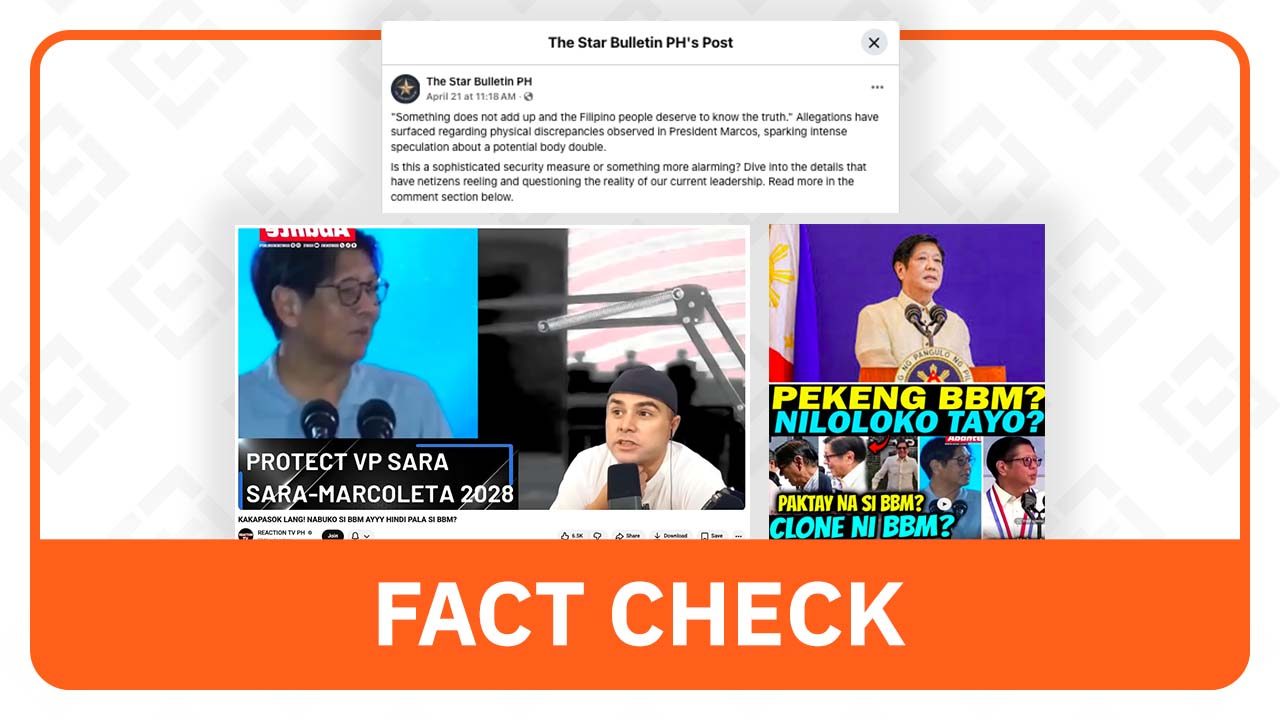
Despite this visible public engagement, conspiracy theories about Marcos’ identity continue to proliferate across social media platforms. A YouTube video on Reaction TV Ph, which has garnered over 102,000 views since April 21, makes the unfounded claim that the current President is not the real Marcos. The video has been reposted by a Facebook page masquerading as a legitimate news outlet with 53,000 followers, accumulating hundreds of interactions.
The sensationalist post features text questioning the President’s identity with phrases like “Fake BBM? Are we being fooled? Is BBM already dead? A clone of BBM?” alongside claims about “physical discrepancies” in the President’s appearance.
These allegations represent the latest iteration of a decades-old urban legend dating back to the late 1970s. The original conspiracy theory suggested that Marcos died in his youth while studying in England—either in a fight, accident, or other violent incident—and was secretly replaced to preserve the Marcos political dynasty. Various versions claim a lookalike or relative underwent plastic surgery to assume his identity.
The narrative experienced a resurgence during the 2022 presidential elections when an individual named Tiburcio Marcos filed a petition with the Commission on Elections seeking to disqualify the president based on these unfounded identity claims.
President Marcos has consistently dismissed these allegations. In a 2019 vlog, he addressed the rumors directly, calling them an urban legend with no factual basis and expressing bewilderment at their origin.
According to data analysis from Rappler Decoded, the current wave of rumors began after Marcos was hospitalized for diverticulitis in January 2026, which quickly escalated into false claims about cancer and his supposed death. An examination of over 65,000 Facebook posts from late March to early April 2026 revealed that approximately 20% of discussions centered on speculation about the President’s health.
Malacañang Palace and the National Bureau of Investigation have characterized the claims as part of a “sudden and coordinated” disinformation campaign. Officials suggest the timing indicates an attempt to undermine public trust and disrupt government operations amid pressing issues like the ongoing energy emergency.
“The timing is suspect. Why the sudden surge at this time? Why resort to outright lies? Why the desperation? Regardless, the motive is clear. Distract and destabilize our government,” Presidential Communications Secretary Dave Gomez said in a recent statement.
The persistence of these conspiracy theories highlights the continuing challenge of combating misinformation in the Philippines’ digital landscape, where political rumors can rapidly gain traction despite being repeatedly disproven. Social media platforms continue to serve as fertile ground for such narratives, with engagement-driven algorithms sometimes amplifying sensational claims over factual reporting.
While the President’s public appearances provide direct evidence contradicting these rumors, the spread of such misinformation underscores the need for continued media literacy efforts and responsible reporting in the Filipino information ecosystem.
Fact Checker
Verify the accuracy of this article using The Disinformation Commission analysis and real-time sources.

18 Comments
While I understand the skepticism, these body double allegations seem far-fetched. The President’s public appearances and official activities suggest he is indeed the real Marcos. We should be cautious about amplifying unproven theories.
Good point. Without credible evidence, these claims about Marcos being a clone or body double are little more than conspiracy theories. Promoting them could undermine trust in democratic institutions.
I’m skeptical of these body double allegations. The President’s public appearances and official activities suggest he is the legitimate Marcos. Without compelling evidence, we should be cautious about amplifying conspiracy theories that could undermine trust in democratic institutions.
Well said. Promoting unsubstantiated claims, even if they seem sensational, can have serious consequences. We should focus on verifiable facts and avoid spreading misinformation, no matter how tempting it may be.
While I understand the desire to question authority, these body double rumors seem far-fetched and lack concrete evidence. The President’s visible public engagements suggest he is indeed the real Marcos. We should be wary of amplifying unproven theories that could sow discord.
Agreed. Fact-checking and relying on credible sources is crucial, especially when it comes to sensitive political issues. Spreading unverified information, even if it seems intriguing, can undermine trust in democratic institutions.
Interesting claims, but without concrete evidence, it’s irresponsible to make accusations about Marcos’ identity. Conspiracy theories tend to spread misinformation, so I’d encourage checking reputable sources before jumping to conclusions.
Agreed, we should be wary of unsubstantiated rumors, especially around high-profile political figures. Fact-checking is crucial to avoid falling for sensationalist claims.
I’m curious to learn more, but the lack of concrete proof makes me skeptical of these allegations. Spreading unverified information, even if sensational, can be harmful. Perhaps we could explore this topic further using reliable sources.
I agree, we should be wary of jumping to conclusions without solid evidence. Fact-checking is crucial, especially when it comes to high-profile political figures. Promoting unproven theories can have serious consequences.
While I understand the desire to question authority, these body double claims seem far-fetched. The President’s public engagements and official actions suggest he is indeed the real Marcos. Let’s focus on verifiable facts rather than unsubstantiated rumors.
Exactly, we shouldn’t spread misinformation or unproven theories, even if they seem intriguing. Fact-checking and relying on credible sources is essential, especially when it comes to matters of national importance.
I’m skeptical of these body double claims, as they seem to lack solid evidence. The President’s public appearances and official activities suggest he is the legitimate Marcos. We should be wary of amplifying unproven theories that could undermine trust in the political process.
Well said. Promoting unsubstantiated allegations, even if they seem sensational, can have serious consequences. It’s important to focus on verifiable facts and avoid spreading misinformation that could erode faith in democratic institutions.
These body double allegations seem highly speculative and unsupported by evidence. The President’s public appearances and official activities suggest he is the legitimate Marcos. We should be cautious about amplifying conspiracy theories that lack concrete proof.
Well said. Promoting unsubstantiated claims, even if they seem sensational, can have serious consequences. It’s important to focus on verifiable facts and avoid spreading misinformation that could undermine trust in the political process.
While I understand the desire to question authority, these body double rumors seem far-fetched and lacking in concrete evidence. The President’s visible public engagements suggest he is indeed the real Marcos. We should be cautious about amplifying unproven theories that could sow discord.
Exactly. Fact-checking and relying on credible sources is crucial, especially when it comes to sensitive political issues. Spreading unverified information, even if it seems intriguing, can have serious consequences for trust in democratic institutions.