


Listen to the article
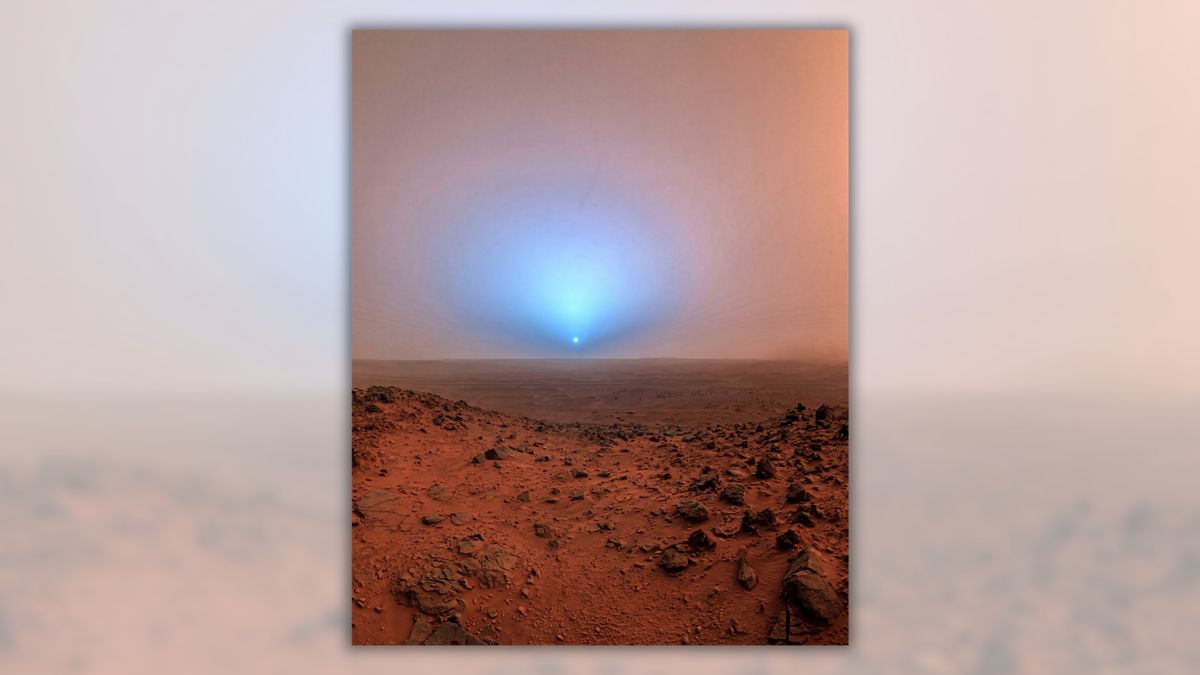
Viral “Blue Sunset on Mars” Image Revealed as AI-Generated Creation
A captivating image purporting to show a blue sunset on Mars has been confirmed as fake after spreading widely across social media platforms in early 2026. The image, which garnered thousands of views and shares, was determined to be an AI-generated creation rather than an authentic NASA photograph.
The image first appeared on February 5, 2026, on a Facebook page called “Echoes of Unbound Curiosity,” accompanied by a dramatic caption stating: “There have been thousands of generations of humans, and you are alive to witness the first photo of a Sunset on another World. This is a real photo of the sunset on Mars.”
From there, the image quickly proliferated across X (formerly Twitter), Instagram, and Reddit, though some users expressed skepticism about its authenticity. Their suspicions proved justified.
Google’s generative AI model Gemini detected SynthID in the image—a digital watermark that Google embeds in content created using its artificial intelligence tools. Additionally, NASA confirmed the image’s fabricated nature, with a spokesperson stating via email: “Space enthusiasts and other image processors are often excited about raw imagery downlinked from NASA spacecraft. Sometimes it is used and altered to create fan-made works shared online. This particular product is one of those examples.”
The image did not appear in NASA’s collection of authentic Martian sunrise and sunset photographs nor in the agency’s broader image gallery. Snopes, which investigated the claim, reported they had reached out to the Facebook page that originally shared the image but had not received a reply.
Currently, only two space agencies have successfully operated rovers on Mars long enough to transmit quality images: NASA and the China National Space Administration (CNSA). The Soviet Union briefly landed a rover in 1971 but lost contact after just 110 seconds. The viral image did not match any releases from CNSA’s Zhurong rover or NASA’s active Martian rovers, Perseverance and Curiosity.
Experts believe the fake image may have drawn inspiration from an authentic NASA photograph captured by the Pathfinder lander in 2005. That genuine image featured similar elements—the red, rocky Martian landscape with a bluish sun setting on the horizon.
The real phenomenon of blue sunsets on Mars is scientifically documented. According to NASA, these unique celestial displays occur because fine dust particles in the Martian atmosphere scatter red light while allowing blue wavelengths to penetrate more effectively during twilight hours. This creates the counterintuitive effect where sunsets appear blue on the Red Planet—opposite to Earth’s typically reddish sunsets.
NASA’s rovers continue their missions searching for signs of life on Mars, regularly transmitting authentic imagery that the space agency publishes on its official websites. These verified images provide genuine glimpses of the Martian landscape that continue to captivate public interest.
This incident highlights the increasing challenge of distinguishing between authentic space imagery and AI-generated content. As AI tools become more sophisticated and widely available, the ability to create convincing but false astronomical imagery grows more accessible, underscoring the importance of verification from official sources like NASA before accepting extraordinary cosmic claims.
The rapid spread of this fabricated image across social media platforms also demonstrates the public’s continued fascination with Mars and our collective desire to witness unprecedented astronomical phenomena—even when the imagery turns out to be nothing more than an imaginative digital creation.
Fact Checker
Verify the accuracy of this article using The Disinformation Commission analysis and real-time sources.

7 Comments
Very interesting article. I’m glad the investigation was able to determine this was an AI-generated image and not a real NASA photo from Mars. It’s important to fact-check sensational claims, especially when they spread rapidly online. Good work by the Disinformation Commission on this one.
Absolutely, it’s crucial to verify the authenticity of viral images and not just take them at face value. The Google SynthID detection and NASA confirmation were important steps in debunking this claim.
Fascinating to see the verification process behind this alleged Mars sunset image. Glad the experts were able to identify it as an AI-generated creation rather than a real NASA photo. It’s a good reminder to be cautious about striking visual claims, especially on social media.
Nice to see a fact-based investigation into the origins of this purported Mars sunset photo. Glad the experts were able to confirm it as an AI-generated creation rather than a real NASA image. Helps maintain trust in scientific claims when misinformation is effectively debunked.
Excellent investigation into the origins of this purported Mars sunset photo. I’m glad the experts were able to conclusively identify it as an AI-generated creation rather than a real NASA image. Fact-checking is so important to combat the spread of misinformation online.
I appreciate the thorough debunking of this viral Mars sunset image. It’s a good reminder that we can’t always trust sensational visuals, especially when they spread rapidly on social media. Kudos to the Disinformation Commission for the rigorous fact-checking work.
Agreed, it’s crucial to be skeptical of unverified claims, no matter how visually compelling. The use of AI detection tools like Google’s SynthID was a smart way to authenticate the provenance of this image.