


Listen to the article
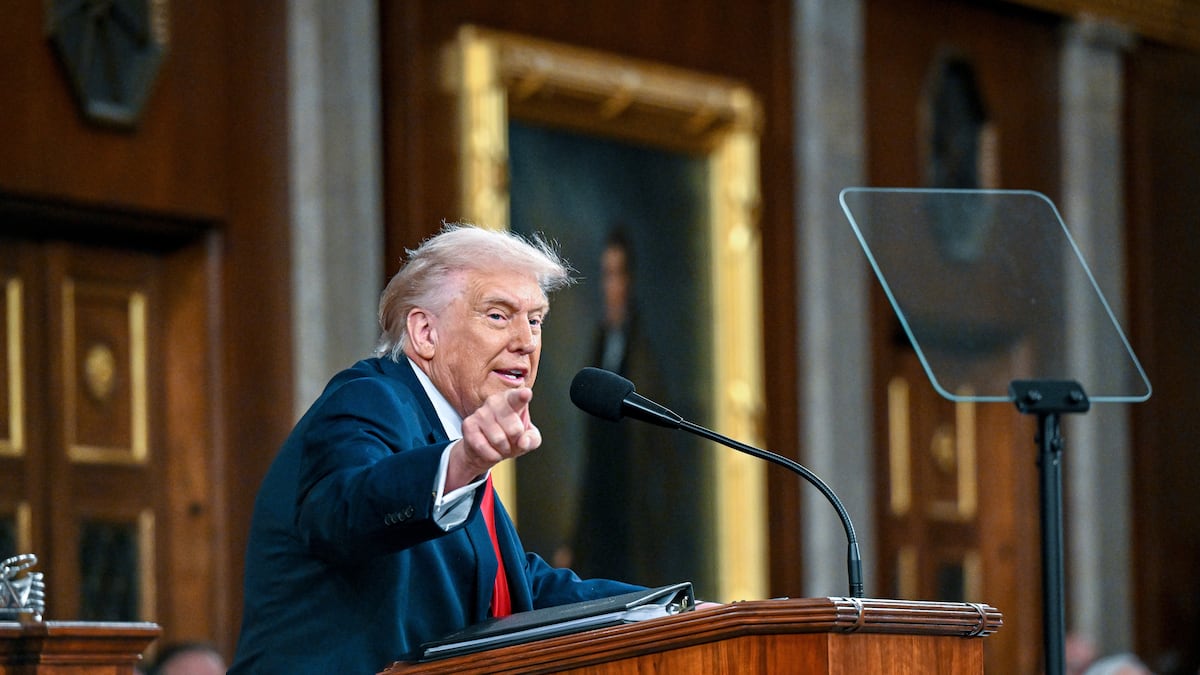
President Joe Biden delivered his last State of the Union address Thursday night, laying out his administration’s accomplishments and future policy goals while sharply criticizing Republican opposition.
The 73-minute speech touched on a wide range of issues including the economy, immigration, foreign policy, and healthcare. As with most major political addresses, Biden’s remarks contained a mix of accurate statements, misleading claims, and selective presentations of data that merit closer examination.
On the economic front, Biden highlighted job growth under his administration, correctly noting that nearly 15 million jobs have been created since he took office. This figure is accurate, though economists point out that many of these jobs represent a recovery from pandemic losses rather than entirely new positions. The president also touted declining inflation rates, which have indeed fallen from their 2022 peak of over 9% to around 3% currently.
However, Biden’s portrayal of economic conditions omitted several challenges. While inflation has slowed, Americans continue to feel the cumulative impact of price increases, with many everyday goods costing significantly more than they did before the pandemic. His claim that “wages are up” is technically correct but requires context – real wages have only recently begun outpacing inflation after a prolonged period of effectively declining purchasing power.
The president’s statements on immigration policy contained both accurate data and questionable framing. Biden correctly referenced the bipartisan border security bill that failed in Congress due to Republican opposition after former President Trump urged its defeat. However, his assertion that the legislation “would have been the toughest set of border reforms we’ve ever had” oversimplifies a complex bill with various provisions.
On foreign policy, Biden accurately described American support for Ukraine and Israel, though his characterization of these conflicts as primarily battles between democracy and authoritarianism represents a particular political viewpoint rather than undisputed fact. The president’s claim that “not a single American soldier has died in combat on my watch” is technically accurate for conventional warfare but ignores the 13 service members killed during the 2021 Afghanistan withdrawal.
Biden’s healthcare claims largely withstand scrutiny. His administration has expanded the Affordable Care Act and implemented measures to cap insulin costs for Medicare recipients at $35 monthly. The Medicare drug price negotiation provision in the Inflation Reduction Act does represent a significant policy shift, though its full impact remains to be seen as implementation has just begun.
Climate policy featured prominently, with Biden highlighting investments in clean energy infrastructure through the Bipartisan Infrastructure Law and Inflation Reduction Act. These multibillion-dollar investments are factually accurate, though their projected environmental impacts involve forecasting and modeling that carries inherent uncertainty.
The president’s criticism of corporate practices included statements about tax avoidance that align with independent analyses showing dozens of profitable corporations paying no federal income tax in recent years. His characterization of monopolistic behavior across various industries reflects growing bipartisan concern about market concentration, though the specific examples he cited would benefit from more detailed evidence.
Throughout the address, Biden repeatedly contrasted his policies with those of his predecessor and likely 2024 opponent, Donald Trump, attributing economic difficulties and other problems to the previous administration. While presidents do inherit economic and policy conditions from their predecessors, such simplified cause-and-effect claims often overlook the complex factors that drive national outcomes.
As is typical of State of the Union addresses across administrations, Biden’s speech presented his administration’s record in the most favorable light while minimizing shortcomings. Voters heading into the 2024 election will need to consider both the verifiable facts and the broader context behind presidential claims as they evaluate the state of the nation under Biden’s leadership.
Fact Checker
Verify the accuracy of this article using The Disinformation Commission analysis and real-time sources.
