


Listen to the article
Social media claims about a second Sphinx buried beneath Egypt’s Giza Plateau have sparked worldwide attention, gathering tens of millions of views and tabloid headlines. Despite the viral spread of these theories, archaeological experts remain unconvinced by the evidence presented.
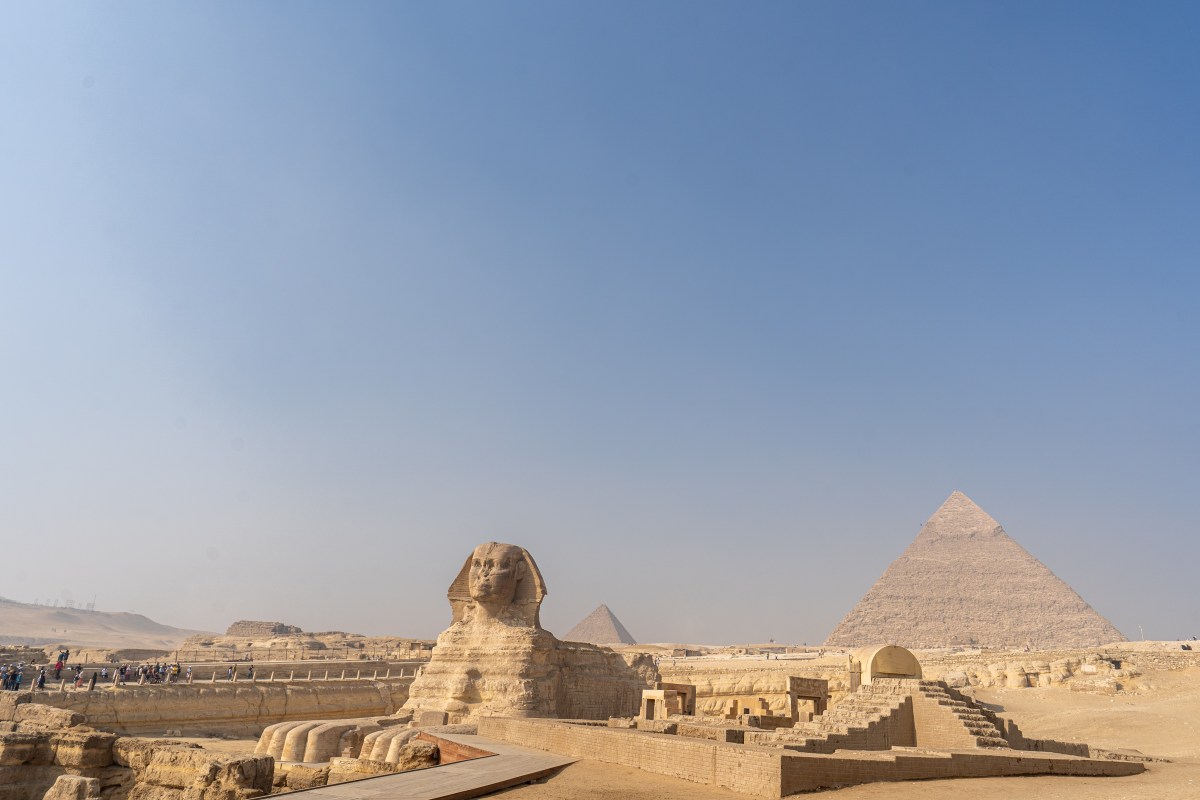
The controversy centers around assertions made by Italian researcher Filippo Biondi and his team, who claim satellite radar scans and geometric alignments reveal a second Sphinx monument concealed under a large sand mound on the plateau. Their theory draws partial inspiration from imagery on the ancient “Dream Stele,” a stone tablet placed between the Great Sphinx’s paws around 1400 BCE that appears to show two sphinx figures.
According to Biondi, who expressed about “80 percent” confidence in his findings, radar data indicates vertical shafts and horizontal passages beneath the sand mound that allegedly mirror features found under the existing Great Sphinx. The theory gained significant traction after the Daily Mail published an article suggesting researchers had “detected” or “found” a second Sphinx, with one post on social platform X attracting approximately 10 million views.
However, the archaeological community has pushed back firmly against these claims. No excavation has been conducted to verify the theory, no peer-reviewed study has validated the findings, and Egyptian authorities have neither approved nor announced any such discovery.
Zahi Hawass, Egypt’s former minister of antiquities and one of the world’s foremost Egyptologists, has explicitly dismissed these assertions. “The rumors suggesting the presence of columns beneath the Pyramid of Khafre are nothing but fabrications propagated by individuals with no expertise in ancient Egyptian civilization or the history of the pyramids,” Hawass stated, referring to related claims about underground structures at Giza.
The plateau surrounding the pyramids and Sphinx has undergone extensive archaeological study and excavation over many decades, with no evidence uncovered that would suggest the presence of a second monumental sphinx structure.
Technical limitations also cast doubt on the claims. Experts in remote sensing and geophysics note that the radar and satellite techniques cited by Biondi’s team cannot reliably detect detailed structures at the depths claimed. Ground-penetrating radar typically resolves features only a few meters below the surface, not massive carved monuments allegedly buried deep underground in dense limestone bedrock.
Regarding the Dream Stele, which proponents cite as evidence, mainstream Egyptologists interpret its dual sphinx imagery as symbolic rather than literal. Scholars emphasize that the stele’s hieroglyphic text makes no reference to a second physical Sphinx, and similar “twin Sphinx” theories have circulated for decades without producing credible archaeological evidence.
The Giza Plateau has long been a focal point for alternative archaeological theories. Its monumental structures—the Great Pyramid, the Pyramid of Khafre, the Pyramid of Menkaure, and the Great Sphinx—continue to inspire scientific research alongside more speculative interpretations. Modern archaeological techniques, including non-invasive scanning methods, have revealed new insights about these ancient structures, but claims of undiscovered monuments require substantial evidence and verification through traditional archaeological methods.
This latest controversy highlights the ongoing tension between mainstream archaeological consensus and alternative interpretations of ancient Egyptian civilization that tend to gain traction through social media and tabloid coverage before undergoing rigorous scientific scrutiny.
For now, archaeological evidence does not support the existence of a second Sphinx beneath the Giza Plateau, and the theory remains within the realm of speculation rather than scientific discovery.
Fact Checker
Verify the accuracy of this article using The Disinformation Commission analysis and real-time sources.

12 Comments
While the idea of a hidden second Sphinx is intriguing, I’m not fully convinced by the current evidence. Satellite imagery and geometric alignments can be open to interpretation. I’ll be interested to see how this story develops as more information emerges.
Absolutely, the archaeological community will need to thoroughly evaluate the data before making any definitive conclusions. Extraordinary claims require an equally rigorous level of scrutiny.
While the idea of a hidden Sphinx is intriguing, I’m not fully convinced by the current evidence presented. Satellite imagery and geometric alignments can be ambiguous, and it’s crucial that the archaeological community thoroughly evaluates the data before drawing any conclusions.
I agree, the burden of proof is high for such an extraordinary claim. The researchers will need to provide much more comprehensive and compelling evidence to overcome the skepticism of the scientific community.
While the idea of a hidden Sphinx is intriguing, I’m not fully convinced by the current evidence. Satellite imagery and geometric alignments can be open to interpretation, and it’s crucial that the archaeological community thoroughly evaluates the data before drawing any definitive conclusions.
I agree. The researchers will need to provide much more comprehensive and compelling evidence to overcome the skepticism of the scientific community. Extraordinary claims require an equally rigorous level of scrutiny.
Fascinating theory about a potential second Sphinx buried under the Giza Plateau. However, I’m skeptical of the claims until we see more rigorous scientific evidence and verification from multiple independent experts. Extraordinary claims require extraordinary proof.
I agree, the evidence presented so far seems quite speculative. Radar data can be tricky to interpret, so I hope the researchers conduct further investigations to either substantiate or refute their findings.
The potential discovery of a second Sphinx is certainly exciting, but I remain cautious until the findings can be independently verified. Extraordinary claims require robust, peer-reviewed evidence to overcome the skepticism of the scientific community.
Well said. I hope the researchers continue to investigate this thoroughly and share their data openly for other experts to analyze. The Giza Plateau still holds many mysteries waiting to be unraveled.
The possibility of a second Sphinx hidden beneath the Giza Plateau is certainly an exciting prospect, but I remain cautious until the findings can be independently verified by the broader archaeological community. Extraordinary claims require an equally rigorous level of scrutiny.
Absolutely. The initial media coverage seems to have gotten a bit ahead of the actual evidence. I’ll be following this story closely to see how the research progresses and if the claims can be substantiated through further investigation.