


Listen to the article
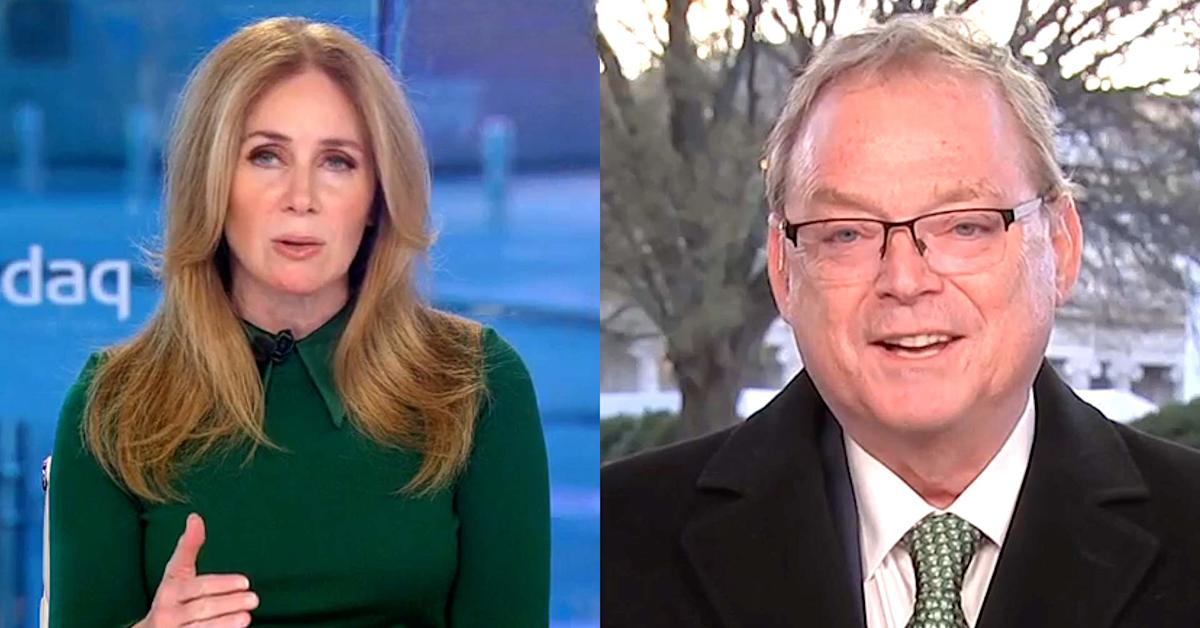
In a sharp exchange highlighting tensions over energy market predictions, CNBC anchor Becky Quick challenged former Trump administration official Kevin Hassett over his optimistic forecast for oil prices amid ongoing Middle East hostilities.
During Tuesday’s broadcast of CNBC’s “Squawk Box,” Quick directly contested Hassett’s claim that oil prices would decline “into the 60s” per barrel by “the fall,” pointing to contradictory futures market data.
The confrontation comes as the conflict involving Iran enters its third week, with attacks on oil tankers in the strategic Strait of Hormuz—a critical chokepoint through which approximately 20% of global oil shipments pass—intensifying concerns about global supply disruptions.
Quick, known for her rigorous financial analysis, cited West Texas Intermediate (WTI) crude futures markets to counter Hassett’s prediction. When the former National Economic Council Director suggested futures indicated prices would drop significantly by autumn, Quick immediately interjected with market evidence showing WTI trading above $75 for delivery as distant as December 2026.
“I just wonder how you’re starting to figure this out, how you are starting to try and anticipate what that will mean for prices,” Quick pressed Hassett, highlighting the disconnect between his forecast and market indicators.
The exchange underscores growing market anxiety about persistent inflationary pressures. Oil prices have surged in recent weeks, with benchmark Brent crude climbing above $80 per barrel and WTI following a similar upward trajectory. These increases have reverberated throughout global markets, contributing to stock market volatility and raising concerns about potential impacts on consumer prices and economic growth.
Energy analysts have cautioned that even a swift resolution to the current Middle East conflict would not guarantee immediate price relief due to structural market factors, including production constraints among OPEC+ nations and robust global demand despite economic headwinds.
The Strait of Hormuz has become particularly critical in current market dynamics. The narrow waterway between Iran and Oman serves as the main shipping route for Persian Gulf oil producers, including Saudi Arabia, Iraq, and the United Arab Emirates. Recent attacks on tankers navigating these waters have heightened risk premiums on crude oil prices.
Hassett, who served in the Trump administration from 2017 to 2019, has maintained that market fundamentals point to eventual price moderation. However, futures contracts—which represent market participants’ collective expectations for future prices—tell a different story, suggesting traders anticipate elevated oil prices will persist well beyond 2024.
This market perspective aligns with assessments from major financial institutions like Goldman Sachs and JPMorgan Chase, which have revised their oil price forecasts upward in recent weeks, citing geopolitical tensions and supply constraints.
The exchange between Quick and Hassett highlights the challenging inflation outlook facing policymakers, particularly the Federal Reserve, which has maintained higher interest rates to combat persistent inflation. Energy price volatility complicates the central bank’s calculus as it weighs economic growth concerns against inflation risks.
For consumers, sustained higher oil prices translate to continued pressure at gas pumps and potential ripple effects through transportation costs that impact retail prices across various sectors.
As tensions persist in the Middle East, market participants remain focused on both immediate developments and longer-term supply-demand fundamentals, with many analysts now suggesting that the “new normal” for oil prices may be substantially higher than pre-pandemic levels, contradicting more optimistic assessments like Hassett’s.
Fact Checker
Verify the accuracy of this article using The Disinformation Commission analysis and real-time sources.

16 Comments
The CNBC anchor seems to have done a good job of pushing back on the former Trump adviser’s oil price claims with concrete market data. Maintaining journalistic skepticism and rigor is so important, especially on economic issues.
Agreed, it’s crucial for media outlets to challenge unsupported assertions, even from high-profile political figures. Data-driven analysis helps cut through partisan rhetoric.
The CNBC anchor seems to have done a commendable job of pressing the former Trump official on his oil price predictions. Grounding the discussion in futures data is a wise approach.
This is a good example of the media’s role in scrutinizing economic claims, especially those made by political figures. The CNBC anchor’s use of futures market data to counter the former Trump official’s predictions is a commendable display of journalistic integrity.
Interesting to see the tension between the former Trump official’s optimistic outlook and the CNBC anchor’s reliance on futures market data. It underscores how difficult it can be to predict oil price movements.
Absolutely, forecasting oil prices is notoriously challenging given the complex interplay of geopolitics, supply/demand, and other factors. Fact-checking is vital to cut through political spin.
The CNBC anchor’s fact-checking of the former Trump adviser’s oil price claims is a valuable example of the media’s role in holding political figures accountable. Grounding the discussion in empirical data is crucial for informing the public.
Agreed, this exchange demonstrates the importance of journalists maintaining a critical, evidence-based approach, even when challenging high-profile political figures. It’s a model of responsible, fact-driven reporting.
This confrontation highlights the challenges of forecasting oil prices, especially amid geopolitical tensions. It’s good to see the CNBC anchor relying on market data rather than taking the former Trump official’s claims at face value.
This exchange highlights the need for nuance and caution when discussing energy market forecasts. Relying on futures data rather than political claims is a sensible approach.
Yes, it’s a good example of how journalists can effectively fact-check economic claims using concrete market information. Maintaining this level of scrutiny is crucial for informed public discourse.
Fact-checking political claims about energy markets is important, as the underlying data can often tell a different story. This exchange demonstrates the value of rigorous journalistic analysis.
Absolutely, it’s critical for the media to challenge unsupported assertions, regardless of the political affiliation of the speaker. Maintaining impartiality and focusing on empirical evidence is key.
The confrontation between the CNBC anchor and the former Trump adviser highlights the need for nuanced, data-driven analysis when discussing energy market dynamics. Fact-checking political claims with concrete evidence is a crucial function of the media.
This exchange highlights the complexities of forecasting oil prices, especially amid geopolitical tensions. It’s good to see CNBC’s anchor pressing for evidence-based analysis rather than political spin.
Yes, it’s important for journalists to fact-check claims, even from high-profile political figures. Objective financial analysis is crucial for understanding energy market dynamics.