


Listen to the article
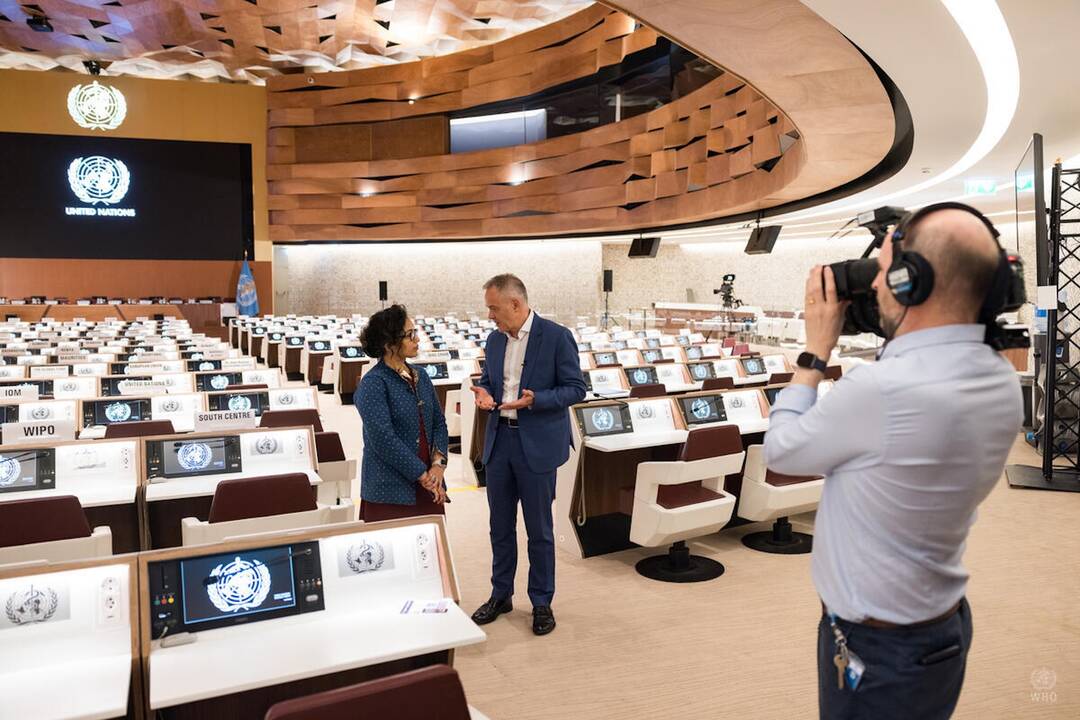
After a year of financial cuts and the departure of the United States from the World Health Organization, the UN agency has undergone painful restructuring while attempting to refocus on its core mission. Jeremy Farrar, WHO’s assistant director general who leads the health promotion, disease prevention and control division, reflects on the organization’s transformation during this challenging period.
Farrar, the former head of the Wellcome Trust charity, joined WHO in 2025 as part of a major leadership reorganization that reduced the number of divisions from ten to four. His appointment came at a critical time as the agency faced significant funding reductions following the U.S. withdrawal.
“2025 was a very difficult year,” Farrar acknowledges. “When you imagine any organization — public or private — reducing its workforce by 30 percent, it is extremely painful.” Unlike many organizations that implement cuts gradually, WHO was forced to make these reductions in a single year, losing what Farrar describes as “many good people.”
By June of this year, WHO will have eliminated 2,400 positions globally, including more than 800 at its Geneva headquarters. The impact extends far beyond the organization’s walls, disrupting scientific collaboration and reducing emergency assistance capabilities worldwide.
The emergency program, which had expanded significantly during the Ebola outbreak in 2014 and the COVID-19 pandemic, saw substantial growth over recent years. However, Farrar explains that many other areas also expanded, necessitating a more focused approach.
“We need to refocus on our core mandate at the heart of the global health system: our work on norms and standards, coordination, technical support, and assistance to countries,” Farrar says, emphasizing the need for the organization to concentrate on its fundamental responsibilities.
The restructuring comes amid evolving relationships within the global health ecosystem in Geneva, which includes organizations like Gavi, the Vaccine Alliance, and the Global Fund to Fight AIDS, Tuberculosis and Malaria. Farrar stresses the importance of each organization leveraging its comparative advantages.
“No single organization can do everything,” he notes. “The Global Fund has enormous strengths in procurement — purchasing medicines, diagnostics, and many other products — and it has very strong links with civil society. We do not need to replicate that. Our role is to advise the Global Fund on the best treatments and the best diagnostic tests.”
Regarding the U.S. withdrawal, Farrar expresses concern about the potential loss of expertise. “The United States has been a scientific powerhouse for decades and has been incredibly generous through institutions such as the Centers for Disease Control and Prevention, the National Institutes of Health, and the Food and Drug Administration,” he says.
He remains hopeful that U.S. agencies, universities, and public institutions will continue collaborating with WHO. Farrar also sees an opportunity in this challenge: experts from other regions of the world may now have greater opportunities to contribute their perspectives and knowledge.
When questioned about whether WHO has been strategic enough in its reforms, Farrar defends the agency’s approach. “The reform we have undertaken is as strategic as possible to ensure the organization is better adapted to the health challenges of the next 20 years,” he explains, noting that senior management positions have been significantly reduced to preserve technical and scientific expertise.
Farrar emphasizes that WHO must strengthen its normative function in an era of widespread disinformation. “It is absolutely essential that the organization’s future remains that of a technical and scientific agency. If we lose sight of the quality of scientific evidence, we will lose the trust of member states,” he warns.
Looking at the broader context of global health, Farrar observes that health issues now extend beyond the traditional domain of health ministries. Health represents a major portion of national budgets—approximately 18 percent of GDP in the United States—and its impact on economic growth became starkly evident during the COVID-19 pandemic.
“The determinants of health go far beyond the health sector,” Farrar concludes. “They also depend on taxation, education, transport, air quality, and policies such as regulations on diesel or petrol use in cars.” This integrated perspective underscores the complex challenges facing global health governance as WHO navigates its new reality.
Fact Checker
Verify the accuracy of this article using The Disinformation Commission analysis and real-time sources.

10 Comments
The WHO’s transformation during this challenging period is inspiring. Refocusing on its core mission and adapting to the age of disinformation will be crucial for the organization to remain a trusted and influential voice in global health.
It’s understandable that the WHO faced significant funding reductions after the U.S. withdrawal. Diversifying revenue streams and strengthening partnerships will be key to ensuring the organization’s long-term sustainability.
Losing over 800 positions at the Geneva headquarters must have been incredibly difficult for the WHO. Maintaining morale and focus during such a dramatic restructuring is a testament to the organization’s resilience.
The WHO’s commitment to remaining a normative power is encouraging. In an age where facts and science are increasingly under attack, the world needs strong, impartial global health institutions more than ever.
Absolutely. The WHO’s ability to set evidence-based standards and guidelines is critical for maintaining public trust and ensuring coordinated responses to global health challenges.
The WHO’s efforts to refocus on its core mission and adapt to a changing landscape are admirable. Streamlining the organization while preserving its normative influence will be critical in the years ahead.
Agreed. The WHO’s ability to provide authoritative guidance and set global health standards is essential, especially as misinformation and disinformation continue to spread.
I’m curious to learn more about the specific steps the WHO is taking to adapt its communication and operations to combat the rise of disinformation. Adapting to this shifting landscape will be key to the organization’s long-term success.
Interesting perspective from the WHO on the importance of remaining a normative power in the age of disinformation. It’s crucial that global health organizations like the WHO maintain credibility and public trust, even during challenging times of funding cuts and restructuring.
Reducing the workforce by 30% must have been an incredibly difficult decision for the WHO. I hope the organization is able to maintain its core capabilities and continue providing essential services despite the budget constraints.