


Listen to the article
In the wake of terrorist incidents on Indian soil, a troubling pattern unfolds across social media platforms: the rapid spread of the “Indian False Flag” narrative, suggesting attacks are staged by India’s own security agencies. This coordinated disinformation campaign represents a sophisticated tactic employed by Pakistan-based actors to deflect responsibility from terrorist organizations operating from their territory.
By examining two recent incidents—the Pahalgam attack and the Red Fort blast of 2025—security analysts have identified a systematic digital campaign designed to provide cover for cross-border terrorism and muddy the waters of international response.
The “False Flag” narrative serves as a pre-emptive denial mechanism in the India-Pakistan geopolitical landscape. It alleges that terrorist attacks on Indian targets are orchestrated by Indian intelligence agencies or the government itself for various purposes: to discredit Pakistan internationally, create pretexts for military action, consolidate political power, or justify security operations in contested regions like Kashmir.
This strategy accomplishes multiple objectives simultaneously. It shifts the burden of proof to India, forcing authorities to combat propaganda rather than focus on identifying perpetrators. It provides plausible deniability for Pakistan-based terrorist groups, allowing them to retract responsibility claims. Perhaps most critically, it fractures international consensus by injecting doubt precisely when clarity is most needed for effective diplomatic and security responses.
The disinformation ecosystem operates through a sophisticated, layered structure. Primary amplifiers—often pro-Pakistan social media accounts showing signs of state coordination—initiate campaigns. These accounts frequently activate simultaneously, indicating orchestrated action rather than organic response. Within hours of attacks, engineered hashtags like #IndianFalseFlag or #RAWConspiracy trend artificially, creating the illusion of widespread belief.
Content fabrication forms another critical component: doctored videos, AI-generated images, fabricated quotes from Indian officials, and recycled footage from unrelated events are presented as evidence. Screenshots of supposed “leaks” mimic authenticity just enough to circulate widely before detailed scrutiny reveals their fraudulent nature.
Strategic amplification networks, including pro-Khalistani, separatist, and anti-India diaspora accounts, further spread this content, giving it ideological diversity and the appearance of grassroots dissent. The final stage involves mainstream legitimization, where Pakistani media outlets and officials cite these social media “reports,” transforming fabrications into seemingly credible allegations.
The April 2025 Pahalgam attack illustrates this pattern clearly. After terrorists targeted tourists in Kashmir, killing several civilians, The Resistance Front (TRF)—widely recognized as a proxy of Pakistan-based Lashkar-e-Taiba—initially claimed responsibility before later retracting.
Within hours, hashtags like #PahalgamFalseFlag began trending, primarily driven by accounts with Pakistan-centric locations and established anti-India posting histories. False narratives claiming Sikh soldiers were mutinying or defying orders circulated alongside doctored communication screenshots purporting to show Indian soldiers discussing the “staged” nature of the attack.
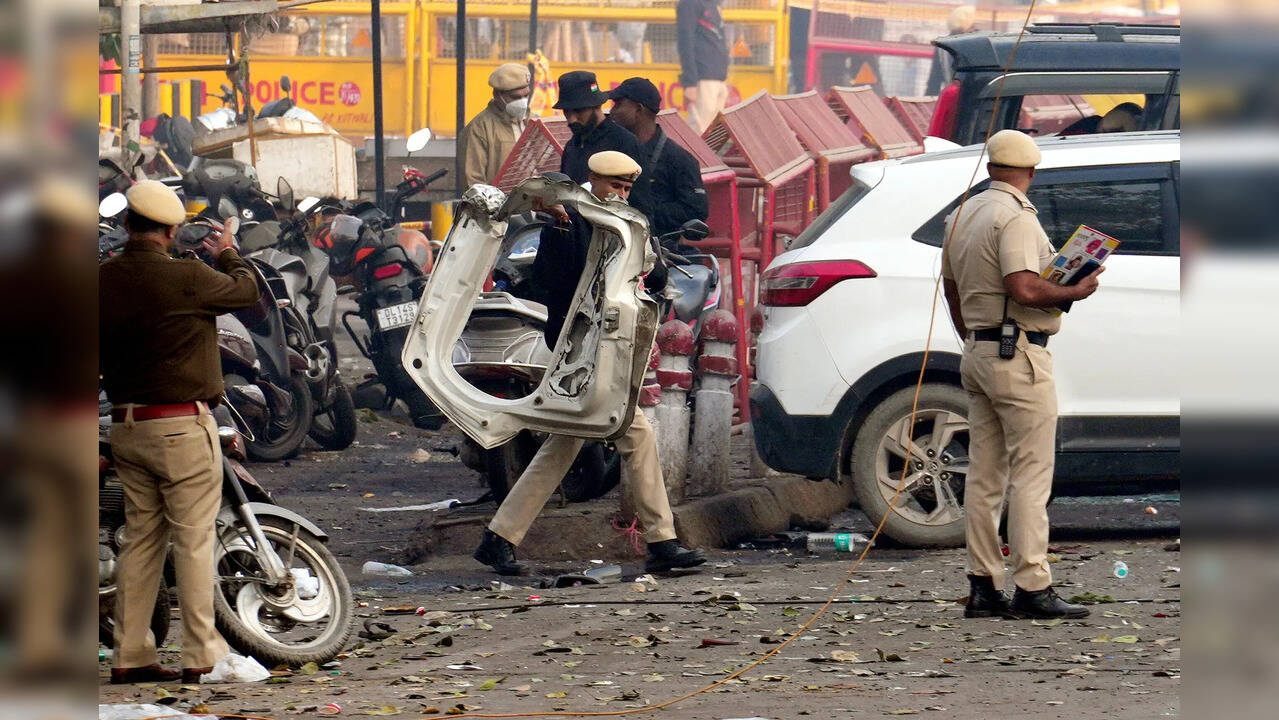
The November 2025 Red Fort car blast in Delhi triggered an even faster response. Within 15 minutes of initial media reports, accounts with Pakistan-linked indicators began pushing coordinated messaging claiming the blast was staged to distract from protests or influence upcoming elections. Network analysis revealed 247 accounts posting near-identical content within just 30 minutes—an impossibility for genuine commentary.
This systematic approach to information warfare causes tangible harm by diverting security resources toward countering disinformation rather than focusing on actual perpetrators. It dilutes diplomatic responses by muddying attribution and creates a false equivalence between evidence-based accusations and manufactured denials.
While global intelligence and diplomatic agencies consistently reject these “False Flag” claims, the true targets of such propaganda are public opinion, diaspora politics, and domestic Pakistani audiences. The persistence of these campaigns reflects a structural commitment within Pakistan’s information ecosystem to protect proxy organizations from international scrutiny.
As disinformation technology advances—from deepfakes to algorithmic amplification—countering these campaigns will become increasingly challenging. Security experts emphasize that recognizing the “False Flag” narrative as weaponized deception rather than legitimate dissent is crucial for developing effective countermeasures.
The victims of terrorist attacks deserve justice untainted by digital manipulation, and the international community must treat these coordinated disinformation campaigns with the same gravity as the terrorist acts they are designed to obscure.
Fact Checker
Verify the accuracy of this article using The Disinformation Commission analysis and real-time sources.

10 Comments
Interesting that this ‘false flag’ narrative seems to be a coordinated effort by Pakistan-based actors. It’s worrying how disinformation campaigns can obscure the truth about terrorism.
You’re right, these kinds of pre-emptive denial strategies are troubling. Transparency and fact-checking are crucial to expose the real perpetrators of terrorist attacks.
The ‘Indian False Flag’ narrative is clearly an attempt to muddy the waters and avoid accountability for cross-border terrorism. It’s a sophisticated tactic that needs to be called out.
This is a disturbing pattern of using disinformation to protect terrorist organizations. The ‘Indian False Flag’ narrative seems to be a calculated strategy to avoid accountability.
It’s concerning to see how these ‘false flag’ narratives can shield terror accomplices and undermine international response. Disinformation is a powerful weapon that must be countered with facts.
I agree, the use of false flag claims to deflect responsibility for terrorism is highly problematic. Rigorous investigation and evidence-based reporting are essential to combat these tactics.
Weaponizing disinformation to shield terror accomplices is a dangerous trend. We must remain vigilant and call out these false narratives to ensure justice and prevent future attacks.
Absolutely. Exposing the truth behind these ‘false flag’ claims is crucial to countering the influence of disinformation campaigns and holding the real perpetrators accountable.
The systematic digital campaign to spread the ‘Indian False Flag’ narrative is a concerning tactic. It’s important to scrutinize these claims and focus on the facts to combat this disinformation.
This ‘false flag’ narrative is a concerning tactic to deflect responsibility for terrorism. Spreading disinformation to shield terror groups is highly problematic and requires vigilance to counter.