


Listen to the article
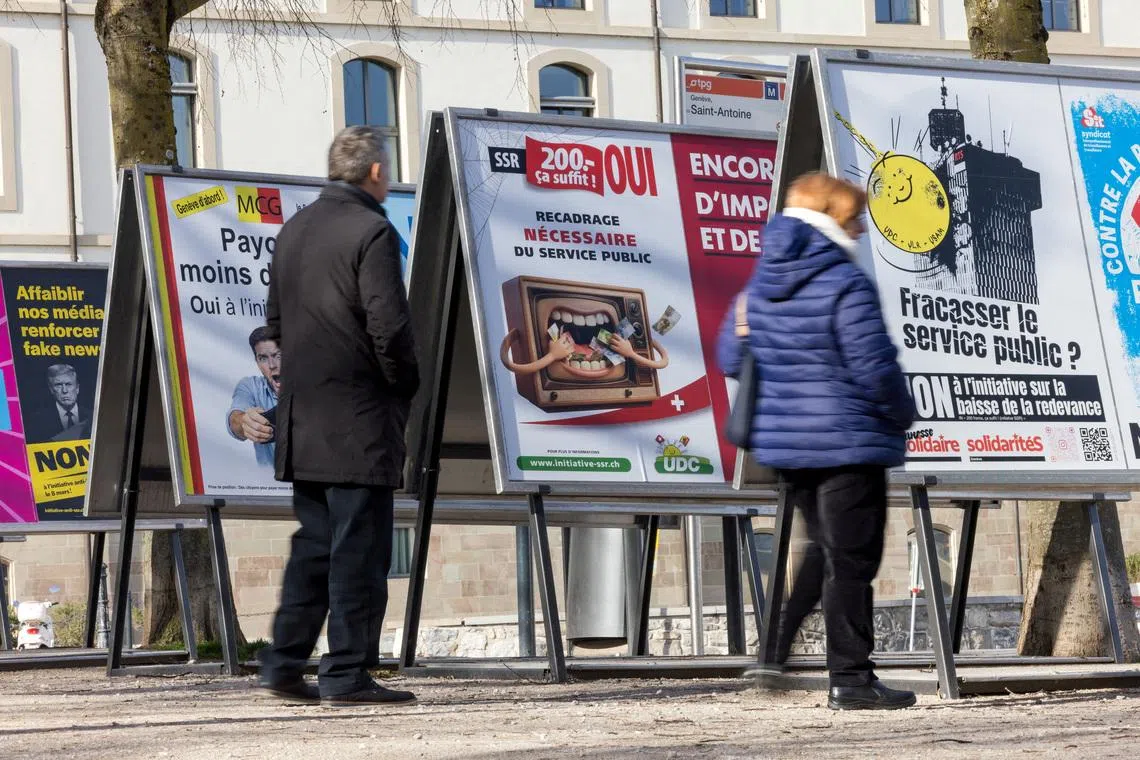
Swiss voters have decisively rejected a referendum that would have substantially cut funding for the country’s public broadcaster, according to early projections released Sunday. Approximately 62 percent of voters opposed the initiative to reduce the annual license fee that finances the Swiss Broadcasting Corporation (SRG).
The referendum sought to slash the mandatory household fee from 335 Swiss francs ($431.87) to 200 Swiss francs, a reduction that would have significantly impacted the broadcaster’s operations and programming capabilities.
The initiative was primarily backed by right-wing groups, including the influential Swiss People’s Party (SVP), who argued that the current fee—reported to be the highest public broadcasting charge in the world—places an excessive financial burden on Swiss households. Supporters also claimed the SRG had grown unwieldy, operating 17 radio stations and seven television channels across Switzerland’s four national languages.
Critics of the public broadcaster further alleged political bias in its coverage, accusing the SRG of left-leaning tendencies in its reporting and questioning its political independence—echoing similar criticisms of public media organizations in other countries.
The referendum reflects a broader international trend of conservative political movements challenging the funding, scope, and objectivity of public service broadcasters. In recent years, public media organizations across Europe and beyond have faced increased scrutiny and funding pressures from right-wing politicians who claim these institutions fail to represent their perspectives fairly.
Opponents of the measure warned that reducing SRG’s funding would severely compromise its ability to provide comprehensive news, sports, and cultural programming across all of Switzerland’s linguistic regions. The broadcaster’s multilingual service is particularly crucial in a country with four national languages—German, French, Italian, and Romansh.
Media experts had cautioned that weakening the SRG could create information vacuums that might be filled by less reliable sources, potentially increasing the spread of misinformation in the Swiss media landscape. This concern has gained prominence in recent years as discussions about media literacy and information quality have intensified globally.
The rejection of the referendum represents a significant victory for supporters of public broadcasting in Switzerland, who have consistently emphasized the SRG’s role in maintaining social cohesion across the country’s diverse linguistic and cultural regions.
“A major dismantling of Switzerland’s media infrastructure has been prevented,” said Laura Zimmermann, who led the campaign against the funding cuts. “Our access to reliable information remains protected.”
The outcome also provides a measure of stability for the SRG, which can now continue its operations without implementing the dramatic cuts that would have been necessary had the referendum passed. Susanne Wille, SRG Director General, expressed commitment to the broadcaster’s mission following the results, stating, “We remain fully committed to accompanying the public in their everyday lives with a diverse and high-quality programme.”
The Swiss referendum comes at a time when public broadcasters worldwide are navigating challenges related to changing media consumption habits, budget constraints, and political pressure. The strong public support for maintaining the SRG’s funding suggests that despite criticisms, many Swiss citizens continue to value the role of public service media in their national discourse.
As digital platforms continue to transform the media landscape, the debate over the appropriate scope, funding model, and mandate of public broadcasters is likely to persist, not only in Switzerland but across democratic societies globally.
Fact Checker
Verify the accuracy of this article using The Disinformation Commission analysis and real-time sources.

7 Comments
This vote highlights the value Swiss citizens place on their national media. While the costs are significant, the public seems to recognize the importance of a robust, unbiased news source, even if it’s state-funded.
You make a fair point. In an era of rising misinformation, preserving credible media outlets is crucial, even if it requires higher taxes. Curious to see how the broadcasters address concerns over political bias moving forward.
Interesting to see the Swiss voters reject cuts to the state broadcaster’s funding. Maintaining a strong public media presence seems important for balanced and independent journalism, even if the fees are high.
I agree, a well-funded public broadcaster can help counter the spread of disinformation. However, the high fees are a concern – hope they can find ways to reduce costs without compromising quality.
This vote seems to reflect the Swiss public’s desire to maintain a strong and independent public media presence, even with the high costs. It will be interesting to see if the broadcaster takes steps to address concerns over political bias in its coverage.
The high cost of the Swiss public broadcaster’s license fee is certainly a concern, but the public’s decisive rejection of cuts suggests they prioritize having a reliable, unbiased news source. It’s a complex issue without easy solutions.
The rejection of funding cuts for the Swiss state broadcaster is an interesting development. Curious to understand more about the specific allegations of political bias – is there evidence to support those claims? Transparency around editorial independence would be important.