


Listen to the article
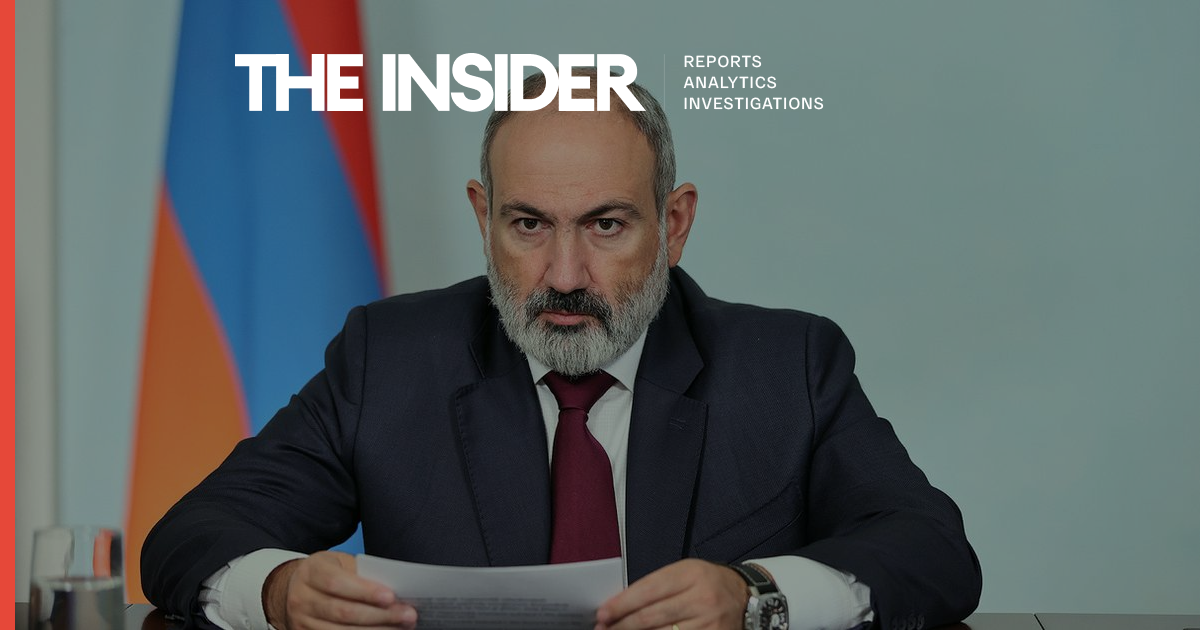
Russian-backed bots have intensified a disinformation campaign against Armenian Prime Minister Nikol Pashinyan, flooding social media with AI-generated images depicting him in humiliating scenarios with regional leaders.
The coordinated attacks, attributed to the “Matryoshka” network, include manipulated images showing Pashinyan being forced to kiss Turkish President Recep Tayyip Erdoğan’s knee and being dominated by Azerbaijani President Ilham Aliyev. Other fabricated visuals depict the Armenian leader picking up trash outside the White House or being belittled by former U.S. President Donald Trump.
According to reporting by independent Russian media outlet The Insider, these digital attacks first targeted Pashinyan in June, coinciding with his planned diplomatic visit to Ankara. The campaign initially accused him of endorsing “the highest level of corruption in the Middle East” and attempting to silence discussion of the Armenian Genocide. Some posts even claimed he was taking “strong tranquilizers.”
The disinformation effort escalated in October when Agentstvo, another independent outlet, discovered Matryoshka bots spreading videos that repurposed images of Auschwitz concentration camp prisoners. These disturbing videos falsely accused Pashinyan of “building gas chambers for Armenia’s symbols and testing them on Mount Ararat.”
This specific accusation references a controversial decision by Pashinyan’s government to remove Mount Ararat’s image from border-crossing stamps. Though the mountain holds deep cultural and historical significance for Armenians, it currently lies within Turkey’s borders. The government presented the change as a diplomatic gesture indicating Armenia was renouncing any territorial claims to the mountain.
The digital attacks come amid a complex geopolitical backdrop following Armenia’s devastating losses in the Nagorno-Karabakh conflict. The disputed territory has been a flashpoint between Armenia and Azerbaijan since the late Soviet era. Though populated predominantly by ethnic Armenians, Nagorno-Karabakh was administratively placed within the Azerbaijani SSR during Soviet times.
Following the First Karabakh War (1992-1994), the region operated as a de facto independent republic, though unrecognized internationally. The situation changed dramatically in 2020 when Azerbaijan, with substantial Turkish support, launched a successful military campaign to recapture portions of the territory.
The final chapter came in 2023, when Azerbaijani forces seized the remainder of Nagorno-Karabakh, effectively ending its existence as a separate entity. The takeover triggered a massive humanitarian crisis as nearly the entire Armenian population fled to Armenia proper.
Russia’s role in the conflict has particularly strained its historically close relationship with Armenia. Despite having peacekeeping forces in the region under the 2020 ceasefire agreement, Moscow notably refrained from intervening when Azerbaijan launched its final offensive in 2023. This perceived abandonment has significantly damaged Russia-Armenia relations.
The Matryoshka disinformation campaign appears designed to exploit these tensions, undermining Pashinyan’s leadership at a moment of extreme vulnerability for the small Caucasus nation. As Armenia attempts to navigate its complex security situation while balancing relations with Russia, Turkey, and Western powers, these coordinated attacks represent a digital front in the ongoing struggle for influence in the South Caucasus region.
The targeting of Pashinyan comes as Armenia has shown increasing interest in closer ties with Western nations, a strategic pivot that likely concerns Moscow as it attempts to maintain influence in what it considers its near abroad.
Fact Checker
Verify the accuracy of this article using The Disinformation Commission analysis and real-time sources.

10 Comments
This is a concerning case of disinformation and coordinated bot attacks targeting the Armenian Prime Minister. It’s troubling to see foreign actors using AI-generated imagery to spread such damaging narratives.
I agree, the use of manipulated images to undermine a leader is a worrying tactic. It’s important to call out these kinds of coordinated disinformation campaigns.
The scale and sophistication of this Russian bot network is alarming. Flooding social media with AI-generated smears is a disturbing new front in the information war.
You’re right, the weaponization of AI to create fake content is a major threat to democratic discourse. Vigilance is needed to combat these deceptive tactics.
This is a clear example of how foreign adversaries are leveraging advanced technologies to interfere in the domestic affairs of other nations. We need stronger international cooperation to counter these threats.
The use of AI-generated images to mock and undermine the Armenian Prime Minister is a disturbing tactic. It’s a stark reminder of the need for greater digital literacy and resilience against disinformation.
Absolutely, this case highlights the urgent need to address the vulnerabilities posed by AI-powered disinformation campaigns. Safeguarding democratic processes should be a top priority.
The use of AI-generated images to mock the Armenian Prime Minister is a troubling development. We must be vigilant against the spread of disinformation and work to uphold the truth.
Agreed, this type of coordinated propaganda campaign is deeply concerning. Maintaining a free and open public discourse is crucial, especially in the face of such manipulation.
It’s disturbing to see how foreign actors are exploiting new technologies like AI to undermine political leaders. We need robust safeguards to protect the integrity of our online spaces.