


Listen to the article
Russia orchestrates widespread disinformation campaign against Ukraine’s Olympic team, officials say
Ukraine has accused Russia of launching a coordinated disinformation campaign targeting its Winter Olympics team, with fabricated news stories that have garnered over a million views across multiple social media platforms.
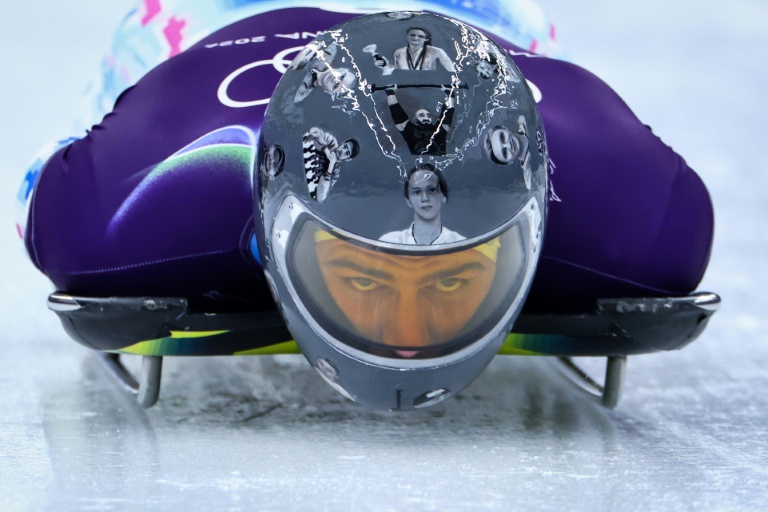
Ukrainian officials on Thursday condemned the spread of false claims about their athletes, including a manipulated story about skeleton racer Vladyslav Heraskevych, who was disqualified for wearing a helmet featuring images of athletes killed in the ongoing conflict with Russia.
“Russians have rolled out an information campaign to discredit Ukraine,” said Kyiv’s center for countering disinformation in a statement. Ukraine’s Sports Minister Matviy Bidny told AFP that “Russia is trying to discredit Ukrainians and undermine international support for Ukraine” through these fabrications.
The disinformation operation included digitally altered Reuters news stories with false additions claiming Heraskevych’s brother recruited soldiers for the war. Another fabricated claim suggested a Hungarian athlete wore a sticker declaring “we’re all fed up with U(kraine).”
Researchers have identified the campaign as part of “Operation Overload,” which previously targeted the Paris 2024 Summer Olympics. Pablo Maristany de las Casas, an analyst at the Institute for Strategic Dialogue think tank, noted the operation involves impersonating legitimate media outlets such as Euronews, as well as organizations like Mossad and even the Italian health ministry.
The fake news extended beyond athletics performance. Fabricated stories claimed Ukrainian team members were housed separately due to “toxic” behavior at previous games, that doping controls had been relaxed specifically for them to take “psychoactive substances,” and that 52 of their translators had absconded.
One particularly sophisticated fake video mimicked US entertainment channel E! News, falsely reporting that rapper Snoop Dogg, who is covering the games for NBC, refused a photo with Ukrainian athletes due to the Ukrainian army’s alleged “Nazism.”
Canadian broadcaster CBC was forced to issue its own fact check after discovering a doctored news segment circulating online. The fake report used 15 seconds from a genuine CBC video featuring chief correspondent Adrienne Arsenault, before switching to an AI-generated version of her voice. The manipulated footage made it appear as though Arsenault was reporting that the Ukrainian team had been accommodated “as far away as possible” from others because they were “extremely toxic” at the Paris Olympics.
“The real video did not mention Ukraine or Ukrainian athletes,” CBC fact-check producer Avneet Dhillon clarified.
The International Olympic Committee flatly denied the allegations, calling the video “absolutely false and an attempt at deliberate misrepresentation.” The IOC confirmed Ukrainian athletes are housed in the same facilities as other teams.
Provereno Media, an Estonia-based fact-checking organization, traced one of the fake videos to a Russian-language Telegram channel called “Odessa for Victory,” where it began circulating on February 5. The organization reported that bot networks have amplified the content, pushing viewership past one million.
More concerning still, pro-Kremlin media outlets have begun citing these fabricated stories as if they came from legitimate Western sources like CBC, further blurring the line between fact and fiction.
The disinformation campaign appears designed not only to discredit Ukrainian athletes but also Ukrainian refugees more broadly, according to analysts. The underlying message suggests “Ukrainians are sowing chaos,” reinforcing negative stereotypes that align with Russian propaganda narratives about Ukraine.
AFP fact-checkers have observed these false claims spreading beyond Russian-language channels, with Slovak-language accounts on Facebook also circulating the disinformation.
Fact Checker
Verify the accuracy of this article using The Disinformation Commission analysis and real-time sources.

12 Comments
I wonder how effective these disinformation campaigns really are at this point. People are increasingly aware of Russia’s tactics, and I hope the international community sees through these fabrications.
That’s a good point. As more people become aware of Russian disinformation efforts, their impact may start to diminish. But vigilance is still crucial to counter these insidious attacks.
It’s disappointing but not surprising to see Russia resorting to these kinds of underhanded tactics. Spreading disinformation is one of their go-to strategies for sowing chaos and division.
You’re right, Russia has a long history of using propaganda and disinformation as weapons. The Olympics should be a celebration of sport, not a battleground for geopolitical conflicts.
The fact that these fabricated stories have garnered over a million views is alarming. Even if some people see through the lies, the sheer volume of disinformation can still have a corrosive effect.
Absolutely, the scale of these operations is what makes them so dangerous. Flooding social media with false narratives is a strategy to overwhelm and confuse people, even if the individual stories are debunked.
This is really concerning. Disinformation campaigns can be so damaging, especially around major events like the Olympics. I hope the international community condemns these tactics and stands firmly with Ukraine.
Absolutely, Russia’s continued efforts to undermine Ukraine are deeply troubling. Fabricating news stories to discredit Ukrainian athletes is a new low.
This is a sobering reminder of the lengths Russia will go to undermine its rivals. Fabricating news stories to discredit Ukrainian athletes is a new low, even for them. I hope the truth prevails.
Agreed. Russia’s disregard for facts and ethics is truly alarming. The international community must remain vigilant and call out these tactics whenever they occur.
I hope the International Olympic Committee and other governing bodies take strong action to counter this kind of disinformation. Athletes shouldn’t have to deal with these kinds of attacks during the Games.
You make a good point. The IOC and other organizations need to be proactive in monitoring and responding to disinformation campaigns that target Olympic participants. The integrity of the Games is at stake.