


Listen to the article
Russian Disinformation Campaign Targets Ukrainian Athletes at Winter Olympics
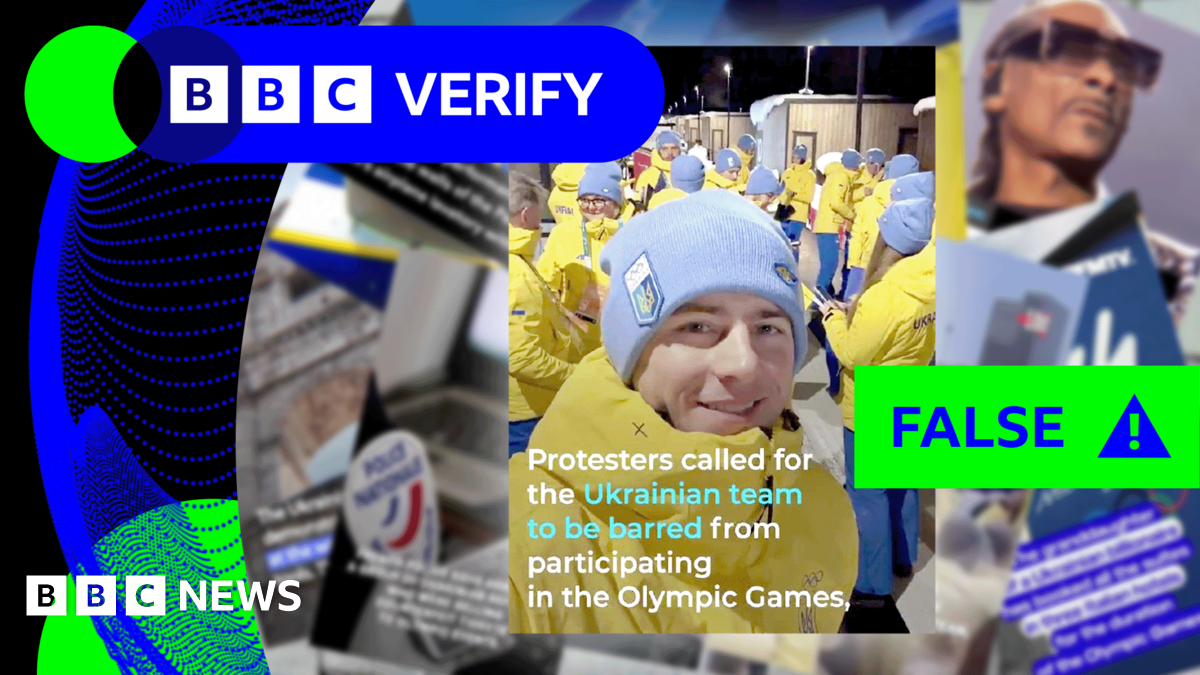
A sophisticated Russian disinformation operation is actively working to undermine Ukrainian athletes and fans during the Winter Olympics, according to experts who have shared evidence with BBC Verify. The campaign aims to portray Ukrainians as aggressive, corrupt, and unlikeable in an apparent effort to erode international support.
Researchers have identified 43 separate fake news stories circulated since January 30th, revealing a coordinated attempt to shape public perception against Ukraine. While individual stories have gained limited traction, collectively they represent a significant pattern of targeted disinformation.
“They have been using tactics like this to turn Western opinion against Ukraine for years, and the Olympics are an opportunity to target new audiences,” explained Darren Linvill, a media forensics expert at Clemson University who has been tracking the operation.
The network, nicknamed “Matryoshka” by investigators in reference to Russian nesting dolls, employs sophisticated impersonation tactics to spread its narratives. BBC Verify has monitored this operation for several years, with the Olympic-focused campaign also being reported by NewsGuard, Agence France-Presse, and Euronews.
The fabricated stories employ multiple themes designed to damage Ukraine’s reputation. Some falsely claim that wealthy Ukrainians have engaged in extravagant spending, such as booking entire luxury hotels in Italy during the Olympics. Others portray Ukrainian refugees as criminals, with fictional accounts of ticket fraud schemes and increased police surveillance.
One particularly outlandish fake story alleges that a Ukrainian performance artist vandalized an airplane lavatory with feces during a Paris-Milan flight. Another falsely claims that celebrity Snoop Dogg refused to take photos with Ukrainian Olympic team members.
The consistent theme across these fabrications is the portrayal of Ukrainians as troublemakers who don’t belong in Western society or the Olympic community. Some stories even claim that protesters have demanded the Ukrainian team be barred from Olympic participation.
Intelligence experts suggest these tactics represent a continuation of Russia’s broader information warfare strategy. By targeting international sporting events with global audiences, the operation aims to influence public opinion in multiple countries simultaneously.
“This is classic influence operations methodology,” said a European security analyst who requested anonymity. “Create numerous small, emotionally-charged narratives that collectively shape perceptions over time, especially among audiences with limited prior knowledge of the subject.”
Little is known about Matryoshka’s operational structure, including whether it has direct ties to the Kremlin. However, its activities align with documented Russian government information warfare objectives regarding Ukraine.
The timing of this campaign coincides with Ukraine’s ongoing efforts to maintain international support for its defense against Russian military aggression. By portraying Ukrainians negatively during a high-profile global event, the operation appears designed to slowly erode public sympathy in Western nations.
Social media platforms have struggled to contain the spread of these narratives, as the operation frequently creates new domains and accounts to evade detection. The fake stories are often crafted to appear legitimate by mimicking established news formats and incorporating real photos or videos repurposed with false captions.
Intelligence agencies from multiple NATO countries have reportedly increased monitoring of Russian disinformation activities during major international events, viewing them as part of Moscow’s broader hybrid warfare strategy.
For Olympic spectators and news consumers, experts recommend increased vigilance regarding sources and verification of claims about participating athletes and nations, particularly those that seem designed to provoke strong emotional reactions or reinforce negative stereotypes.
Fact Checker
Verify the accuracy of this article using The Disinformation Commission analysis and real-time sources.

6 Comments
I’m not surprised to hear about Russia’s alleged disinformation campaign targeting Ukraine during the Olympics. They’ve used these tactics for years to sway public opinion. It’s a concerning trend that needs to be addressed.
While I’m not shocked that Russia is engaging in these kinds of tactics, it’s still troubling to see the scale and sophistication of their disinformation campaigns. Targeting Ukrainian athletes at the Olympics is a particularly low move.
This isn’t the first time Russia has been accused of spreading disinformation around the Olympics. Their tactics of impersonation and coordinated fake news stories seem to be an ongoing strategy. I wonder what the long-term impact on public perception will be.
Russia’s history of spreading disinformation is well-documented, so this latest allegation isn’t shocking. However, the scale and coordination of their campaign against Ukrainian athletes is quite concerning. I wonder what the long-term consequences could be.
Interesting but not surprising. Russia has a long history of using disinformation campaigns to undermine its rivals, especially during major events like the Olympics. It’s concerning to see them target Ukrainian athletes in this way.
It’s disappointing but not surprising to see Russia accused of using disinformation to undermine Ukraine during the Winter Olympics. This seems to be part of their broader geopolitical strategy. I hope the international community can effectively counter these efforts.