


Listen to the article
Russian disinformation campaign targets Ukrainian Winter Olympians, spreads fake news globally
Ukraine has accused Russia of orchestrating a sophisticated disinformation campaign targeting its Winter Olympics team, with fabricated stories generating over one million views across multiple platforms. Officials in Kyiv issued statements Thursday condemning what they described as coordinated efforts to undermine international support for Ukraine.
“Russians have rolled out an information campaign to discredit Ukraine,” said Kyiv’s center for countering disinformation in an official statement. Ukrainian Sports Minister Matviy Bidny told AFP, “With such fakes, Russia is trying to discredit Ukrainians and undermine international support for Ukraine.”
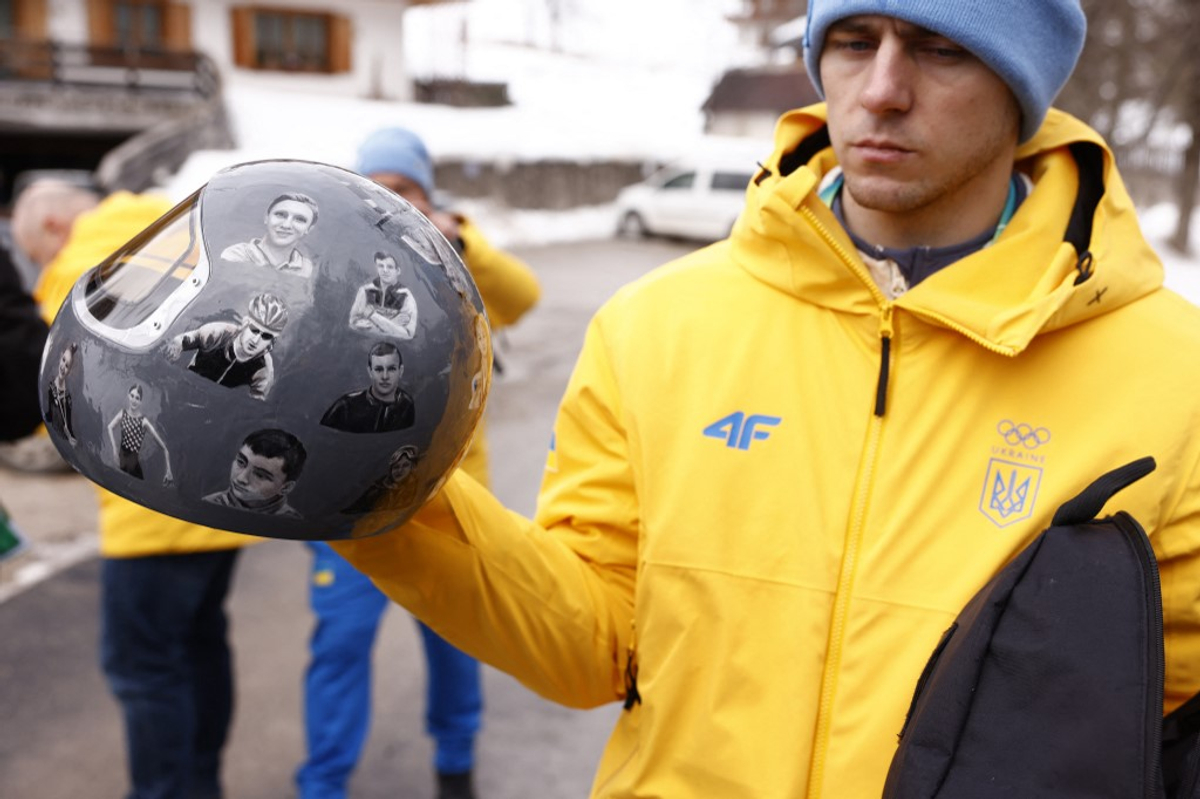
The most prominent fabricated story involved Ukrainian skeleton racer Vladyslav Heraskevych, who was disqualified from competing Thursday for wearing a helmet displaying images of athletes killed in the ongoing conflict. A digitally manipulated Reuters news agency article about Heraskevych falsely claimed his brother recruited soldiers for the war and that a Hungarian athlete wore a sticker saying “we’re all fed up with U(kraine).”
Multiple Russian-language accounts on X were observed spreading similar disinformation. Other false narratives included claims that Ukrainian team members were isolated from other athletes due to “toxic” behavior, that doping controls had been relaxed to allow them to take “psychoactive substances,” and that 52 Ukrainian translators had absconded from the Olympic Village.
One particularly sophisticated fake featured a video with a logo resembling that of U.S. entertainment channel E! News. The fabricated clip alleged that rapper Snoop Dogg, who is covering the Winter Games for NBC, refused a photo with the Ukrainian team because of supposed “Nazism” within Ukraine’s military.
Pablo Maristany de las Casas, an analyst at the Institute for Strategic Dialogue think tank, identified these efforts as part of “Operation Overload,” a Russian-aligned campaign that was also active during the Paris 2024 Summer Olympics. He noted that the operation involves impersonating credible media outlets like Euronews, government agencies including Israel’s Mossad, and even the Italian health ministry.
“The campaign aims to discredit not just Ukrainian athletes but also refugees,” de las Casas explained, with a consistent message that “Ukrainians are sowing chaos” internationally.
Ukraine’s Center for Countering Disinformation reported that this “coordinated” campaign of “completely falsified” stories first appeared on Russian-language Telegram channels before being “amplified by a network of propaganda accounts.”
Canadian broadcaster CBC was forced to issue its own fact-check after discovering that disinformation operatives had manipulated one of its genuine videos. The fake report used the first 15 seconds of an authentic CBC social media clip featuring Chief Correspondent Adrienne Arsenault before switching to an AI-generated version of her voice. The fabricated portion made false claims about Ukrainian athletes being accommodated “as far away as possible” from other teams due to being “extremely toxic” at the Paris Olympics.
CBC fact-check producer Avneet Dhillon confirmed that the original video made no mention of Ukraine or its athletes. The International Olympic Committee categorically stated that Ukrainian athletes were housed in the same facilities as other teams, calling the video “absolutely false and an attempt at deliberate misrepresentation.”
Provereno Media, an Estonia-based fact-checking organization, traced the origin of this particular fake video to a Russian-language Telegram channel called “Odessa for Victory,” where it first appeared on February 5. The fabricated story was subsequently amplified by automated bots and eventually picked up by pro-Kremlin media outlets, which cited it as legitimate CBC reporting.
The scope of the disinformation campaign appears extensive, with AFP fact-checkers also identifying the circulation of these claims on Slovak-language Facebook accounts, indicating a coordinated effort to spread anti-Ukrainian narratives across multiple languages and platforms during the Winter Games.
Fact Checker
Verify the accuracy of this article using The Disinformation Commission analysis and real-time sources.

14 Comments
The disinformation campaign targeting Ukraine’s Olympians is a shameful attempt by Russia to undermine their success. We must stand in solidarity with Ukraine and call out these blatant lies.
Agreed. Spreading false narratives about Ukrainian athletes is a despicable move by Russia. We need to fact-check and counter this propaganda wherever we see it.
I’m appalled by Russia’s attempts to discredit Ukraine’s Olympic team through fabricated stories. This is a cynical and unethical tactic that deserves widespread condemnation. Ukraine’s athletes have our full support.
While I’m not surprised by Russia’s efforts to spread misinformation, it’s disheartening to see them stoop to targeting Ukraine’s athletes. This kind of propaganda is unethical and counterproductive.
I agree, this is a shameful tactic that undermines the spirit of the Olympics. Ukraine’s athletes deserve our full support, not to be smeared by fabricated stories.
This disinformation campaign is a concerning tactic by Russia to undermine Ukraine’s athletes and discredit them on the global stage. It’s important to remain vigilant and fact-check these kinds of stories before spreading them further.
Absolutely, the use of fake news to target Ukrainian Olympians is a new low. We must call out these blatant attempts to sow discord and division.
While not surprising, Russia’s disinformation campaign against Ukraine’s Olympians is still deeply concerning. We must remain vigilant and call out these lies whenever they surface.
Absolutely. Fact-checking and exposing these fake stories is crucial to preventing them from gaining traction and undermining Ukraine’s athletes.
Russia’s disinformation campaign against Ukraine’s Olympic team is a concerning development. We must remain vigilant and fact-check claims before sharing them, to avoid inadvertently amplifying this propaganda.
Absolutely. It’s crucial that we don’t allow these fake stories to gain traction and undermine the achievements of Ukraine’s athletes. Fact-checking is key.
It’s disappointing to see Russia resorting to these kinds of underhanded tactics. Targeting Ukraine’s Olympic team with disinformation is a new low, even for them. We should stand with Ukraine and condemn these efforts.
The use of disinformation to target Ukraine’s Olympic team is a new low, even for Russia. We must stand in solidarity with Ukraine and condemn these unethical tactics.
This is a disgraceful attempt by Russia to discredit Ukraine’s Olympic team through fabricated stories. We should condemn these tactics and show our unwavering support for Ukraine’s athletes.