


Listen to the article
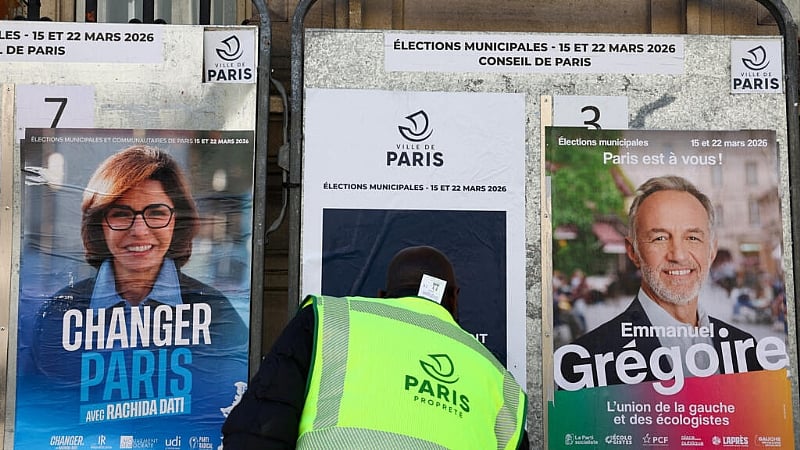
French municipal elections have become the latest battleground against digital disinformation, with cyber experts identifying nearly 200 fake campaign websites designed to mislead voters. While the vast number of candidates—over 900,000 across more than 50,000 lists in the first round—creates vulnerabilities, experts suggest smaller communities may possess natural defenses against such manipulation.
Pierre Bonis, who leads Afnic, the organization managing France’s country code domain names, noted that local elections create particular concerns due to their scale. “We are traditionally particularly attentive to the local elections, because it multiplies the possibilities of identity theft,” Bonis explained.
Manipulators frequently employ “typosquatting” or URL hijacking techniques to divert users to fraudulent websites mimicking legitimate candidate pages or local news outlets. These sites then spread false information designed to influence voting behavior or undermine electoral confidence.
Despite these risks, Bruno Courtois, a cybersecurity adviser at digital consultancy Sopra Steria, believes the communal nature of smaller municipalities provides some protection. “Local elections are still based on trust and knowledge of local teams, which remains the best defence against disinformation,” Courtois told RFI. In towns with populations under 100,000, elected officials and residents typically maintain personal connections that make deception more difficult to sustain.
The situation differs significantly in France’s major urban centers, where the relationship between political figures and constituents becomes more impersonal. “What is more worrying is large metropolitan areas where the relationship between mayors and voters is more distant,” said Courtois. “I worry more about big cities than small and medium-sized ones.”
One high-profile target was Pierre-Yves Bournazel, candidate from President Emmanuel Macron’s Horizons party for Paris mayor. According to Viginum, which monitors foreign disinformation campaigns, Bournazel was targeted by the “Storm 15-16” network, a Russian-linked operation that has been active across multiple European countries.
Many of the fraudulent websites identified by Afnic were established well ahead of the election cycle, allowing them to build credibility over time before deploying misleading content at critical moments in the campaign.
Various initiatives have emerged to combat electoral disinformation. Wikimedia France partnered with a data analysis company to create a monitoring barometer that tracks which Wikipedia pages experience unusual editing activity before elections. This tool aims to alert moderators, journalists, researchers, and the public to potential manipulation attempts.
However, experts acknowledge that simply shutting down fraudulent websites addresses only a fraction of the problem. “It goes beyond elections. It is about protecting the integrity of the European information space more broadly,” Courtois said, highlighting the importance of media certification systems and tools to identify AI-generated content on social platforms.
Artificial intelligence has emerged as both a threat and tool in this evolving landscape. A recent Ipsos survey revealed that 25 percent of respondents had used generative AI to learn about politicians or parties, with 23 percent considering doing so in the future.
“It’s a tool that has become totally essential,” said Clarisse de Maupeou, an AI specialist at Ipsos. “People don’t ask outright who to vote for. They ask it to help them identify which candidate best matches their views.” She compared this evolution to previous shifts from newspapers and television to social media, noting that AI now represents the most convenient information source for younger voters.
De Maupeou expressed concerns, however, about the origins and potential biases of AI tools, many of which are developed by American companies with different political contexts and priorities.
According to Bonis, the broader objective of electoral disinformation extends beyond influencing specific races. “The ultimate aim of disinformation during elections is to put people off voting. It is not necessarily about convincing them to vote for one candidate or another. The more confusing the information, the more it creates a general sense of distrust.”
As France moves through its municipal election cycle, the battle against disinformation highlights the evolving challenges facing democratic processes in the digital age, where trust in information increasingly determines the health of electoral participation.
Fact Checker
Verify the accuracy of this article using The Disinformation Commission analysis and real-time sources.

7 Comments
The diversity of candidates and community-focused aspect of local elections may indeed make them less vulnerable to large-scale disinformation campaigns. However, the threat of targeted manipulation through tactics like ‘typosquatting’ remains concerning. Ongoing efforts to educate voters and secure online platforms will be crucial.
The fact that nearly 200 fake campaign websites have been identified in the French municipal elections is concerning. Disinformation actors are clearly targeting these local races, likely hoping to erode public confidence. But the community-focused aspect could serve as a bulwark against such manipulation.
Interesting that ‘typosquatting’ and URL hijacking are common tactics used by disinformation actors to mislead voters. I’m glad experts are closely monitoring these local elections and identifying fraudulent websites. Maintaining public trust in the democratic process is so crucial.
It’s reassuring to hear that experts are closely monitoring these local elections in France and taking steps to identify and mitigate disinformation efforts. The communal nature of smaller municipalities could provide some natural defenses, but constant vigilance will still be required.
The scale of local elections certainly creates vulnerabilities, with hundreds of thousands of candidates across France. But the community-focused nature of these races may provide some natural resistance to broad disinformation campaigns. It’s a nuanced issue requiring ongoing monitoring and mitigation.
While the large number of local candidates in France increases potential attack vectors for disinformation, the communal nature of smaller municipalities could provide some protection. It will be important to see how this dynamic plays out and what lessons can be applied to other elections.
It’s good to see that local elections may have some natural defenses against disinformation campaigns. The diversity of candidates and communal nature of smaller municipalities could make it harder to effectively spread false narratives. Still, constant vigilance is needed to protect the integrity of the electoral process.