


Listen to the article
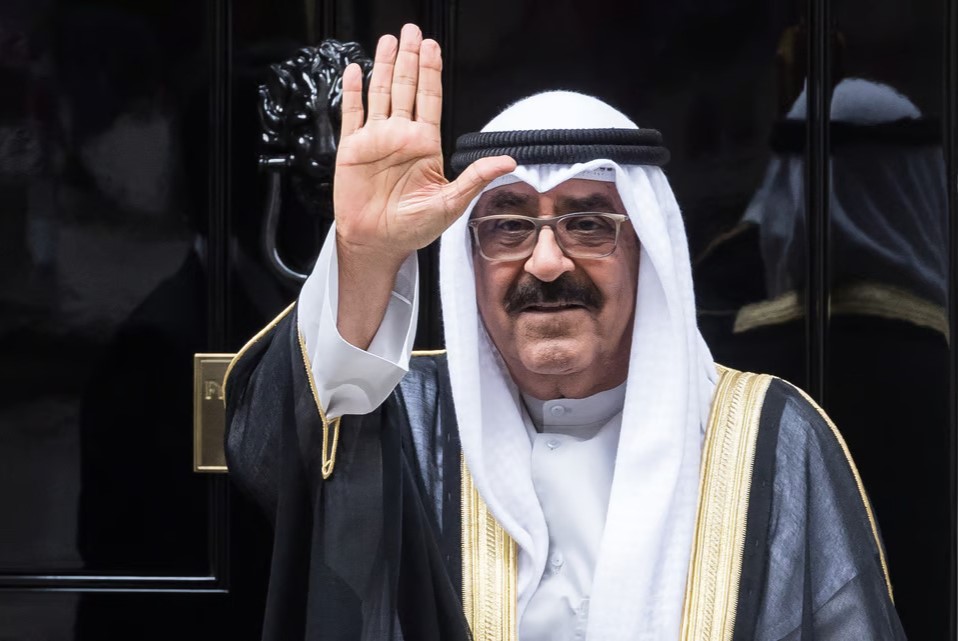
In a significant address marking the final days of Ramadan, Kuwait’s Amir Mishal Al-Ahmad Al-Jaber Al-Sabah called on citizens to maintain vigilance against the spread of misinformation and activities that could potentially undermine national stability and security.
Speaking during the sacred final ten nights of the holy month, Amir Mishal emphasized that protecting Kuwait’s security is not solely the government’s responsibility but a collective duty shared by all citizens. His message highlighted growing concerns about the impact of false information in an increasingly digital media landscape.
“Safeguarding our nation requires every Kuwaiti to remain alert to disinformation campaigns and activities designed to sow discord within our society,” the Amir stated during his address, which was broadcast on state television and shared widely on official social media channels.
The Amir’s warning comes at a time of heightened regional tensions, with Kuwait carefully navigating its diplomatic position amid conflicts affecting several neighboring countries. As a small but oil-rich Gulf state, Kuwait has historically maintained a balanced foreign policy while prioritizing internal stability.
In a separate but equally significant development, Prime Minister Ahmad Abdullah Al-Ahmad Al-Sabah issued a forceful condemnation of what he described as Iranian attacks targeting Kuwaiti territory and other nations in the region. Speaking as the Amir’s representative at a high-level security meeting, the Prime Minister characterized these actions as “flagrant violations” of Kuwait’s sovereignty and international law.
“These aggressive actions contravene not only Kuwait’s territorial integrity but also violate international humanitarian law and the fundamental principles enshrined in the United Nations Charter,” the Prime Minister declared.
The statements come amid escalating tensions in the Gulf region, where Iran’s military activities and proxy conflicts have raised concerns among Gulf Cooperation Council (GCC) members. Kuwait, which shares a maritime border with Iran and is located near strategic shipping lanes in the Persian Gulf, has particular security concerns regarding regional stability.
Political analysts note that Kuwait’s leadership appears increasingly worried about both external threats and internal divisions that could be exploited by regional powers. Dr. Hassan Al-Ansari, a political science professor at Kuwait University, explained that “the dual messages from Kuwait’s highest leadership reflect the complex security environment facing the country, where both information warfare and conventional security threats must be addressed simultaneously.”
Kuwait has historically maintained diplomatic relations with Iran despite periodic tensions, positioning itself as a potential mediator in regional disputes. However, the Prime Minister’s unusually direct criticism signals potential shifts in Kuwait’s stance toward Tehran.
The timing of these statements during Ramadan—traditionally a period of reflection and unity in Muslim-majority countries—adds particular weight to the messages. Ramadan often sees political leaders address their nations on matters of spiritual and national importance.
Kuwait’s oil sector, which accounts for nearly 90% of government revenue, remains particularly vulnerable to regional instability. Any escalation in Gulf tensions could impact global energy markets, where Kuwait ranks as the world’s ninth-largest oil producer with approximately 2.5 million barrels produced daily.
The government has recently increased investments in cybersecurity infrastructure and public awareness campaigns about misinformation, reflecting the Amir’s concerns about information security as a component of national defense.
As Kuwait approaches Eid al-Fitr celebrations marking the end of Ramadan, authorities have enhanced security measures at key infrastructure sites and public gathering places, according to Interior Ministry sources who spoke on condition of anonymity.
The leadership’s warnings underscore Kuwait’s delicate position in a volatile region, where maintaining internal cohesion and territorial security remains paramount amid complex geopolitical challenges that show little sign of abating.
Fact Checker
Verify the accuracy of this article using The Disinformation Commission analysis and real-time sources.

18 Comments
As a small but influential Gulf state, Kuwait’s stability is critical for the region. The Amir’s message on the dangers of disinformation is a timely and important one.
Absolutely. In an era of heightened regional tensions, Kuwait must remain steadfast in protecting its interests and promoting the truth. The Amir’s leadership on this issue is commendable.
It’s important for all citizens to stay vigilant against misinformation that could undermine national stability. Kuwait’s Amir is right to call for collective responsibility in safeguarding the country’s security.
Agreed. In today’s digital age, we must be careful about blindly accepting information and work together to verify facts.
The Amir’s call to action is timely given the rise of misinformation globally. Protecting national security is indeed a shared responsibility, and Kuwaitis must remain vigilant.
Agreed. In an era of widespread online falsehoods, fostering a culture of truth and skepticism towards unverified claims is crucial for Kuwait’s long-term stability.
Kuwait’s strategic location and oil wealth make it a key player in the Gulf. The Amir’s call for vigilance against disinformation is a prudent step to safeguard the country’s security.
Well said. Combating the spread of false information is crucial for Kuwait’s long-term stability and prosperity. The Amir’s message highlights the importance of citizen engagement in this effort.
Kudos to the Kuwaiti Amir for highlighting the importance of combating disinformation. As a small but strategic Gulf state, Kuwait must be proactive in safeguarding its interests.
Well said. Disinformation campaigns can have far-reaching consequences, so Kuwait’s unified approach to this challenge is commendable.
It’s encouraging to see the Kuwaiti leadership taking a strong stance against the spread of misinformation. Maintaining national stability in the face of regional tensions is no easy task.
Agreed. Kuwait’s balanced foreign policy requires constant vigilance, and the Amir’s call for citizen involvement is a wise move to bolster the country’s defenses against malicious actors.
As a small but influential Gulf state, Kuwait must navigate delicate regional dynamics. Maintaining internal stability while promoting truth is a critical challenge facing the country.
Absolutely. Kuwait’s balanced foreign policy is commendable, but combating disinformation campaigns will require ongoing diligence from both the government and the people.
As a small but influential Gulf state, Kuwait’s stability is crucial for the region. The Amir’s message on combating disinformation is timely and underscores the importance of citizens being vigilant against false information.
Well said. In an era of heightened geopolitical tensions, Kuwait must remain steadfast in protecting its interests and promoting the truth. The Amir’s leadership on this issue is commendable.
The Kuwaiti Amir’s warning about the dangers of disinformation is a necessary wake-up call. In an increasingly digital world, all citizens must be proactive in verifying information and safeguarding national interests.
Agreed. Disinformation campaigns can have far-reaching consequences, and Kuwait’s leadership in addressing this challenge is commendable. Maintaining national stability should be a collective responsibility.