


Listen to the article
House Minister Amit Shah Faces Backlash Over Muslim Population Claims
Union Home Minister Amit Shah has sparked controversy with recent statements about Muslim population growth in India, drawing sharp criticism from Congress leaders who accuse him of spreading misinformation and attempting to polarize voters ahead of upcoming elections.
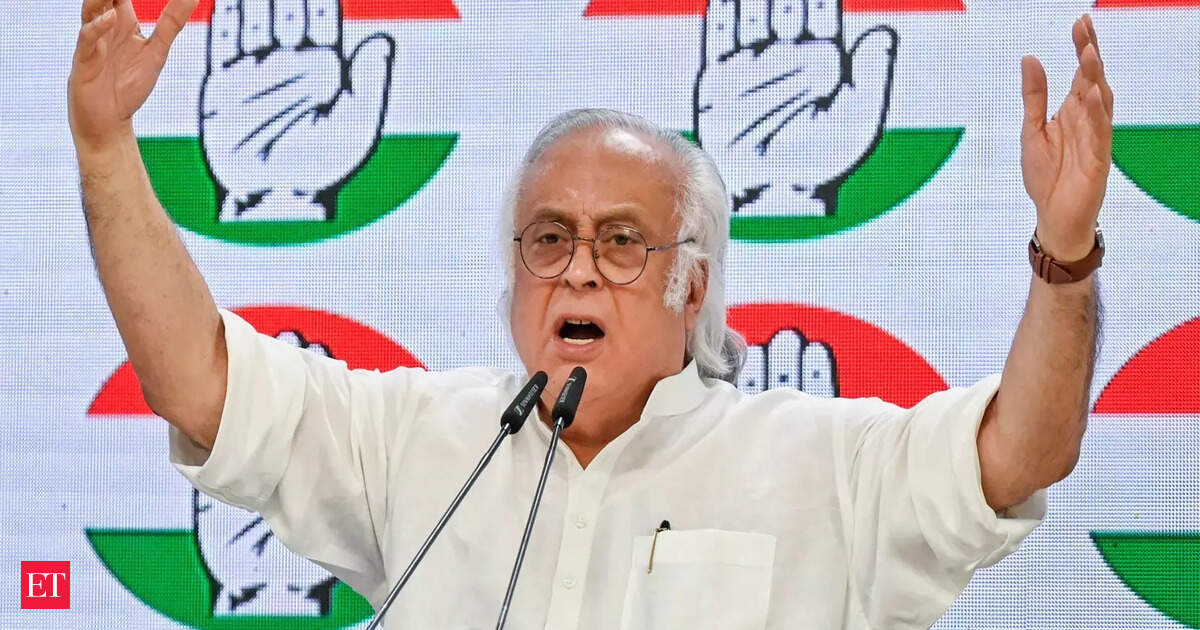
Congress MP Jairam Ramesh, the party’s General Secretary in-charge of Communications, responded forcefully to Shah’s claims by calling him an “indigenously developed WMD – Weapon of Mass Disinformation – as well as a WIMP – Weapon of Intimidatory Mass Polarisation” in a post on social media platform X.
Shah had claimed that from 2001-2011, the Muslim population in India grew at a rate of 24.6 percent compared to a 16.8 percent growth rate for Hindus. The Home Minister attributed this disparity to “infiltration” from neighboring countries, presenting census data showing a gradual increase in the Muslim population percentage from 9.8 percent in 1951 to 14.2 percent in 2011, while the Hindu percentage declined from 84.1 percent to 79 percent over the same period.
“The major reason for the disparity in population growth rates from 1951 to 2011 is infiltration,” Shah stated in his controversial remarks.
Congress MP Pawan Khera also joined the criticism, questioning why Shah, who has served as Home Minister for the past 11 years, had not addressed the alleged infiltration issue during his tenure if he considered it a serious problem.
“If the Muslim population has, as he claims, risen ‘due to infiltration,’ what exactly was the Minister of Home Affairs doing for the last 11 years?” Khera asked in his social media post.
Khera further pointed to what he described as a contradiction in Shah’s statements and the BJP government’s actions, noting that “Between 2005 and 2013, the Congress governments deported 88,792 Bangladeshi nationals. Under BJP rule, less than 10,000 have been deported in 11 years.”
According to Khera, Shah quickly deleted his post after realizing the self-contradiction in his statement. “He quickly realized that he is also the Home Minister and the boomerang he had aimed at Muslims had turned around and found him,” Khera wrote.
The controversy comes at a politically sensitive time, with several state elections on the horizon and growing concerns about religious polarization in Indian politics. Demographic changes have long been a contentious issue in Indian political discourse, particularly regarding the border regions and migration patterns.
Shah’s statements reflect a consistent BJP narrative that has raised concerns about demographic changes, particularly in border states. However, demographers and social scientists have pointed out that differences in population growth rates between religious communities are influenced by multiple factors, including socioeconomic conditions, education levels, and access to healthcare, rather than primarily immigration.
The exchange highlights the increasingly confrontational tone of political discourse in India, with opposition parties accusing the ruling BJP of using religious polarization as an electoral strategy. The Congress party, through its senior leaders like Ramesh and Khera, has been particularly vocal in challenging what they characterize as divisive rhetoric.
As the political temperature rises ahead of upcoming elections, statements about religious demographics are likely to remain a flashpoint in the national conversation, with both ruling and opposition parties attempting to frame the narrative according to their political objectives.
Fact Checker
Verify the accuracy of this article using The Disinformation Commission analysis and real-time sources.
