


Listen to the article
Iran’s AI-Generated Propaganda Videos Mock Trump Administration, Gain Millions of Views
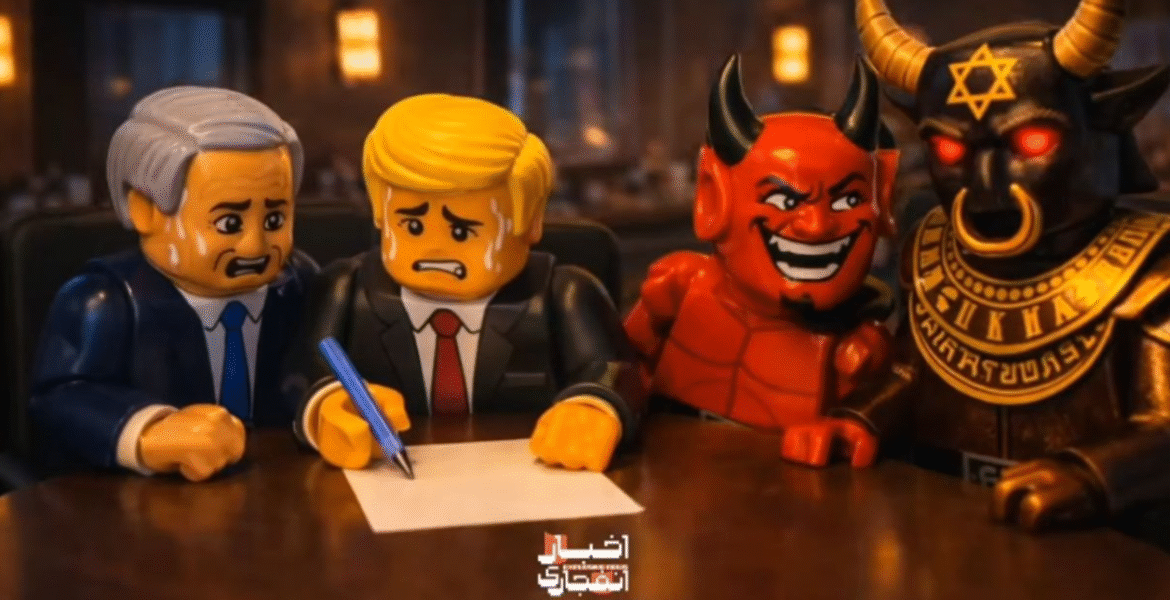
In a striking development in digital propaganda, an Iranian-linked production company has been releasing AI-generated videos depicting political figures like Donald Trump in Lego form, garnering millions of views across social media platforms and potentially shifting online discourse about American foreign policy.
Explosive Media, which counts the Iranian government among its clients, has created dozens of these satirical animations targeting the Trump administration’s foreign policy toward Iran. One particularly notable video shows a tearful Lego Trump walking through rain from a building labeled “Hormuz Strait” to a limousine, where he drinks a Diet Coke while accompanied by a blonde-pigtailed Lego girl. The animation features a taunting soundtrack with lyrics like “Look in the mirror / tell me what you see / big ego crushed / fake reality.”
Other videos in the campaign include equally provocative content: a Lego Pete Hegseth (U.S. Defense Secretary) portrayed as drunk and assaulting a woman, and another showing Lego versions of Trump and Netanyahu conspiring with Satan to bomb a school for girls.
What makes these propaganda efforts particularly effective is their adoption of cultural references that resonate with American audiences. Unlike traditional foreign influence operations, which typically rely on bot networks and targeted advertising to create an illusion of grassroots engagement, Explosive Media has tapped into genuine American public sentiment about an unpopular war and president.
Media analysts suggest that the company has recognized social media’s fundamental principle: content that provokes outrage generates the most engagement. By creating culturally relevant material that mimics Trump’s own confrontational posting style, the Iranian propaganda has achieved viral status. One expert noted the videos succeed because they generate incredulity—the jarring contradiction of a socially conservative Iranian regime using provocative language and imagery that would normally contradict its own domestic policies.
The Trump administration appears to have inadvertently created the conditions for this propaganda’s success. By lowering the standards of political discourse and frequently employing AI-generated content—including videos showing political opponents in compromising situations—Trump’s team established a precedent now being exploited by foreign adversaries. The administration’s focus on “owning the libs” rather than substantive policy discussions has created a template that Iran has effectively replicated.
Social media platforms have struggled to moderate this content. While YouTube has suspended Explosive Media for violations of its violent content and anti-spam policies, much of the material remains accessible on Instagram, X (formerly Twitter), TikTok, and Telegram. The videos’ clear satirical nature—no reasonable person would believe these Lego animations represent actual events—makes them difficult to categorize as harmful misinformation under many platform policies.
The U.S. administration has begun recognizing the threat. Secretary of State Marco Rubio recently sent instructions to American diplomats to “counter anti-American propaganda.” However, this effort faces challenges because many civil servants previously dedicated to such work were reportedly dismissed due to concerns about “conservative censorship,” according to some political observers.
Rubio specifically suggested diplomats use X.com as an “innovative” tool for counter-messaging—a choice that reveals the administration’s primary concern is not international audiences but American citizens who might be influenced by these foreign-created memes and videos.
The situation highlights the evolving nature of information warfare in the AI era. High-quality creative tools are now widely accessible, allowing foreign governments to produce sophisticated propaganda that can resonate with domestic audiences in ways traditional influence operations never could.
As one line from the viral video sardonically states: “Big ego crushed / fake reality,” perhaps inadvertently summarizing the new information landscape where traditional diplomatic messaging struggles to compete with AI-generated Lego music videos for public attention.
Fact Checker
Verify the accuracy of this article using The Disinformation Commission analysis and real-time sources.

18 Comments
Fascinating to see Iran leveraging AI-generated propaganda to gain the upper hand in the information war against the Trump administration. These satirical Lego animations seem designed to mock and undermine U.S. foreign policy in the region.
While the Trump administration’s stance on Iran has been controversial, using AI-generated Lego animations to mock U.S. officials seems like a questionable tactic. We should be wary of the growing threat of technology-enabled disinformation campaigns.
This story highlights the increasingly complex and sophisticated nature of information warfare in the digital age. The Iranian government’s use of AI-generated videos to mock the Trump administration is a bold tactic, and it will be important to see how it plays out on the global stage.
While these Lego-style videos are undoubtedly provocative, they do seem to be tapping into a growing anti-Trump sentiment, at least among certain online audiences. Iran is clearly trying to gain the upper hand in the information war, but the long-term implications remain to be seen.
These AI-generated Lego videos targeting the Trump administration are an innovative approach to propaganda, but I worry about their potential to mislead and sway public opinion. We need to be vigilant in identifying and calling out the use of technology-enabled disinformation campaigns.
Fascinating how Iran is using AI-generated videos to turn the propaganda tables on the Trump administration. These satirical Lego animations certainly seem to be gaining traction and shifting the online discourse. I wonder what the long-term impact will be.
The Iranian government’s use of AI-powered propaganda to gain the upper hand in the information war against the Trump administration is a concerning development. It underscores the need for greater scrutiny and verification of online content, especially when it comes to sensitive geopolitical issues.
I’m curious to learn more about the technology behind these AI-generated videos. How advanced is the artificial intelligence being used, and what are the implications for the future of digital propaganda? This is a concerning development that warrants further investigation.
I agree, the use of AI in propaganda is a troubling trend that needs to be closely monitored. The ability to create highly realistic, yet fabricated, content is a powerful tool that can be easily abused.
I’m concerned that these AI-powered videos could become a powerful tool for Iran to spread its narrative and undermine U.S. foreign policy. We need to be cautious about the rise of technology-enabled disinformation campaigns.
The Iranian government is clearly getting creative with its digital propaganda tactics. These AI-generated videos mocking Trump and his foreign policy team are both amusing and concerning. It will be interesting to see how the U.S. responds, if at all.
You raise a good point. The U.S. administration will likely feel pressure to counter this type of propaganda, but any heavy-handed response could backfire and amplify Iran’s messaging even further.
These Lego-style videos targeting the Trump administration are an imaginative use of AI, but I worry about the potential to mislead viewers and sway public opinion through such slick, satirical content. We need to be vigilant about verifying the accuracy of online media.
While the Trump administration’s stance on Iran has been contentious, using AI-powered propaganda to mock U.S. officials is a concerning development. It underscores the growing threat of technology-enabled disinformation campaigns.
The Iranian government’s use of AI-generated propaganda to go after the Trump administration is a bold tactic. It will be interesting to see how this plays out in the ongoing information war between the two countries.
It’s concerning to see the Iranian government leveraging AI to create such provocative and potentially misleading propaganda targeting the Trump administration. We need to be vigilant in assessing the accuracy of online media, especially when it comes to foreign policy issues.
I’m curious to see how effective these AI-generated videos will be at shifting public discourse around Iran-U.S. relations. The provocative content and viral nature of the campaign could make it a powerful propaganda tool for Iran.
You raise a good point. The use of AI-generated content to spread disinformation is a concerning trend that we’ll likely see more of. It will be important to scrutinize the veracity of these types of videos.