


Listen to the article
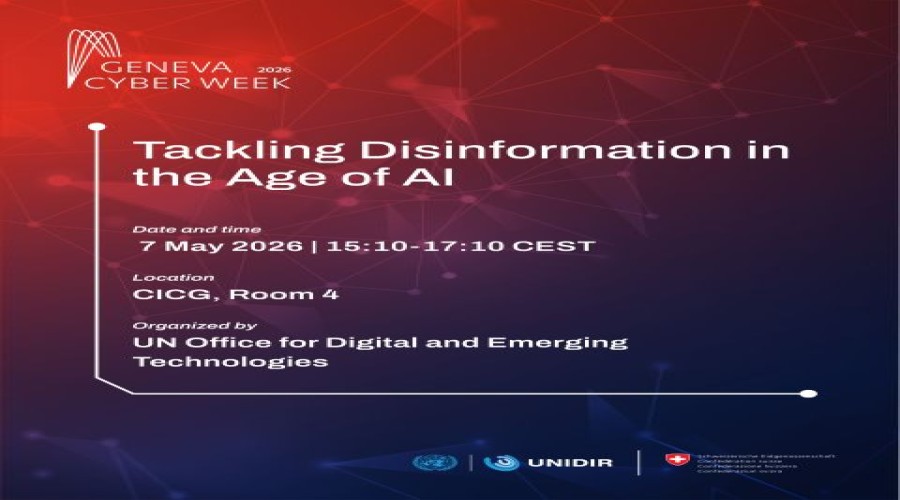
In a major development for the global cybersecurity calendar, organizers have announced that the 2026 edition of Geneva Cyber Week will place special emphasis on combating artificial intelligence-driven disinformation campaigns and safeguarding information integrity across digital platforms.
The prestigious event, scheduled to take place in Geneva, Switzerland, will bring together cybersecurity experts, policymakers, technology leaders, and academics from around the world to address what many consider the defining digital challenge of our era.
“The proliferation of sophisticated AI tools has dramatically changed the landscape of online disinformation,” said Dr. Marta Khoury, chairperson of the Geneva Cyber Week organizing committee. “What we’re witnessing now is not just the spread of false information, but the creation of entirely fabricated realities that can be almost indistinguishable from truth.”
The announcement comes amid growing international concern about the role of AI in spreading misinformation across social media platforms, news websites, and messaging applications. Recent incidents involving deepfake videos of political figures and AI-generated crisis scenarios have demonstrated the potential for such technologies to disrupt democratic processes and undermine public trust in institutions.
Switzerland’s selection as the host country continues the nation’s tradition of providing neutral ground for addressing complex international challenges. The Swiss Federal Council has pledged substantial support for the event, recognizing cybersecurity as a critical component of national and economic security.
Industry analysts note that the timing of Geneva Cyber Week coincides with the expected global implementation of several major regulatory frameworks focused on AI governance and digital content authenticity. The European Union’s Digital Services Act will be fully operational by then, while similar regulations in North America and parts of Asia are expected to come into effect around the same period.
“We’re approaching a critical juncture where technology, policy, and public awareness must align to preserve the integrity of our information ecosystem,” explained Professor Jean-Paul Moreau of the Geneva Center for Security Policy. “The 2026 conference aims to facilitate practical solutions rather than just theoretical discussions.”
The week-long event will feature specialized tracks addressing various dimensions of the disinformation challenge. These include technical workshops on content authentication systems, policy roundtables on cross-border enforcement mechanisms, and sessions dedicated to media literacy and public education initiatives.
Several major technology companies have already confirmed their participation, including representatives from Silicon Valley giants and emerging cybersecurity firms from Africa, Asia, and Europe. Notably, the conference will place special emphasis on including perspectives from regions frequently underrepresented in global cybersecurity dialogues.
“What happens in the Global South regarding information integrity is just as important as what happens in more developed markets,” said Nandi Mwangi, director of the East African Cybersecurity Alliance. “We’re pleased to see Geneva Cyber Week taking a truly global approach to this challenge.”
Economic implications will also feature prominently at the conference. A recent World Economic Forum report estimated that AI-driven disinformation could cost the global economy over $300 billion annually by 2026 through market manipulation, reputation damage to businesses, and decreased consumer confidence in digital services.
Beyond addressing immediate threats, the conference aims to develop a sustainable framework for protecting information integrity while preserving innovation. Panels will explore how authentication technologies, regulatory approaches, and industry standards can work together without stifling technological advancement.
“This isn’t about reversing digital progress,” said Dr. Khoury. “It’s about ensuring that our digital future remains anchored in reality and truth.”
Registration for Geneva Cyber Week 2026 is expected to open in early 2025, with early projections suggesting it may become the largest gathering of cybersecurity professionals focused specifically on information integrity to date. Organizers are currently finalizing the full agenda and speaker lineup, with formal announcements expected in the coming months.
Fact Checker
Verify the accuracy of this article using The Disinformation Commission analysis and real-time sources.

10 Comments
The organizers are right to prioritize information integrity in the face of AI-enabled misinformation. This conference could have far-reaching implications for digital platforms and society.
Fascinating that Geneva Cyber Week is focusing on this issue. Safeguarding digital information is paramount in our increasingly AI-powered world. Looking forward to seeing the outcomes.
Yes, the proliferation of deepfakes and fabricated content is a major concern that needs to be addressed head-on. This conference is timely and important.
Addressing AI-powered disinformation campaigns is essential for maintaining public trust and democratic discourse. I’m glad to see this issue being prioritized at Geneva Cyber Week.
Addressing AI-driven disinformation is critical for maintaining public trust and information integrity. This conference will bring much-needed expertise to tackle this growing challenge.
I agree, the widespread use of AI for malicious disinformation campaigns is truly alarming. This event could provide valuable insights and solutions.
Kudos to the Geneva Cyber Week organizers for taking on this critical issue. AI-driven disinformation is a serious threat that demands coordinated global action.
Absolutely. This event is a valuable opportunity to develop effective countermeasures and strengthen international cooperation in this domain.
AI-driven disinformation is a complex challenge, but I’m hopeful this event will yield practical strategies for combating it. Bringing together experts from diverse backgrounds is crucial.
Agree, a multidisciplinary approach is essential to tackle this problem effectively. Looking forward to seeing the policy recommendations and technological solutions proposed.