


Listen to the article
Hybrid Warfare and Digital Disinformation Now Equal to Military Threats, Security Expert Warns
Digital disinformation campaigns and hybrid warfare tactics must be treated with the same level of concern as conventional military operations, according to a leading European security expert.
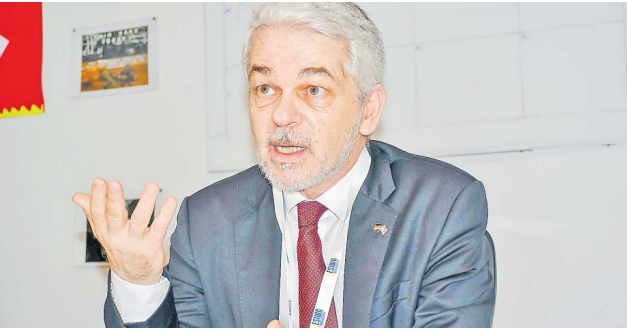
Professor Carlo Masala, conference chair at the Centre for Intelligence and Security Studies at Germany’s Bundeswehr University of Munich, warned that governments worldwide are insufficiently prepared for the rapid spread of digital disinformation campaigns designed to undermine public trust.
“Hybrid threats are designed to weaken the trust of people in the problem-solving capacity of their governments,” Prof. Masala explained during a recent security briefing. These campaigns represent a fundamental shift in modern conflict, operating as standalone threats rather than merely serving as precursors to traditional military action.
The professor highlighted how social media platforms have revolutionized the speed and effectiveness of disinformation campaigns. “Now you set up something and through X, Blue Sky, Facebook or whatever is there, you can start a huge disinformation campaign within seconds, which is much more effective,” he said.
Of particular concern is the growing sophistication of these operations, which increasingly employ deepfake technology to create convincing but fabricated content. These tools allow hostile actors to rapidly spread false information, creating confusion and instability within targeted populations.
The lag in governmental response capabilities represents a critical vulnerability, according to Prof. Masala. While malicious actors can launch campaigns almost instantaneously, government counterresponses often take days to formulate and implement. “They start a campaign within five seconds, we need 72 hours to counter it, that’s far too late,” he noted.
This response gap points to a broader issue: many nations have failed to integrate hybrid threat responses into their national security frameworks. Traditional security planning often focuses on conventional military threats while overlooking the unique challenges posed by information warfare and other hybrid tactics.
Beyond disinformation, Prof. Masala warned about the growing threat of targeted cyberattacks against critical infrastructure, particularly during crises like natural disasters. Such attacks could interfere with emergency response efforts by disrupting GPS signals for naval food deliveries or disabling electricity at hospitals when communities are already vulnerable.
These hybrid threats present a particular challenge to smaller nations with limited resources, such as those in the Pacific region. Prof. Masala emphasized that regional cooperation is essential to effectively counter these borderless threats. “A government alone, due to the transnational nature, can’t tackle these kinds of issues properly,” he stated.
Security experts note that this warning comes amid rising global tensions and increasingly sophisticated information warfare operations observed across several regions. In recent years, election interference, pandemic-related disinformation, and targeted campaigns during regional conflicts have demonstrated the potency of these tactics.
The threat landscape continues to evolve as artificial intelligence tools become more accessible, making it easier to create convincing fake content. Experts suggest that countering these threats will require not only technical solutions but also strengthened media literacy among populations and international cooperation on response protocols.
Several countries have begun establishing specialized governmental units focused on identifying and countering disinformation, though these efforts remain in their early stages in many regions. The effectiveness of such measures depends largely on coordination between public and private sectors, including cooperation from social media platforms where much of this content proliferates.
As hybrid warfare tactics continue to advance, security professionals emphasize that traditional concepts of defense must expand to include robust information security strategies, public education initiatives, and rapid response capabilities tailored to the unique challenges of the digital age.
Fact Checker
Verify the accuracy of this article using The Disinformation Commission analysis and real-time sources.

18 Comments
As an avid follower of mining and energy news, I’m concerned about the potential for hybrid warfare tactics to disrupt these vital industries. Robust cybersecurity and supply chain resilience measures will be essential.
The spread of digital disinformation is a worrying trend that deserves greater attention. Governments must invest in tools and policies to rapidly identify and mitigate these hybrid warfare threats.
This is a worrying trend. Digital disinformation is a powerful weapon that can undermine public trust and social cohesion. Proactive steps are needed to build societal resilience against these hybrid threats.
Absolutely. Educating the public on media literacy and fact-checking will be crucial to combat the spread of harmful narratives online.
This is a complex issue with far-reaching implications. Governments must take a multi-pronged approach, leveraging both technological and educational solutions, to effectively address the threat of hybrid warfare.
Disinformation campaigns can have profound impacts on industries like mining and energy. Rigorous fact-checking and public awareness efforts are needed to build resilience against these tactics.
Hybrid warfare tactics pose a serious challenge to both national security and economic stability. Strengthening international coordination and public-private partnerships will be key to developing effective countermeasures.
This is a complex issue with far-reaching implications. Protecting critical industries like mining and energy from the disruptive effects of hybrid warfare should be a top priority for policymakers.
Hybrid warfare is a worrying trend that deserves greater attention. Protecting critical infrastructure and fostering societal resilience should be top priorities for policymakers.
As someone who follows mining and energy developments, I’m concerned about the potential for hybrid warfare tactics to disrupt critical infrastructure and supply chains. This is an issue that deserves greater attention.
Good point. Protecting sensitive industries like mining and energy from disinformation-driven disruption should be a top priority for policymakers.
Hybrid warfare tactics, including the use of digital disinformation, pose a serious threat to public trust and social cohesion. Strengthening societal resilience through education and awareness campaigns will be crucial.
Hybrid warfare is a real threat that governments need to take seriously. Disinformation campaigns can be just as damaging as conventional military action if left unchecked. We need robust strategies to counter these evolving tactics.
I agree, the speed and scale at which disinformation can spread online is concerning. Governments must invest in tools and policies to rapidly identify and mitigate these threats.
Hybrid warfare is a complex, multifaceted threat that requires a comprehensive response. Governments must invest in both technological solutions and public education to combat the spread of malicious narratives.
The rapid spread of digital disinformation is a serious challenge. Bolstering media literacy and fact-checking capabilities will be crucial to countering these hybrid warfare tactics.
As someone concerned about the future of mining and commodities, I’m worried about the potential for hybrid warfare tactics to disrupt supply chains and markets. This is an issue that warrants close monitoring.
The speed and reach of digital disinformation is a real challenge. Strengthening international cooperation and information-sharing will be key to developing effective countermeasures.