


Listen to the article
The European Union unveiled its Democracy Shield proposal on Wednesday, a scaled-back initiative aimed at combating disinformation and foreign election interference across the bloc. The plan represents a significant retreat from European Commission President Ursula von der Leyen’s more ambitious vision outlined in her September State of the European Union address, where she declared that “our democracy is under attack.”
While the Commission’s proposal explicitly identifies Russia as a primary threat to European democracy, citing its “brutal war of aggression against Ukraine” and escalating “hybrid attacks” against Europe, critics argue the initiative deliberately avoids addressing similar activities originating from Western allies, particularly the United States.
The Democracy Shield initiative promises to monitor disinformation campaigns and establish a European Centre for Democratic Resilience. It also includes a Media Resilience Programme intended to support independent journalism and media literacy across the bloc. However, these components come with significant caveats – participation will be voluntary for EU member states, with repeated assurances that freedom of expression will be protected.
According to sources speaking to Euractiv, the proposal was substantially watered down at the direction of von der Leyen’s cabinet, reportedly to avoid diplomatic tensions with the United States. Many elements presented as new in the Democracy Shield package actually repackage existing provisions from previous legislation, including the Digital Services Act and AI Act, along with a €5 million fact-checking program.
The timing of this retreat coincides with increasing pressure from U.S. Republican lawmakers, who held a Congressional hearing in September titled “Europe’s threat to American speech and innovation.” In July, the U.S. House of Representatives Judiciary Committee released a report characterizing the EU’s digital rules as a “foreign censorship threat,” claiming European regulators target “core political speech” in a manner biased against conservatives. Some Republican lawmakers have even suggested imposing sanctions on European officials who enforce EU digital regulations.
The liberal Renew Europe group in the European Parliament has criticized the proposal’s lack of ambition. Austrian MEP Helmut Brandstätter called it “uninspiring” and “dangerously insufficient” given the current geopolitical climate. “While it would be acceptable in peacetime, in the current geopolitical situation it is dangerously insufficient,” Brandstätter stated, adding that Parliament would push for more effective legislation.
Critics point to numerous examples of U.S. political figures intervening in European politics. In May, U.S. Secretary of Homeland Security Kristi Noem campaigned for far-right Polish presidential candidate Karol Nawrocki, who subsequently won the election. Earlier this year, U.S. Vice President JD Vance criticized European governments over free speech concerns at the Munich Security Conference before meeting with leaders of Germany’s far-right Alternative for Germany party.
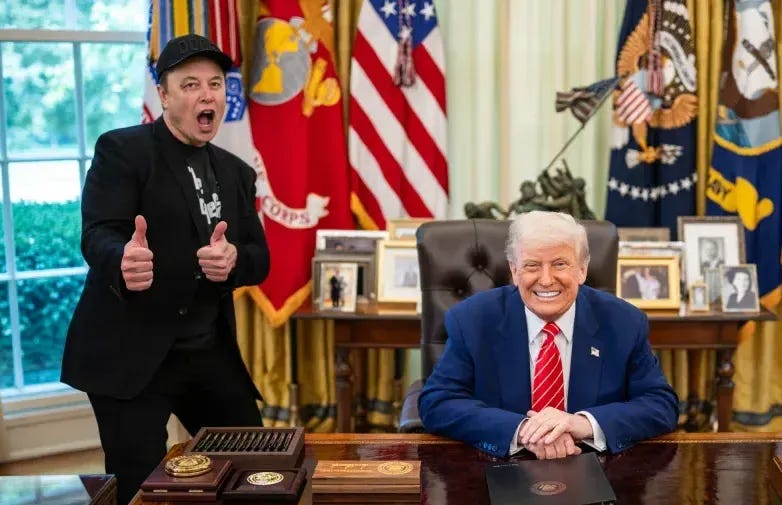
The controversy extends to social media platforms as well. Elon Musk, who holds significant influence in the current U.S. administration, has used his social network X to spread contested claims about British politics, including calling for UK Prime Minister Keir Starmer’s imprisonment and suggesting American intervention in British affairs.
A May post on the U.S. State Department’s Substack described a need for “Civilizational Allies in Europe,” arguing that centrist European governments are waging an “aggressive campaign against Western civilization itself” and suggesting Europe should return to its “Christian heritage.”
These developments create a challenging position for EU leaders, who find themselves caught between acknowledging Russian disinformation efforts while remaining largely silent on similar activities originating from Western allies. The result is a Democracy Shield that critics argue cannot effectively counter the full spectrum of threats facing European democratic institutions.
As the initiative moves forward, the European Parliament has signaled it will push for strengthening the proposal, setting up a potential institutional clash over how broadly to define and address foreign interference in European democracy.
Fact Checker
Verify the accuracy of this article using The Disinformation Commission analysis and real-time sources.

18 Comments
While the EU’s efforts to combat disinformation are commendable, the Democracy Shield’s limitations in addressing Western allies’ influence are worrying. A truly impartial approach is needed to safeguard European democracy.
Well put. Selective targeting of threats will only undermine the program’s credibility and effectiveness. A comprehensive, unbiased framework is essential.
The Democracy Shield is a laudable initiative, but its voluntary nature and selective focus on Russia raise concerns. For it to be effective, the program needs to be comprehensive and mandatory across the EU.
Agreed. Disinformation campaigns can originate from various state and non-state actors, so a truly robust defense must address threats from all directions, including US-based ones.
While the EU’s efforts to combat disinformation are commendable, the Democracy Shield’s limitations in addressing Western influence are troubling. For the program to be effective, it needs to be mandatory and impartial, monitoring and countering threats from all sources, including US-based actors.
Well said. Ignoring potential interference from Western allies could leave the EU vulnerable and undermine the credibility of the entire initiative.
Interesting proposal to address disinformation and foreign election interference in the EU. Curious to see how it will be implemented and if it can effectively counter threats from all sides, including Russia and Western allies.
Agree, the voluntary nature and avoidance of addressing US influence is concerning. Robust, impartial monitoring will be key to the program’s success.
The Democracy Shield is a laudable initiative, but its selective focus on Russia and voluntary nature are concerning. For the EU to truly protect its democratic processes, the program needs to be mandatory and impartial in its approach to all foreign interference, regardless of the source.
Absolutely. A comprehensive, unbiased framework that addresses disinformation campaigns from all actors, including Western allies, is essential for the EU’s democratic resilience.
I appreciate the EU’s effort to bolster democratic resilience, but the exclusion of the US from scrutiny is puzzling. Disinformation knows no borders, and a truly effective shield must be impartial.
Well said. If the EU wants to protect its democracy, it needs to be willing to hold all bad actors accountable, without fear or favor.
The Democracy Shield is a step in the right direction, but its voluntary nature and reluctance to address US-based disinformation campaigns are concerning. For the EU to truly protect its democratic processes, the program needs to be mandatory and impartial.
Agreed. A robust, equitable system that monitors and counters foreign interference from all sources, including Western allies, is crucial for the EU’s democratic resilience.
The Democracy Shield seems like a step in the right direction, but the lack of teeth and focus on only Russia is worrying. Disinformation from all sources, including allies, needs to be addressed.
Absolutely. A truly effective program would need to be mandatory and comprehensive in its approach to combating foreign interference, regardless of the source.
While the EU’s efforts to combat disinformation are commendable, the Democracy Shield’s limitations in addressing Western influence raise questions about its true effectiveness. A truly impartial and comprehensive approach is needed to safeguard European democracy.
Well said. Ignoring potential threats from Western allies undermines the program’s credibility and could leave the EU vulnerable to manipulation from various sources.