


Listen to the article
Scientists Warn of Growing “Antiscience Virus” Threatening Global Response to Crises
Two prominent scientists who experienced Australia’s black summer bushfires and the COVID-19 pandemic in the United States have issued a stark warning about what they describe as an “antiscience virus” of weaponized disinformation that undermines society’s ability to address critical challenges.
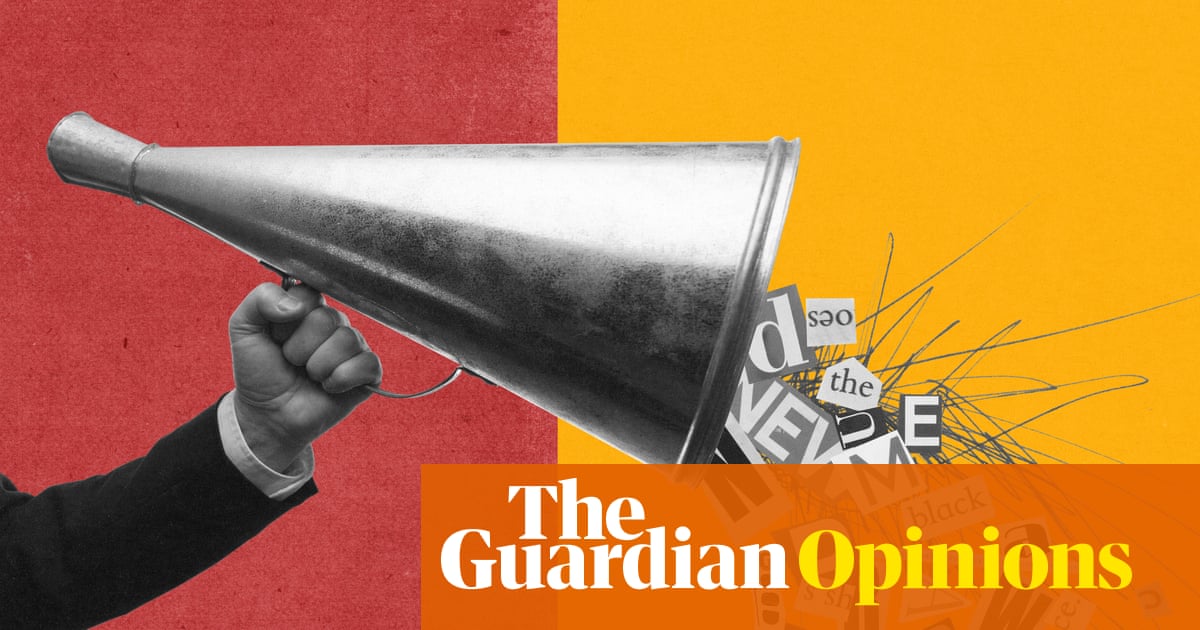
Michael E. Mann, presidential distinguished professor at the University of Pennsylvania, and Peter Hotez, professor and dean of the National School of Tropical Medicine at Baylor College of Medicine-Texas Children’s hospital, identify five interconnected forces behind what they call an “assault on science and reason.” Dubbed the “five Ps,” these forces include plutocrats, petrostates, paid promoters of anti-science, propagandists, and portions of the media.
According to the scientists, this network of actors includes wealthy individuals in the United States and Australia, libertarian technology entrepreneurs, and oil-rich nations such as Russia and Saudi Arabia. They utilize social media, podcasts, and conservative news outlets to spread fossil fuel-friendly messaging that undermines climate action and public health measures, including vaccination campaigns.
“The objective is to inundate the public with propaganda that portrays scientists as enemies or villains,” they explain. “The well of public opinion critical to informed voting is poisoned.”
The scientists draw a sharp contrast between Australia and the United States in their responses to scientific evidence. While visiting Australia during the 2020 black summer, Mann observed the threat posed by climate denialism in the Murdoch media empire, which has significant influence in Australia’s media landscape. Nevertheless, Australians have shown remarkable resilience against disinformation campaigns.
Though not without criticism—the current Labor government continues to face scrutiny for supporting expanded fossil fuel infrastructure—Australia has chosen a government that respects science, even if falling somewhat short of its climate commitments. Prime Minister Anthony Albanese has recognized climate change as an existential threat, standing in stark contrast to former U.S. President Donald Trump, who dismissed it as a hoax.
The scientists’ comparison extends to pandemic responses. Texas, where Hotez lives and works, has approximately the same population as Australia but recorded roughly 90,000 COVID-19 deaths by September 2022—almost four times Australia’s total. They note that approximately 40,000 of those Texans had refused COVID-19 immunizations after they became widely available.
Mann and Hotez attribute these divergent paths to several factors. Australia’s electoral system, with its compulsory voting, absence of partisan districting, and preferential “ranked choice” voting, has allowed the country to elect a more climate-forward government despite widespread climate disinformation from conservative media outlets.
In contrast, the United States suffers from partisan gerrymandering, low voter turnout, and polarized two-party politics that marginalize moderates. This has resulted in electoral representation that contradicts majority public opinion. For instance, a 2023 Gallup poll found that 61% of U.S. adults were concerned about the climate crisis, yet U.S. policies are currently set by a party that largely denies climate change exists.
While some U.S. states are moving toward ranked choice voting, the scientists believe substantial changes to the American electoral system are unlikely in the near term. Instead, they advocate addressing the problem at its source: the well-financed antiscience disinformation machine.
In 2021, Mann testified before an Australian Senate media diversity inquiry against the Murdoch disinformation network, alongside former Prime Minister Malcolm Turnbull. Following these hearings, biennial assessments monitoring media diversity were established, with the first report issued earlier this year.
The scientists highlight the Australian Broadcasting Corporation’s decision to broadcast a documentary series titled “Fox and the Big Lie” despite objections from the Murdoch family. They argue that media entities spreading climate and COVID-19 disinformation should be held accountable, much like those that have faced consequences for promoting falsehoods about the 2020 U.S. election.
Mann and Hotez elaborate on these challenges in their new book, “Science Under Siege: How to Fight the Five Most Powerful Forces That Threaten Our World,” which examines strategies to combat the disinformation networks they believe threaten human civilization.
Fact Checker
Verify the accuracy of this article using The Disinformation Commission analysis and real-time sources.

19 Comments
As someone who follows the mining and commodities sector, I’m alarmed by the potential impact of disinformation campaigns on public perceptions and policy decisions.
Agreed. The mining industry needs to be more proactive in countering misinformation and demonstrating its role in the clean energy transition.
The scientists’ warnings about the network of actors spreading disinformation are eye-opening. We need a coordinated, multi-pronged response to counter their influence.
Agreed. Governments, tech platforms, media outlets, and civil society all have a role to play in combating the spread of misinformation.
As an investor in mining and energy stocks, I’m concerned about how disinformation campaigns could impact the policy environment and public sentiment towards these industries.
This article highlights the urgency of the situation. Protecting the integrity of research and public discourse should be a top priority for governments, companies, and civil society.
Absolutely. We can’t afford to be complacent in the face of such coordinated disinformation campaigns.
Disinformation is a major obstacle to addressing critical challenges like climate change. We need to find ways to restore trust in science and objective facts.
This article highlights the urgency of addressing the ‘antiscience virus’ before it causes even more damage. Restoring public trust in institutions and expertise must be a top priority.
As an investor in the mining and energy sectors, I’m concerned about how disinformation could impact policy decisions and public sentiment towards these industries.
This is a complex issue without easy solutions, but we can’t afford to be complacent. Protecting science and reason should be a unifying cause across the political spectrum.
Well said. Defending the integrity of our institutions and democratic discourse is critical for tackling the global challenges we face.
The ‘five Ps’ identified in this article – plutocrats, petrostates, paid promoters, propagandists, and portions of the media – are deeply concerning. We must find ways to counter their influence.
Absolutely. Shining a light on these actors and their tactics is an important first step. Strengthening media literacy and critical thinking skills in the public is also crucial.
Disinformation is a serious threat to scientific progress and fact-based decision making. Protecting the integrity of research and public discourse should be a top priority.
Agreed, we need to combat the spread of misinformation and ensure policymakers and the public have access to reliable, evidence-based information.
As someone who follows the mining and energy sectors, I’m worried about the impact of disinformation campaigns on public discourse and policy decisions around issues like climate change.
Me too. Responsible companies in these industries should be vocal advocates for science-based solutions, not part of the problem.
The ‘antiscience virus’ described in this article is a serious threat that demands a robust response. I hope policymakers and the public take these warnings seriously.