


Listen to the article
Former NATO Commander Dismisses Charges Against Kosovo’s Ex-President Thaçi
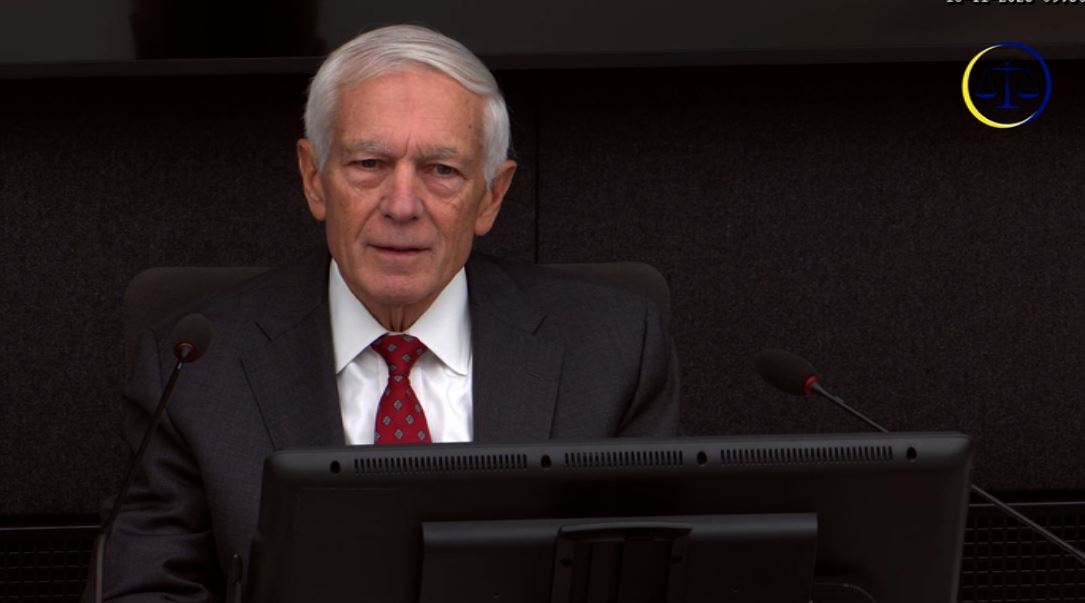
Former NATO Supreme Allied Commander Europe, General Wesley Clark, testified before the Kosovo Specialist Chambers that accusations against Kosovo’s former president Hashim Thaçi lack substance, casting doubt on the war crimes case that has kept Thaçi in pre-trial detention for five years.
During his testimony, Clark revealed he was initially unaware of the specific charges against Thaçi when he first commented on the case in 2020. “The accusations I had in my mind were organ-trafficking allegations. I have the impression that during the 2007–2008 period, there were accusations against the KLA about organ trafficking, and personally I consider those to have been nothing more than disinformation,” Clark stated.
When pressed by prosecutor Matt Halling on whether the charges against Thaçi were substantial, Clark emphatically denied their validity. His testimony carries significant weight given his role during the Kosovo conflict when NATO intervened against Serbian forces in 1999.
Clark characterized Thaçi as “ambitious and articulate” but disputed claims that Thaçi exercised control over the Kosovo Liberation Army (KLA), a central element of the prosecution’s case. “In terms of control, he certainly did not have absolute authority — I never saw such a thing, because these elements did not have the structure that a normal organization would have,” Clark explained, adding that KLA fighters were “individuals and groups that were simply fighting for their survival.”
The prosecution attempted to counter Clark’s assessment by referencing British General Mike Jackson’s book, which described a tense meeting where Thaçi allegedly told NATO representatives, “Nobody plays games with the KLA,” and warned, “If you think you can give us instructions, then you are wrong, and you will regret it.”
Clark’s appearance marks the conclusion of the defense’s presentation of evidence, which began on September 15 with testimony from former U.S. Assistant Secretary of State James Rubin. Other defense witnesses included Paul Williams, former legal adviser to the Albanian delegation at the Rambouillet peace talks; John Stewart Duncan, former political adviser to Clark at NATO; and James Peter Covey, who served as deputy to UN representative Bernard Kouchner in Kosovo.
The trial has drawn significant attention across the Balkans and within Kosovo’s diaspora communities. Four protests supporting the former KLA leaders have been held in Pristina, The Hague, Tirana, and Strasbourg. November 5 marked five years since Thaçi and three other former KLA leaders were placed in pre-trial detention at the specialized court in The Hague.
The Kosovo Specialist Chambers, established in 2015, operates within the Kosovo legal system but is staffed by international judges and prosecutors. It was created following a 2011 Council of Europe report that alleged serious crimes during and after Kosovo’s 1998-1999 war for independence from Serbia, including allegations against KLA members.
The court has announced that November 14 will mark the end of the defense phase. Final submissions and statements on the impact of the alleged crimes on victims are expected by December 22, 2025, indicating the complex case still has a substantial way to go before reaching a verdict.
All four former KLA leaders, including Thaçi who resigned as Kosovo’s president in 2020 to face the charges, have consistently maintained their innocence. The case continues to stir strong emotions in Kosovo, where many view the KLA leaders as liberation heroes rather than war criminals.
Fact Checker
Verify the accuracy of this article using The Disinformation Commission analysis and real-time sources.

12 Comments
General Clark’s testimony raises valid concerns about the credibility of the charges against Thaçi. As a former NATO commander with firsthand experience of the Kosovo conflict, his assessment of the ‘disinformation’ around organ-trafficking allegations deserves serious consideration by the court.
General Clark’s testimony provides a valuable counterpoint to the prosecution’s case against Thaçi. His characterization of the organ-trafficking allegations as ‘disinformation’ and his assessment of Thaçi as ‘ambitious and articulate’ rather than a war criminal are significant insights that warrant careful consideration by the court.
It’s good to see a respected military leader like General Clark testifying on this sensitive case. His experience and perspective could help shed light on the political dynamics and potential misinformation surrounding the allegations against Thaçi. I’m curious to learn more about the nuances of this complex situation.
I agree, Clark’s testimony provides an important counterpoint to the charges against Thaçi. As a former NATO commander, his insights on the broader context of the Kosovo conflict and the credibility of these claims carry a lot of weight.
General Clark’s comments raise important questions about the credibility of the charges against Thaçi. As a former NATO commander, his assessment of the ‘disinformation’ around organ-trafficking allegations is significant. This case seems to be more complex than it first appeared.
The dismissal of the organ-trafficking claims by General Clark, a respected military leader, is an important development in this case. His testimony highlights the need for a thorough, impartial investigation to determine the validity of the charges against Thaçi and avoid the spread of potential misinformation.
It’s interesting to see a respected military leader like General Clark testify on this sensitive case. His dismissal of the organ-trafficking claims as ‘disinformation’ and his overall assessment of the charges against Thaçi raise important questions about the validity of the prosecution’s case. This highlights the need for a thorough, impartial examination of all the evidence.
Clark’s testimony casts doubt on the war crimes case against Thaçi, particularly the organ-trafficking claims. It will be interesting to see how this testimony is received and what other evidence or witnesses may emerge to further clarify the situation.
It’s notable that General Clark was initially unaware of the specific charges against Thaçi, and then dismissed the organ-trafficking claims as ‘disinformation’. His testimony provides an important counterpoint to the prosecution’s case and highlights the need for a thorough, impartial examination of the evidence.
Agreed. Clark’s testimony underscores the importance of carefully scrutinizing the evidence and claims in this sensitive case, rather than relying on potentially flawed or politically motivated narratives.
The dismissal of the organ-trafficking allegations as ‘disinformation’ by General Clark is noteworthy. Given his involvement in the Kosovo intervention, his perspective on the validity of the charges against Thaçi deserves close attention as this case continues to unfold.
Interesting developments in the Thaçi case. General Clark’s dismissal of the organ-trafficking claims as ‘disinformation’ carries significant weight given his role during the Kosovo conflict. I wonder what other evidence or insights he can provide on the overall validity of the charges against Thaçi.