


Listen to the article
In a somber development from one of America’s most scenic national parks, search and rescue crews in Glacier National Park have recovered the body of a missing hiker, with officials reporting that the victim’s injuries appear consistent with a bear attack. Reports indicate an empty canister of bear spray was found near the body, raising questions about the effectiveness of commonly recommended safety measures in bear country.
The incident has reignited a contentious debate about human-wildlife coexistence, particularly regarding grizzly bears in the Northern Rockies. This discussion frequently intersects with broader cultural divisions—urban versus rural perspectives and differing attitudes toward firearms—often preventing critical safety information from reaching those who need it most.
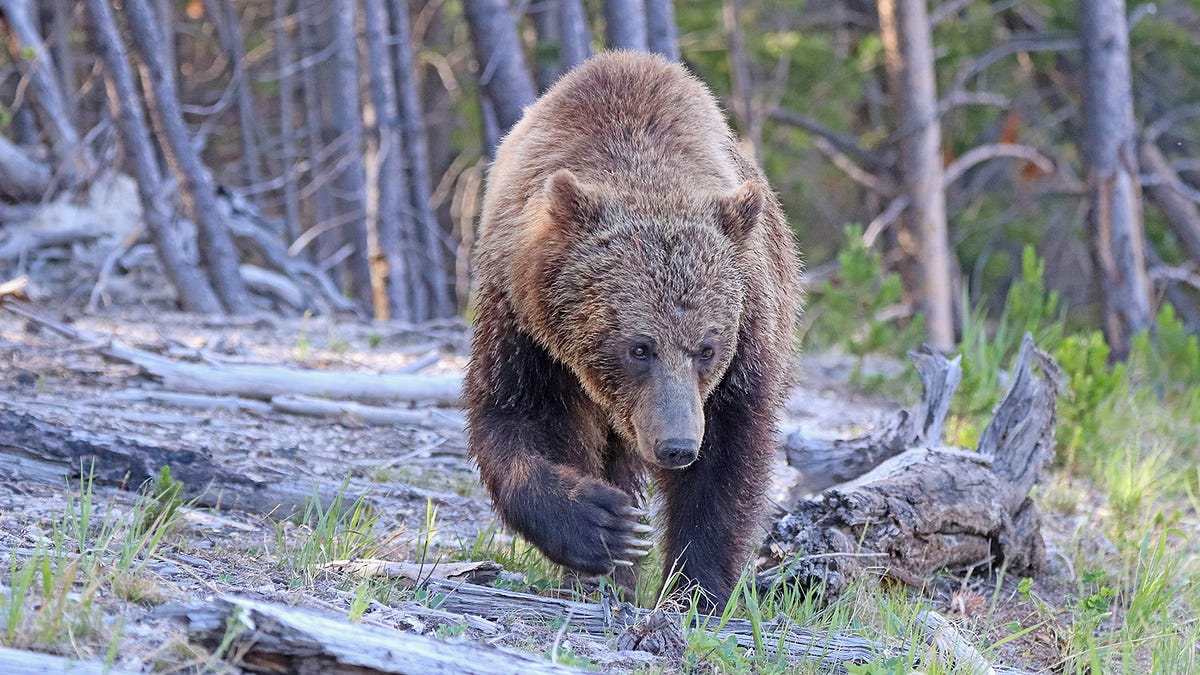
Grizzly bear populations in the Northern Rockies declined to fewer than 1,000 animals by the late 1960s, prompting their classification as threatened under the Endangered Species Act in 1975. Conservation efforts have since helped the population roughly double, creating new challenges as bears expand into territories they haven’t inhabited for decades—areas that have meanwhile seen substantial human development.
This expansion has created a landscape where humans and bears increasingly share space, yet many visitors and even residents lack adequate understanding of how to safely navigate bear country. The regional population has swelled during the bears’ absence, with towns, highways, farms, and ranches now occupying former grizzly habitat.
While brown bears worldwide belong to the same species, their behavior and physical characteristics vary significantly by region. Coastal Alaskan bears, which can grow nearly twice as large as interior grizzlies due to salmon-rich diets, typically avoid humans. In parts of Eastern Europe, brown bears have adapted to urban environments, sometimes foraging in populated areas with minimal concern for human presence. These variations complicate the application of bear-management strategies across different regions.
Contrary to widely circulated claims, the only scientific study ever conducted on bear spray effectiveness in actual attacks found it to be completely effective in just one-third of incidents. This statistic contradicts the common assertion that bear spray outperforms firearms during bear encounters.
The origin of this misconception can be traced to a misinterpretation of research conducted by Dr. Tom Smith, a leading expert on human-bear conflicts. Speaking directly about his work, Smith explained: “The appearance that bear spray outperforms firearms was not the focus of our research.”
The confusion stems from comparing two separate studies with different methodologies and objectives. The bear spray study primarily examined intentional hazing situations rather than surprise encounters. Meanwhile, the firearms study specifically examined cases where guns failed to stop bears, deliberately excluding successful interventions.
No comprehensive research has ever directly compared the effectiveness of bear spray versus firearms in stopping bear attacks. The binary framing of this debate—spray versus guns—has overshadowed more practical discussions about preventing bear encounters altogether.
Smith’s research reveals that simple preventative measures may be most effective. Traveling in groups of two or more adults who remain close together appears to be remarkably effective. Smith noted: “To the best of my knowledge, I have not seen an instance where two or more persons have remained grouped, whether standing their ground or backing from a bear, that the bear made contact.”
Additional findings show that bears are twice as likely to attack in areas with poor visibility compared to open terrain. Furthermore, human intervention during an attack has a 90 percent success rate in stopping maulings, with rescuers facing only a 10 percent chance of being attacked themselves.
These straightforward guidelines—travel in groups, stay close together, avoid dense vegetation in bear country, and help companions if attacked—provide practical safety protocols that could save lives if more widely known and followed.
As grizzly populations continue to recover and expand throughout the Northern Rockies, the need for accurate, evidence-based information becomes increasingly critical for both visitors and residents in bear country. This tragic incident underscores the importance of moving beyond simplified debates about deterrent methods toward comprehensive education about coexisting with these powerful predators.
Fact Checker
Verify the accuracy of this article using The Disinformation Commission analysis and real-time sources.

9 Comments
A sobering reminder that coexisting with wildlife like grizzlies requires constant vigilance and the right safety precautions. I hope this spurs further research to improve our understanding and responses in bear encounters.
This is a tragic incident. While bear spray can be an effective deterrent, it’s clear more research is needed on its real-world performance. Hikers should remain vigilant and consider all safety precautions when venturing into bear country.
Agreed. Coexisting with wildlife like grizzlies is complex, with no easy answers. Improving safety education and gear is important, but so is respecting the bears’ habitat and role in the ecosystem.
This is a tragic incident that raises important questions about the effectiveness of bear spray and our overall approach to human-wildlife coexistence. More research and nuanced public education is clearly needed.
Concerning to hear about the empty bear spray canister. I wonder what factors may have contributed to its apparent ineffectiveness in this case. More studies could help us better understand the limitations and proper use of these tools.
Absolutely. Proper training on bear spray deployment is crucial. Factors like wind, distance, and spray duration can all impact its effectiveness. Continued research and public awareness campaigns are needed.
This highlights the inherent risks in bear country. While tragic, it’s important we don’t jump to conclusions about bear spray. More data is needed to assess its true efficacy and limitations in real-world scenarios.
Concerning news about the bear attack and the apparent failure of the bear spray. This underscores the importance of continued research and public education on the proper use and limitations of these safety tools. We must find ways to improve coexistence with wildlife.
Agreed. Improving safety gear and protocols is important, but we also need to consider the bears’ perspective and habitat needs. Collaborative solutions that balance human and wildlife interests are key.