


Listen to the article
The influx of AI-generated political content on social media has emerged as a significant concern in Bangladesh’s electoral landscape, with hundreds of synthetic videos circulating widely among voters without proper disclosure of their artificial nature.
Investigations by BBC Verify have uncovered an alarming trend of sophisticated AI-generated videos proliferating across Facebook in the lead-up to Bangladesh’s national elections. These videos, many lacking clear labeling as synthetic content, feature eerily realistic fabricated news presenters, individuals posing as “ordinary citizens,” and figures dressed in police-like uniforms delivering partisan political messages.
The production quality of these AI-generated videos is particularly troubling. With polished presentations and convincing visuals, many appear authentic at first glance, making it challenging for average viewers to distinguish between genuine and artificial content. This sophistication represents a new frontier in digital misinformation that Bangladesh’s electoral system appears ill-equipped to address.
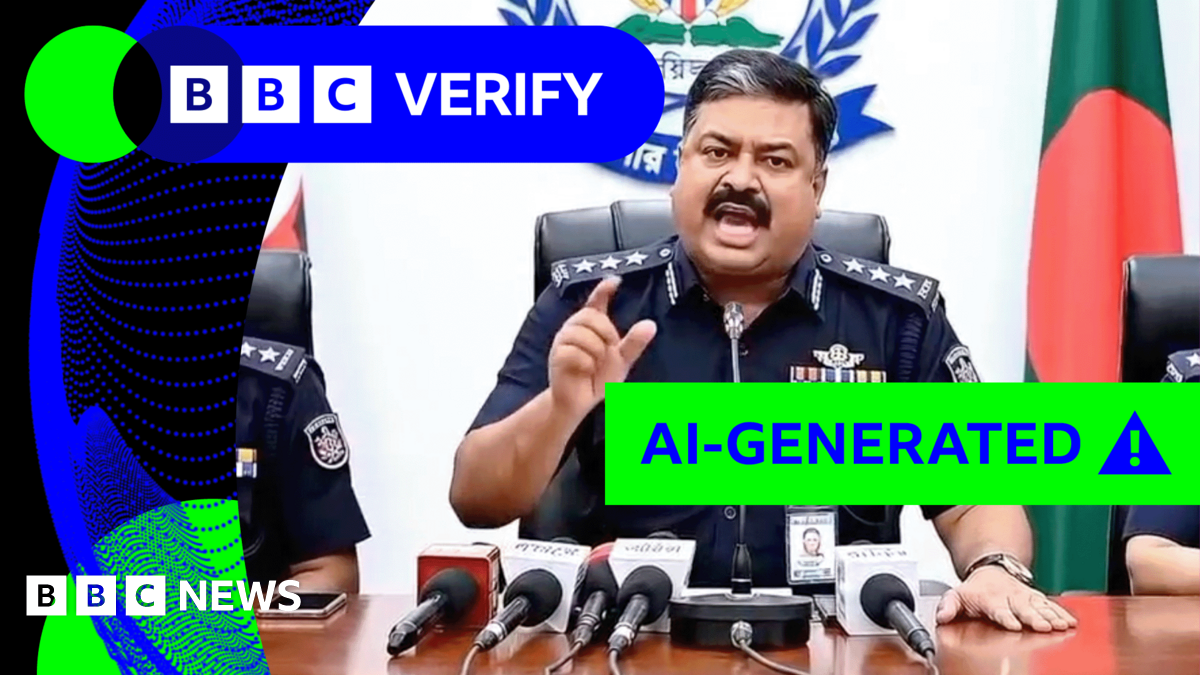
One particularly concerning example identified through Google’s SynthID detection tool has garnered nearly eight million views. The video features a man in an official-looking blue uniform similar to those worn by government authorities, delivering politically charged statements. The uniform’s resemblance to official attire lends an air of legitimacy that could potentially mislead viewers about the source of the information.
In another instance, a fabricated shopkeeper appears in a clip viewed approximately 200,000 times, explaining his rationale for not supporting a specific candidate. Such personalized, seemingly grassroots content can be particularly effective at swaying voter opinions, as it appears to represent authentic community sentiment rather than political messaging.
While Bangladesh’s electoral code of conduct explicitly prohibits the creation and distribution of misleading AI-generated content, monitoring and enforcement mechanisms for online platforms remain inadequate. The regulatory framework has not kept pace with technological advancements, creating a significant gap in electoral oversight.
The phenomenon highlights broader challenges facing electoral systems worldwide as AI technology becomes increasingly accessible. The ability to create convincing synthetic media at scale represents a fundamental shift in how political campaigns and their supporters can influence public opinion, potentially undermining democratic processes.
Social media platforms like Facebook, which serve as primary information sources for many Bangladeshi voters, face mounting pressure to identify and label synthetic content. However, the volume and sophistication of these materials make comprehensive detection difficult without specialized tools that most users cannot access.
Digital rights experts warn that the prevalence of unlabeled AI content could have lasting consequences beyond the election itself. The normalization of synthetic media in political discourse may erode public trust in authentic information sources and further complicate efforts to combat misinformation.
For Bangladeshi voters, this flood of AI-generated content creates additional barriers to making informed electoral choices. Without clear indicators of synthetic material or reliable methods to verify authenticity, citizens must navigate an increasingly complex information environment where distinguishing fact from fabrication requires significant digital literacy.
The situation in Bangladesh serves as a cautionary tale for democracies worldwide. As AI tools become more sophisticated and accessible, electoral authorities and social media platforms must develop more robust frameworks for identifying, labeling, and regulating synthetic political content to preserve the integrity of democratic processes.
Meanwhile, media literacy initiatives and public awareness campaigns about identifying AI-generated content have become increasingly vital components of electoral education, though such efforts often struggle to reach vulnerable populations with limited digital access or expertise.
Fact Checker
Verify the accuracy of this article using The Disinformation Commission analysis and real-time sources.

11 Comments
It’s disheartening to see such sophisticated disinformation tactics being employed in Bangladesh’s elections. Rigorous fact-checking and media literacy efforts are essential to combat this growing challenge.
This is a disturbing trend that undermines the integrity of the electoral process. Governments and tech companies must collaborate to develop effective countermeasures against AI-driven disinformation.
This is a worrying development that could have far-reaching consequences for the democratic process. Strengthening digital media literacy and improving AI detection capabilities should be top priorities.
Agreed. Voters must be empowered to critically evaluate the information they consume online, especially during election periods.
The proliferation of AI-generated political content is a serious threat to free and fair elections. Robust regulations and technological solutions are needed to address this complex issue.
The level of sophistication in these AI-generated videos is quite alarming. It’s crucial that governments and tech platforms work together to develop effective detection and mitigation strategies to combat this emerging threat.
Agreed. The public also needs to be educated on how to spot synthetic media, as it can be challenging to differentiate from genuine content.
This highlights the urgent need for greater transparency and accountability around the use of AI in political discourse. Voters deserve access to accurate, verified information to make informed decisions.
Absolutely. AI-generated fakes erode public trust in democratic institutions. Policymakers must act swiftly to address this issue before it undermines the integrity of elections.
Wow, this is really concerning. AI-generated disinformation during elections is a scary prospect. We need robust fact-checking and media literacy efforts to protect the integrity of the democratic process.
The use of AI to generate fake news and misinformation is a concerning development that could have far-reaching consequences for democracy. Urgent action is needed to combat this threat.