


Listen to the article
Concerns are mounting over a surge of artificial intelligence-generated content and disinformation campaigns that have infiltrated Bangladesh’s first major election since the violent student protests that shook the nation earlier this year.
Electoral authorities and digital rights groups have documented hundreds of deepfake videos and manipulated images circulating on social media platforms in the weeks leading up to Sunday’s vote, raising fears about the integrity of the democratic process.
The election comes at a critical juncture for Bangladesh, a South Asian nation of 170 million people that has experienced significant political turbulence in recent months. The student-led demonstrations that erupted in July over government job quotas resulted in more than 200 deaths and eventually forced Prime Minister Sheikh Hasina to step down, ending her 15-year rule.
“We’re witnessing an unprecedented level of synthetic media being deployed to influence voter opinions,” said Tahmina Rahman, director of the Bangladesh Digital Rights Coalition. “Some of these deepfakes are so sophisticated that even educated voters struggle to identify them as fake.”
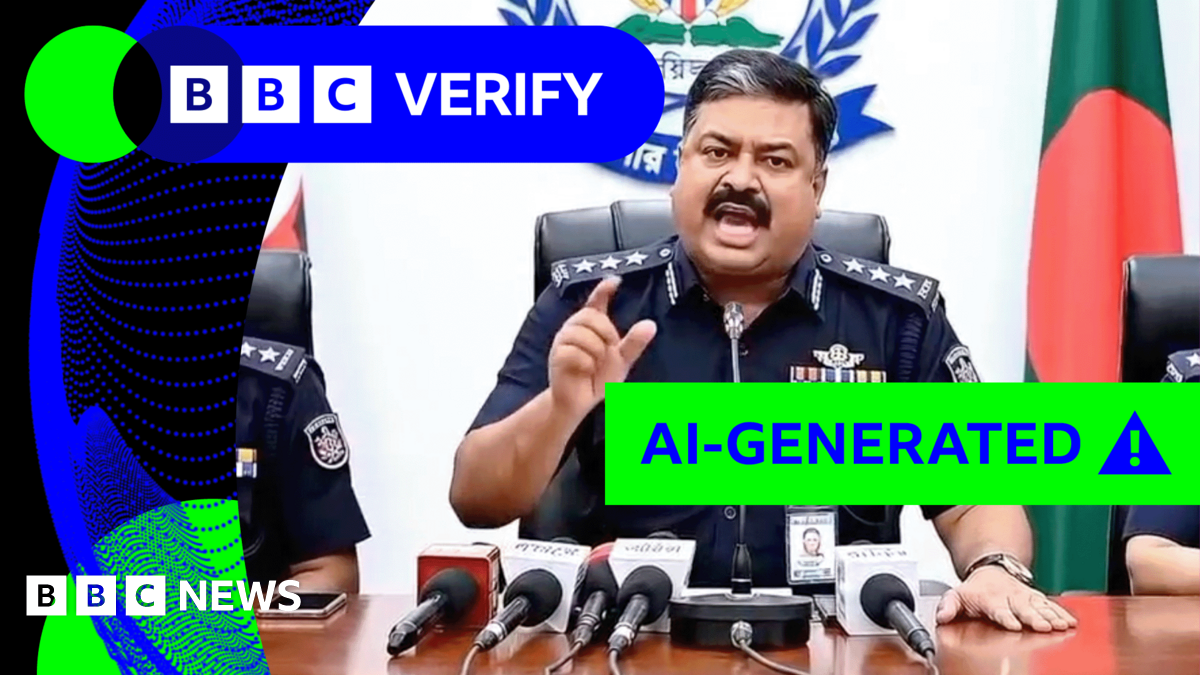
Among the most concerning examples are AI-generated videos showing opposition candidates making inflammatory statements they never actually said, and fabricated news reports claiming certain parties have withdrawn from the race. These manipulations appear designed to create confusion and potentially suppress voter turnout in specific districts.
Bangladesh’s Electoral Commission established a dedicated digital forensics team in October to monitor and respond to online misinformation. The unit has already removed over 2,000 pieces of misleading content, but officials acknowledge they are struggling to keep pace with the volume.
“For every fake video we identify and take down, three more appear,” explained Mohammad Khalid, who heads the commission’s digital response unit. “We’re working around the clock with social media companies, but the challenge is immense.”
The proliferation of AI-generated content represents a new frontier in election interference for Bangladesh, which has historically struggled with political violence and voter intimidation during election periods. The country’s vibrant but polarized media landscape has also made it fertile ground for misinformation campaigns.
International observers from the European Union and United Nations are monitoring the situation closely. A joint statement issued by these organizations on Thursday called on all political parties to “condemn and refrain from using manipulated media to mislead voters.”
Economic analysts note that political stability in Bangladesh carries significant regional implications. The country has emerged as one of Asia’s fastest-growing economies in recent years, with its garment industry serving as a crucial global supply chain hub for major fashion retailers like H&M, Zara, and Walmart.
“Foreign investors are watching this election closely,” said Dr. Ahsan Rahman, an economist at Dhaka University. “The combination of political uncertainty and rampant disinformation creates exactly the kind of unpredictable environment that makes markets nervous.”
Technology companies have implemented some countermeasures. Meta, which owns Facebook and Instagram, announced enhanced fact-checking partnerships specific to the Bangladesh election, while Google has adjusted its algorithms to prioritize verified news sources in search results related to the vote.
Civil society organizations have also mobilized, launching digital literacy campaigns and fact-checking initiatives. The Bangladesh Association for Media Literacy distributed simplified guides to identifying deepfakes in both urban and rural communities, reaching an estimated 3 million citizens.
Despite these efforts, experts warn that the damage to voter trust may already be substantial.
“Once people see several convincing deepfakes, they begin questioning all content, including legitimate news,” said digital rights advocate Farida Islam. “This creates a form of information paralysis that undermines the informed decision-making essential to democracy.”
As voting begins across the country’s 300 constituencies, officials have urged citizens to verify information through multiple sources and report suspicious content to the Electoral Commission’s hotline.
The outcome of this election will not only determine Bangladesh’s immediate political future but may also set precedents for how emerging democracies worldwide can respond to the growing threat of AI-enabled electoral manipulation.
Fact Checker
Verify the accuracy of this article using The Disinformation Commission analysis and real-time sources.

16 Comments
As a resource-rich country, the outcome of this election could have significant implications for Bangladesh’s mining and energy sectors. I’m curious to see how the candidates propose to balance economic development and environmental protection.
That’s a great point. Responsible management of the country’s natural resources will be key, especially given the global demand for critical minerals like lithium and copper. Voters will want to see clear plans from the candidates on this front.
Deepfakes and manipulated media are a major concern, but I’m also curious about the role of social media platforms in this situation. What steps are they taking to identify and remove this kind of coordinated disinformation?
That’s a good question. Social media companies have a responsibility to be more proactive in policing their platforms for this type of content, especially in the context of high-stakes elections. Transparency and accountability will be crucial.
The student protests earlier this year highlighted the need for meaningful political reforms in Bangladesh. I hope this election can be a catalyst for positive change, but the disinformation threat is worrying.
Absolutely. Genuine democratic reform requires an informed and engaged citizenry. Combating the spread of synthetic media and misinformation should be a top priority for all stakeholders in Bangladesh.
As a major player in the global mining and energy landscape, the outcome of this election could have ripple effects far beyond Bangladesh’s borders. I’ll be following the developments closely, particularly any implications for commodities markets.
Good point. Bangladesh’s resource wealth and strategic location make it an important player in regional and global supply chains. The integrity of this election will have broader geopolitical and economic implications that warrant close attention.
Concerning to hear about the surge of AI-generated disinformation in Bangladesh’s election. Maintaining the integrity of the democratic process is critical, especially given the recent political turbulence. Voters need to be vigilant in identifying deepfakes and manipulated media.
Agreed. The use of synthetic media to influence voter opinions is particularly troubling. Authorities and digital rights groups will need to work hard to educate the public and counter these deceptive tactics.
The use of AI-generated disinformation is a worrying global trend that threatens the foundations of democracy. I hope international observers and civil society groups can provide support and expertise to help Bangladesh navigate this challenge.
Agreed. Cooperation and knowledge-sharing across borders will be essential to combat these sophisticated tactics. Bangladesh can’t be left to fend for itself against such a complex threat to its democratic process.
This is a concerning situation that highlights the vulnerabilities of emerging democracies to the threats of modern disinformation tactics. I hope Bangladesh can find effective ways to protect the integrity of its electoral process and strengthen its democratic institutions.
Well said. Resilient democracies require robust safeguards against manipulation and deception. Bangladesh will need to draw on international best practices and expertise to combat this challenge. The stakes are high for the country’s future stability and development.
The student protests earlier this year certainly set the stage for a contentious election. I hope Bangladesh can find a way to address the underlying issues and strengthen its democratic institutions to withstand these disinformation campaigns.
Absolutely. Rebuilding trust in the political process after such turbulence will be a major challenge. Transparent and inclusive elections are crucial for Bangladesh’s future stability.