


Listen to the article
Climate Misinformation Intensifies in Australia as Reporting Resources Dwindle
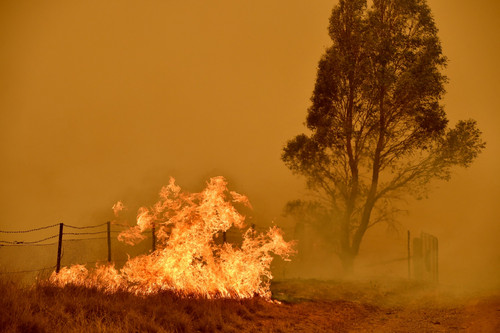
In January 2020, as Australia battled its worst bushfires, a misleading narrative spread rapidly across social media platforms. The viral hashtag #ArsonEmergency pushed a false claim that nearly 200 arsonists—not climate change—were responsible for the devastating “Black Summer” fires that dominated global headlines.
The truth was far different. While legal action had indeed been taken against 183 people for fire-related offenses, most involved minor infractions such as improperly discarding cigarettes or failing to take precautions around machinery. Only about 24 individuals actually faced arson charges, according to New South Wales Police.
By the time fact-checkers debunked these claims, the damage was done. This orchestrated counter-narrative had already muddied public discourse and contributed to the intimidation of climate scientists and activists.
Australian journalists report that such climate misinformation campaigns have intensified in recent years. “I definitely think it has ramped up, particularly with the political situation we see in the US,” says Bianca Hall, environment and climate reporter at The Age and media vice president of Australia’s Media, Entertainment & Arts Alliance.
Australia has emerged as a significant hub for climate misinformation due to a perfect storm of factors: a powerful fossil fuel industry, concentrated media ownership, and a political landscape that historically uses climate action as a divisive wedge issue.
The University of Canberra’s 2024 Digital News Report found that exposure to misinformation among Australians “skyrocketed” to 75%, an 11-point increase from 2022, with climate change ranking among the top three areas where false information was encountered.
The problem has evolved beyond a mere communications issue. The Australian Security Leaders Climate Group described climate disinformation as a “national security challenge” with direct consequences for economic and energy resilience. Meanwhile, Australia’s Senate Inquiry into Information Integrity on Climate Change and Energy warned that the deteriorating information ecosystem is significantly impacting public policy.
Globally, the trend is equally concerning. In the lead-up to the COP30 climate summit, false or misleading content increased by 267% between July and September 2025, with approximately 14,000 examples identified online.
The nature of climate misinformation has evolved since 2020. Where the Black Summer bushfires saw relatively organic misinformation spread, subsequent extreme weather events have been met with more calculated disinformation campaigns. International denialist narratives are now being adapted and localized specifically for Australian audiences.
“The challenge in Australia is not simply that false information is inserted into the media,” explains Martin Zavan, an ex-journalist who now runs Sydney-based Campaign Republic. “It’s that the system tends to reward simple, confident claims, particularly when they come from powerful and influential voices.”
Journalists face mounting challenges in combating this trend. Shrinking newsrooms and accelerating news cycles leave little time for thorough fact-checking, especially on complex scientific topics.
“We are trying to pitch stories towards different online editions to figure out how to sit within the news cycle,” Hall explains, noting that her team now works across 6am, midday, 4pm, 8pm and overnight deadlines. “Fact checking breaking news has always been challenging, but when you’re trying to fact check science on the spot, it’s extremely challenging. We need more resources.”
The rise of artificial intelligence has further complicated matters. AI tools have dramatically lowered the cost of creating misinformation at scale, enabling the distribution of vast quantities of misleading text, images, video and audio.
In one alarming example, a 2023 social media post claimed that a University of Tasmania study had modeled that 400 whales per year would be killed by offshore wind turbines. The study, supposedly published in the prestigious journal Marine Policy, simply didn’t exist—it was entirely generated by AI.
Ketan Joshi, an Australian climate writer based in Oslo, has observed this trend developing. “My theory a few years ago was that there would be a huge proliferation of fake science papers created using AI,” he says. “It’s going a little bit more in the direction of emotionally arresting content. Generative AI is much better at creating a shocking video that’s almost like a cartoon of wind turbine whales.”
Freelance journalists face additional hurdles in convincing editors to prioritize climate coverage. “The topic is constantly seen as a long-term problem happening somewhere off in the future,” explains Lyndal Rowlands, who works primarily for Al Jazeera but also freelances on climate issues. “Those Black Summer fires were such a massive moment in Australia. And yet it didn’t lead to a substantial increase in climate change journalism.”
Despite these challenges, some news organizations are adapting their approach. Hall notes that her team has shifted toward solutions-based journalism after realizing that relentlessly negative environmental news was turning audiences away.
“We adopted a new practice of trying to offer some kind of hope and path forward for people,” she explains. “Whether that’s electrifying the home, or ways that reefs can be reconstructed to help cool and clean coastal waters.”
There are other positive developments within Australia’s media landscape. The ABC has established a dedicated Climate Team, while international outlets like Carbon Brief and specialized newsletters are building loyal audiences by treating climate as a corruption and accountability story rather than just an environmental issue.
Perhaps most encouragingly, Australians themselves appear increasingly concerned about misinformation. The Digital News Report: Australia 2025 found that 74% of Australians worry about fake news and misinformation—the highest percentage among 48 countries surveyed.
However, concern alone won’t address the scale of Australia’s climate challenge. As the world’s third-largest fossil fuel exporter with per capita CO₂ emissions roughly triple the global average, the country faces difficult conversations about its economic and environmental future.
“In Australia, we have this tradition where people say ‘oh it’s not the time to talk about it,'” Rowlands notes. “‘Don’t politicize it.’ But it’s so politicized already.”
Fact Checker
Verify the accuracy of this article using The Disinformation Commission analysis and real-time sources.

8 Comments
Misinformation can be highly damaging, especially on topics like climate change where the stakes are so high. I hope Australian media outlets and fact-checkers remain vigilant in debunking false narratives and upholding journalistic integrity.
The bushfire crisis in Australia was a complex issue, driven by multiple factors including climate change. Oversimplifying the causes and pushing false claims only serves to obscure the real challenges we face.
Exactly, we need nuanced analysis and a commitment to evidence-based discussions, not partisan finger-pointing. Credible information is key to making progress on these critical issues.
Worrying to see disinformation campaigns targeting climate science in Australia. We need robust fact-based reporting to combat the spread of misleading narratives. Journalists play a crucial role in upholding the truth.
The impact of climate change is a complex, multifaceted issue. While there may be disagreements, we must strive for nuanced, fact-based discussions that consider the full scope of the challenges we face.
Climate change is a global issue that requires coordinated, science-based solutions. Attempts to sow doubt and confusion through misinformation campaigns only serve to delay meaningful action. We must stay focused on the facts.
Journalists play a vital role in providing the public with accurate, evidence-based information. I hope Australian media outlets continue to prioritize robust climate reporting and remain vigilant against the spread of misinformation.
It’s concerning to see the intensification of climate misinformation in Australia. Rigorous reporting and fact-checking will be crucial to counter these efforts and ensure public discourse remains grounded in reality.