


Listen to the article
Indian Army Chief Warns of Changing Conflict Dynamics, Calls for UN Peacekeeping Reform
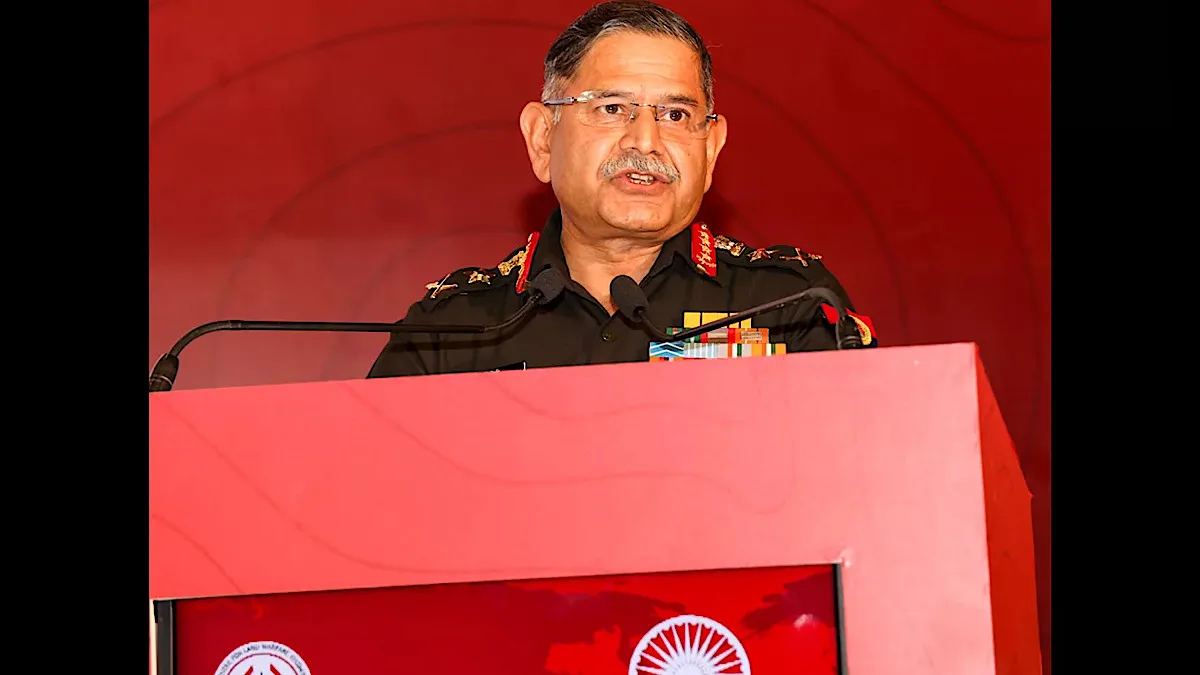
Indian Army Chief General Upendra Dwivedi addressed the evolving nature of global conflicts on Tuesday, highlighting how emerging technologies and non-traditional warfare have fundamentally altered the landscape of military operations worldwide.
Speaking at the United Nations Troop Contributing Countries (UNTCC) conference at the Manekshaw Center in New Delhi, General Dwivedi emphasized that “the infusion of disruptive technologies, the growing influence of non-state actors, hybrid warfare, and the scourge of disinformation have blurred the traditional boundaries of conflict.”
His remarks come just days after he issued a stern warning to Pakistan that India would not show restraint in the event of another “Operation Sindoor 2.0,” signaling heightened tensions between the neighboring nuclear powers.
The Army Chief painted a sobering picture of the current global security environment, noting that the world stands “almost at an inflection point” with over 56 active conflicts involving approximately 90 nations. This fragmentation has placed unprecedented strain on peacekeeping operations, challenging the consensus that typically enables unified UN action.
“Shifting geopolitical currents strain the spirit of consensus that underpins cohesive UN action. Such realities demand more resilient, swift, and unified responses that only peacekeepers, working together, can deliver,” General Dwivedi stated.
Financial constraints remain a significant challenge for UN peacekeeping missions. General Dwivedi acknowledged that reduced funding “will be a reality,” forcing missions to operate with fewer personnel on the ground and greater reliance on technology. He suggested a strategic shift toward “preventive diplomacy and sustainable peacebuilding” rather than simply maintaining an armed presence in conflict zones.
India’s extensive contribution to global peacekeeping efforts featured prominently in the Army Chief’s address. He noted that India has deployed approximately 300,000 personnel across 51 of the UN’s 71 peacekeeping missions throughout history. Currently, Indian forces serve in nine of the eleven ongoing UN missions, continuing a tradition that dates back to early deployments in Korea (1950) and Congo (1960).
A significant portion of General Dwivedi’s address focused on the need for structural reform within UN peacekeeping frameworks. He specifically called for greater flexibility between Chapter VI and Chapter VII mandates of the UN Charter, which define the scope and authority of peacekeeping operations.
“Many Chapter VI missions have become increasingly complex, compelling peacekeepers to operate under conditions that often require Chapter VII-like responses,” he explained. Chapter VI missions typically involve peaceful dispute resolution, while Chapter VII authorizes more robust enforcement actions.
General Dwivedi proposed developing operational concepts that allow for “temporary or situational interchangeability” between these mandates, suggesting that even missions operating under Chapter VI should effectively function at what he termed a “Chapter 6½” capability level. This would provide peacekeepers with the necessary tools and authority to respond effectively in rapidly evolving conflict situations.
The Army Chief also called for modernization of UN Headquarters operations, particularly the functioning of U1 to U9 offices, which coordinate various aspects of peacekeeping missions. “The evolution of these offices will lead to delayering, greater transparency, and improved responsiveness of peacekeeping operations,” he stated.
As international conflicts grow increasingly complex, General Dwivedi’s call for peacekeeping forces to be “future ready” through “bold imagination and practical adaptation” reflects the growing recognition among military leaders that traditional peacekeeping approaches may no longer suffice in addressing contemporary global security challenges.
Fact Checker
Verify the accuracy of this article using The Disinformation Commission analysis and real-time sources.

8 Comments
The Chief’s warning about heightened tensions with Pakistan is worrying, given the nuclear capabilities of both countries. De-escalating regional conflicts should be a top priority for the UN and its peacekeeping forces.
Absolutely. Maintaining stability in nuclear-armed regions like the India-Pakistan border will require a delicate diplomatic touch from the UN. Peacekeepers will need robust conflict resolution skills to prevent miscalculation and accidental escalation.
Interesting to hear the Indian Army Chief’s perspective on the evolving nature of conflict and the impact on UN peacekeeping operations. Hybrid warfare and disinformation pose significant challenges that will require innovative approaches from the international community.
I agree, the blurring of traditional conflict boundaries is a concerning trend that peacekeepers will need to adapt to. Integrating new technologies and countering misinformation will be critical for the effectiveness of future missions.
Sobering to hear the Army Chief’s assessment of the current global security landscape. The proliferation of non-state actors and blurring of conflict boundaries is a worrying trend that requires a comprehensive international response.
Over 56 active conflicts involving 90 nations – that’s a staggering figure. The UN peacekeeping apparatus is clearly under immense strain. Reforms and additional resources will be necessary to meet these complex, evolving challenges.
The Chief’s call for UN peacekeeping reform is well-justified. Integrating new technologies, countering disinformation, and adapting to hybrid warfare tactics will be critical for the future effectiveness of peacekeeping missions.
I agree, the UN needs to be proactive in revamping its peacekeeping capabilities. Failing to adapt could undermine the credibility and impact of these vital international operations.