


Listen to the article
AI-Generated Misinformation Floods Middle East Conflict as War Erupts
A new chapter of conflict erupted in the Middle East on February 28 when Israeli and U.S. forces launched strikes against Iran, triggering retaliatory measures that quickly escalated into a regional confrontation. Among the initial casualties was Iran’s Supreme Leader, Ayatollah Ali Khamenei, along with other key regime figures.
What began as targeted strikes rapidly expanded beyond Iran’s borders. Israel shifted focus to Lebanon while Iran targeted Gulf states, creating a widening circle of instability throughout the region.
Just five days into the conflict, the digital battlefield became equally chaotic as AI-generated content and false claims flooded social media platforms. This technological dimension has created unprecedented challenges for journalists, citizens, and policymakers attempting to understand the true nature of events on the ground.
“This war might have already broken the record for the highest number of AI-generated videos and images that have gone viral during a conflict,” noted BBC Verify’s Shayan Sardarizadeh, who has been meticulously tracking and debunking false information since the conflict began.
The rapid advancement of AI technology in recent months has created perfect conditions for disinformation. Sardarizadeh’s daily compilations of war misinformation highlight the scale of the problem. In one instance, a viral clip purportedly showing the aftermath of a drone attack on the U.S. embassy in Riyadh actually depicted an unrelated car accident. High-profile accounts sharing such content exponentially amplified its reach.
Even official government channels have deployed AI deceptively. Israeli Prime Minister Benjamin Netanyahu’s social media account posted a video showing him speaking Farsi and calling for Iranians to “take to the streets” and “overthrow the regime.” Analysis by VerificaRTVE revealed the audio was AI-generated, with visible errors in the lip-synchronization.
The attack on an elementary school in Minab, Iran, which reportedly killed 168 people—many of them children—became a particular flashpoint for both genuine outrage and targeted misinformation. Satellite imagery analyzed by news organizations identified the school’s location near two Revolutionary Guard buildings, confirming the general location through eyewitness videos.
Yet this tragedy also spawned falsehoods that were amplified by X’s AI tool, Grok, which incorrectly identified authentic images as fake. “For hours, Grok insisted on its mistake and even called the media reports a hoax,” reported VerificaRTVE, highlighting the dangers of relying on automated verification systems.
In another troubling development, the Iranian embassy in Austria published an AI-generated image of a blood-spattered schoolbag, which Google’s SynthID detector confirmed was created using artificial intelligence. This illustrates how diplomatic actors are now weaponizing synthetic media.
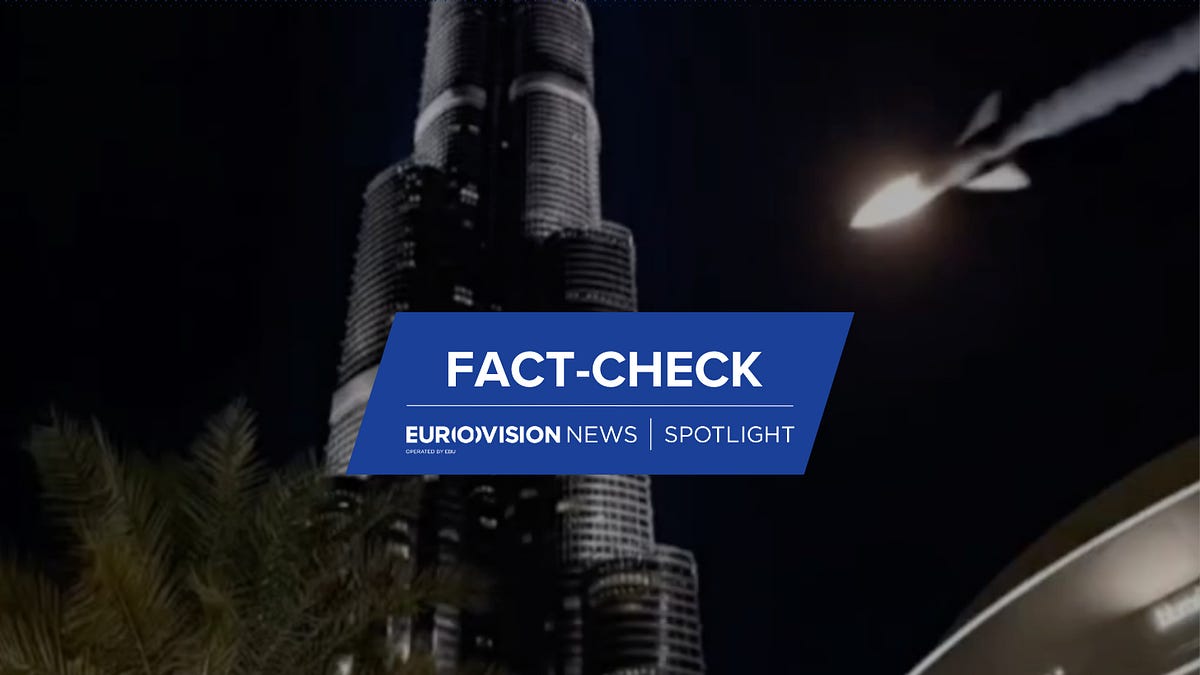
Dubai’s involvement in the conflict through Iranian retaliatory strikes created particular confusion online. While Terminal 2 at Dubai International Airport was indeed damaged, numerous fabricated videos circulated showing rockets hitting the Burj Khalifa and causing massive explosions. Analysis by VRT news revealed these to be AI-generated, with technical flaws indicating “a slightly older AI model” where “debris and smoke plume look like something out of a cartoon.”
The information environment in the UAE was further complicated by social media restrictions. Many Dubai-based influencers posted suspiciously similar messages claiming the city remained completely safe—raising questions about coordinated messaging under the UAE’s strict social media regulations, which prohibit content that could “harm public order or the reputation of the state.”
As the conflict expanded regionally, open-source intelligence (OSINT) analysts identified tangible impacts beyond the immediate war zone, including disrupted oil tanker movements around the Strait of Hormuz and airspace closures throughout the Middle East. Satellite imagery released by Vantor and analyzed by RTÉ Clarity showed verifiable damage at Iran’s Natanz nuclear facility, drone installations in western Iran, Zahedan airbase, and Saudi Arabia’s Ras Tanura oil refinery.
With conventional media access limited in conflict zones, OSINT analysis has emerged as one of the most reliable methods for understanding the war’s true scope and anticipating future flashpoints as this regional crisis continues to unfold.
Fact Checker
Verify the accuracy of this article using The Disinformation Commission analysis and real-time sources.

9 Comments
The scale and speed of these AI-generated lies is truly alarming. Journalists and fact-checkers have their work cut out for them trying to stay on top of this flood of misinformation. Vigilance and public awareness will be key to combating it.
Wow, this is really concerning. AI-generated disinformation during conflicts is a major threat to truth and stability. It’s crucial that we have strong verification processes to debunk false claims and keep the public informed.
The rise of AI-powered misinformation is a troubling development. I’m curious to learn more about the specific tactics and techniques being used to create and amplify these false claims. Understanding the playbook is key to developing effective countermeasures.
Wow, this is really disturbing. I can only imagine how challenging it must be for journalists and fact-checkers to stay on top of this deluge of AI-generated disinformation. Kudos to them for their tireless efforts.
I’m glad to see this issue getting attention. The potential for AI to accelerate the spread of false information during conflicts is extremely concerning. Robust fact-checking and media literacy efforts will be vital going forward.
This is a sobering reminder of how technology can be used to undermine truth and stability. I’m curious to learn more about the specific tactics and techniques being used to create and amplify these AI-generated lies.
This is a sobering reminder of how advanced AI can be weaponized to sow chaos and confusion. I hope the relevant authorities are taking strong action to identify the sources and limit the spread of these fabricated narratives.
The spread of AI-generated misinformation during conflicts is a major threat that requires a robust and coordinated response. I hope policymakers and tech platforms are taking this issue seriously and developing effective countermeasures.
Tracking and debunking AI-generated disinformation in real-time must be an immense challenge. Kudos to the teams working tirelessly to separate fact from fiction and maintain public trust during this conflict.