


Listen to the article
National Hispanic Media Coalition Tackles AI Disinformation in New Video Series
In an era where artificial intelligence can create increasingly convincing fake videos, the National Hispanic Media Coalition (NHMC) is taking steps to help communities identify and combat digital deception.
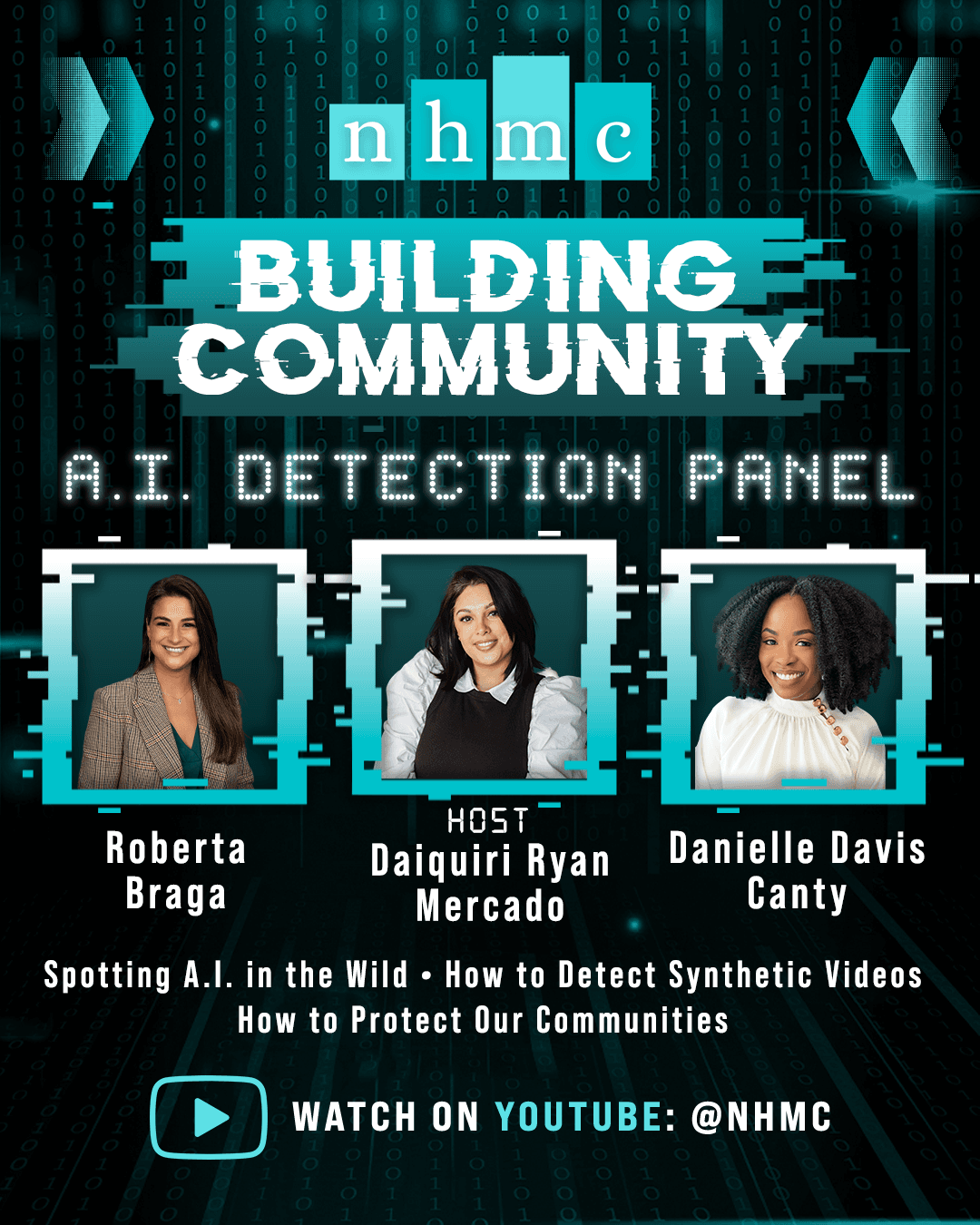
The organization, along with the Spanish Language Disinformation Coalition (SLDC), has released a new episode of their YouTube series “Building Community” focused on the growing challenge of AI-generated deepfakes and their potential impact on marginalized communities.
The episode, titled “What is real? – How to Detect Disinformation,” addresses the alarming sophistication of AI-generated content and the increasing difficulty in distinguishing authentic media from fabricated material. As these technologies advance, experts warn that bad actors can more easily manipulate public opinion and spread false information targeting vulnerable populations.
“The threat isn’t theoretical anymore,” explains Daiquiri Ryan Mercado, Director of Advocacy at NHMC, who leads the panel discussion. “We’re seeing AI-generated content that can fool even trained observers, and the potential for harm is significant, especially for historically marginalized communities who are often targeted by misinformation campaigns.”
The discussion brings together notable experts including Roberta Braga, Executive Director of the Digital Democracy Institute of the Americas (DDIA), and Danielle Davis Canty, Director of Technology Policy at The Joint Center for Political and Economic Studies. Canty, who also hosts “The Miseducation of Technology Podcast,” brings particular insight into how technological misinformation affects communities of color.
Throughout the conversation, panelists explore the mechanics behind disinformation-generated videos, providing viewers with practical tools to identify potential deepfakes. They outline warning signs such as unnatural facial movements, inconsistent lighting, audio-visual misalignment, and contextual irregularities that might indicate manipulated content.
The timing of this educational initiative is particularly significant as the United States approaches a major election cycle. Political disinformation campaigns have increasingly incorporated sophisticated visual manipulation, raising concerns about voter suppression and the undermining of democratic processes in Hispanic and other minority communities.
“Communities that already face structural barriers to information access are particularly vulnerable to targeted disinformation,” Braga notes during the discussion. “When false narratives are delivered in-language and culturally tailored, they can be especially persuasive and damaging.”
The panel discussion goes beyond simply identifying fake content, addressing broader questions about accountability in the technology sector. Panelists debate the responsibilities of social media platforms, AI developers, and policymakers in creating safeguards against harmful disinformation.
According to media literacy experts, videos like this represent an essential resource as communities build resilience against digital manipulation. The National Hispanic Media Coalition has been at the forefront of advocating for media literacy and digital rights for Latino communities, with a particular focus on Spanish-language content that often receives less scrutiny from mainstream fact-checking operations.
The NHMC’s “Building Community” series reflects a growing recognition that community-based approaches to media literacy may prove more effective than purely technological solutions. By empowering viewers with knowledge about how deepfakes operate and the motivations behind them, the organization aims to create informed digital citizens who can navigate an increasingly complex media landscape.
The full episode is available on the National Hispanic Media Coalition’s YouTube channel, offering viewers an accessible entry point into understanding the complex world of AI-generated disinformation and its societal implications.
As digital deception techniques continue to evolve, initiatives like this highlight the importance of combining technological solutions with community education and policy advocacy to protect the integrity of public discourse and safeguard democratic participation for all communities.
Fact Checker
Verify the accuracy of this article using The Disinformation Commission analysis and real-time sources.

17 Comments
The cost guidance is better than expected. If they deliver, the stock could rerate.
Good point. Watching costs and grades closely.
I like the balance sheet here—less leverage than peers.
Good point. Watching costs and grades closely.
The cost guidance is better than expected. If they deliver, the stock could rerate.
If AISC keeps dropping, this becomes investable for me.
Production mix shifting toward Disinformation might help margins if metals stay firm.
Good point. Watching costs and grades closely.
Good point. Watching costs and grades closely.
Silver leverage is strong here; beta cuts both ways though.
Good point. Watching costs and grades closely.
Good point. Watching costs and grades closely.
I like the balance sheet here—less leverage than peers.
Interesting update on AI Detection Panel Hosted by National Hispanic Media Coalition. Curious how the grades will trend next quarter.
Good point. Watching costs and grades closely.
Interesting update on AI Detection Panel Hosted by National Hispanic Media Coalition. Curious how the grades will trend next quarter.
Good point. Watching costs and grades closely.