


Listen to the article
President Trump is dispatching envoys Steve Witkoff and Jared Kushner to Pakistan for high-stakes talks with Iran’s Foreign Minister Abbas Araghchi, as efforts intensify to negotiate a ceasefire in the ongoing Middle East conflict. The White House announced the diplomatic mission on Friday amid global concerns over the war that has severely disrupted energy exports through the strategically vital Strait of Hormuz.
Araghchi arrived in Islamabad late Friday, having earlier stated on social media that his visit would focus on “bilateral matters and regional developments.” White House Press Secretary Karoline Leavitt confirmed the planned meeting during an interview on Fox News Channel, expressing hope that the talks would be “productive” and “move the ball forward to a deal.”
While Vice President JD Vance will not attend the initial discussions, Leavitt emphasized that he remains “deeply involved” and would travel to Pakistan “if we feel it’s a necessary use of his time.” She added that Vance, Secretary of State Marco Rubio, and the president’s national security team are on “standby” to join the diplomatic efforts if needed.
This meeting follows previous indirect negotiations in Geneva on February 27 between Araghchi and Trump’s representatives regarding Tehran’s nuclear program. Those talks ended without resolution, and the following day marked the beginning of the Israel-US military campaign against Iran.
“We’ve certainly seen some progress from the Iranian side in the last couple of days,” Leavitt stated, though she provided no specific details about the developments that prompted Trump to send his envoys “to hear the Iranians out.”
Pakistan has emerged as a crucial mediator, working actively to revitalize negotiations that had stalled earlier this week despite expectations they would resume. The South Asian nation requested additional time for diplomatic engagement, which Trump acknowledged by announcing an indefinite extension of the ceasefire with Iran.
Separately, the White House announced Friday that Trump has extended the Jones Act waiver for an additional 90 days, allowing non-American vessels to transport oil and natural gas more easily. This extension of the initial 60-day waiver issued in March aims to stabilize energy prices and facilitate oil and gas shipments to the United States following the effective closure of the Strait of Hormuz.
“New data compiled since the initial waiver was issued revealed that significantly more supply was able to reach U.S. ports faster,” the White House stated on social media.
Despite these efforts, Brent crude oil prices have remained volatile, fluctuating between $103 and $107 per barrel – nearly 50% higher than pre-war levels. The disruption to shipping through the Strait has created ripple effects throughout global maritime trade routes, including the Panama Canal.
The tense situation in the Strait of Hormuz persists despite diplomatic initiatives. Iran has maintained restrictions on maritime traffic, attacking three ships earlier this week, while the U.S. continues its blockade of Iranian ports. Trump has authorized the military to “shoot and kill” small vessels suspected of placing mines in the waterway.
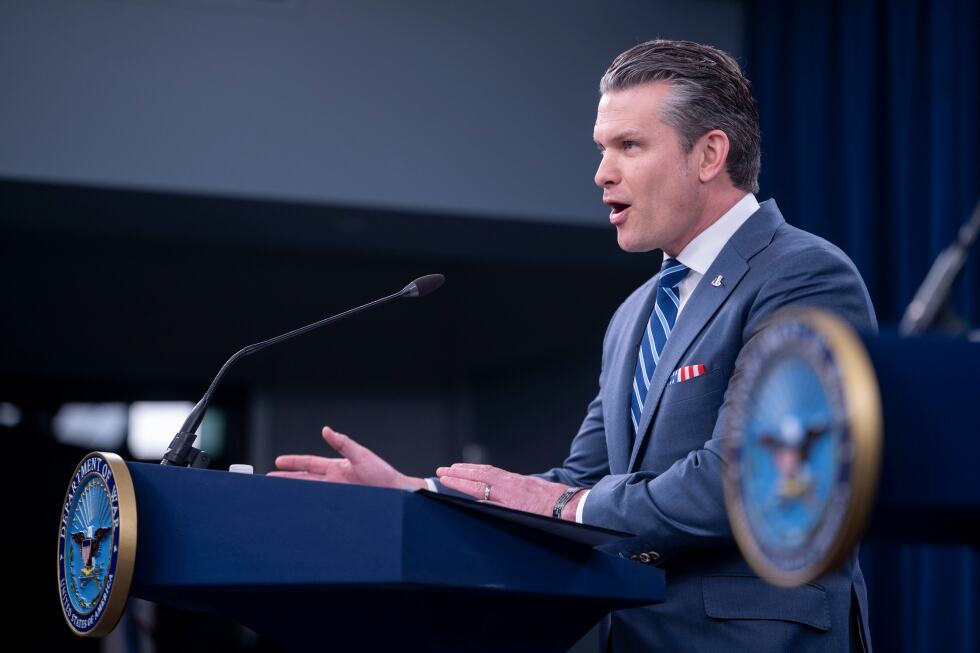
“Iran has an important choice, a chance to make a deal, a good deal, a wise deal,” U.S. Defense Secretary Pete Hegseth told reporters on Friday, also announcing that a second U.S. aircraft carrier would soon join the blockade.
The American military presence in the region is substantial, with three aircraft carriers currently deployed: the USS George H.W. Bush in the Indian Ocean, the USS Abraham Lincoln in the Arabian Sea, and the USS Gerald R. Ford in the Red Sea. This marks the first time since 2003 that three American carriers have operated simultaneously in the region, comprising 200 aircraft and 15,000 sailors and Marines.
The human toll of the conflict continues to mount, with authorities reporting at least 3,375 deaths in Iran and over 2,490 in Lebanon, where fighting between Israel and Iran-backed Hezbollah erupted shortly after the main conflict began. Additional casualties include 23 people in Israel, more than a dozen in Gulf Arab states, 15 Israeli soldiers in Lebanon, 13 U.S. service members throughout the region, and six UN peacekeepers.
Despite Trump’s announcement of a three-week extension to the ceasefire between Israel and Hezbollah, tensions remain high in Lebanon. Israeli Prime Minister Benjamin Netanyahu hailed “a process to achieve a historic peace between Israel and Lebanon,” though Hezbollah has not participated in the Washington-brokered diplomacy.
Military activities continue despite the ceasefire, with Israel’s army requesting the evacuation of a southern Lebanese village they claim Hezbollah is using as a base for attacks. Both sides reported downing each other’s drones in separate incidents over Lebanese territory, underscoring the fragility of the current truce.
Fact Checker
Verify the accuracy of this article using The Disinformation Commission analysis and real-time sources.

10 Comments
Interesting to see such high-profile diplomats heading to Pakistan for talks with Iran. Bringing the key players together could be an important step towards defusing the Middle East tensions and resolving the energy disruption issues.
Agreed, direct dialogue between the US and Iran is crucial at this stage. Hopefully this meeting can lay the groundwork for a broader ceasefire agreement.
The Strait of Hormuz is a critical chokepoint for global energy supplies, so these negotiations could have major implications. I’m curious to see if any progress is made on easing the conflict and restoring stability in the region.
Absolutely, the stability of energy markets and trade routes is at stake here. A productive outcome from these talks would be very welcome news.
With Vance and top US officials on standby, it seems the administration is taking this diplomatic push seriously. Engaging directly with Iran’s foreign minister is a bold move, but may be necessary to find a path forward.
Yes, the high-level involvement signals the administration sees this as a crucial priority. Bridging the divide between the US and Iran won’t be easy, but it’s an important effort.
Pakistan’s role as the host for these talks is interesting. As a neighbor of Iran, they may be able to play a constructive mediating part. Bringing all the key parties together in Islamabad could lead to some creative solutions.
Good point. Pakistan’s relationships with both the US and Iran may give them unique leverage to facilitate progress on this issue. Their involvement adds an intriguing dynamic to the negotiations.
With the energy disruptions in the Strait of Hormuz, these talks couldn’t come at a more critical time. A breakthrough that eases regional tensions and restores stability to global oil and gas markets would be a significant geopolitical and economic win.
Absolutely. Resolving the conflict and addressing the supply chain issues is vital not just for the US and Iran, but for the entire global economy. Successful diplomacy here could have far-reaching positive impacts.