


Listen to the article
US Military Maintains Ceasefire Despite New Tensions in Strait of Hormuz
U.S. military officials insist a fragile ceasefire remains in effect despite renewed attacks in the Strait of Hormuz, where American forces are attempting to reopen the vital waterway amid ongoing tensions with Iran.
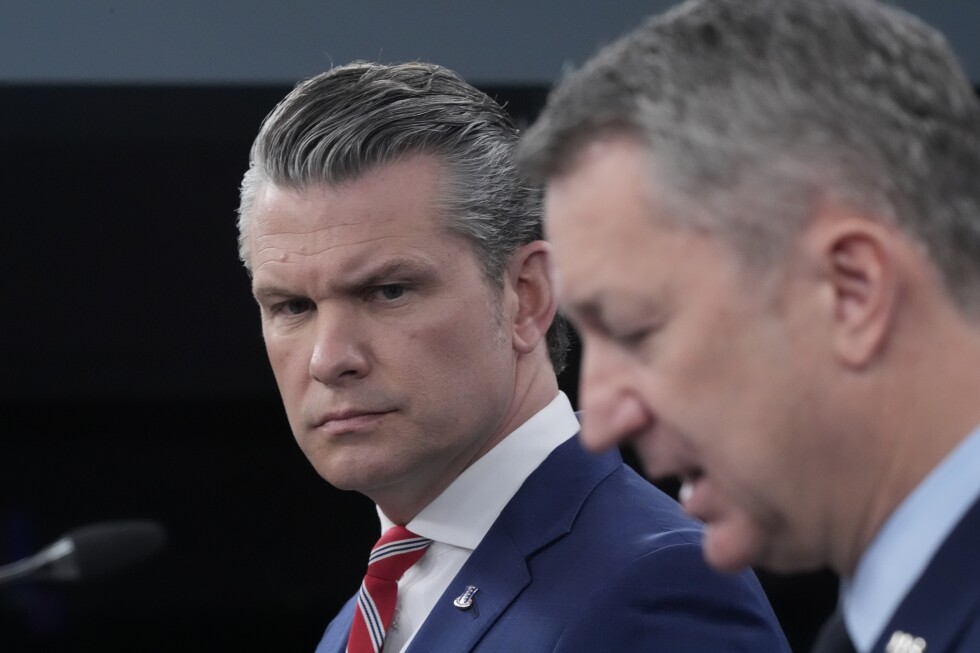
Speaking at a Pentagon press conference Tuesday, Defense Secretary Pete Hegseth and Chairman of the Joint Chiefs of Staff Gen. Dan Caine emphasized the truce was holding despite provocations. “No, the ceasefire is not over,” Hegseth stated, even as the United Arab Emirates reported it had come under fresh Iranian drone and missile attacks on Tuesday.
The United States is pressing ahead with efforts to establish a safe shipping lane through the strait, where Iran effectively closed commercial traffic following U.S. and Israeli strikes on Iran in late February. On Monday, the U.S. military announced it had sunk six small Iranian boats that had threatened commercial vessels attempting to transit the waterway.
“We know full well that the continuation of the status quo is intolerable for America; while we have not even begun yet,” said Iranian parliament speaker Mohammad Bagher Qalibaf in a social media post, suggesting Iran may be preparing a more substantial response to U.S. efforts to reopen the strait.
Iranian state media disputed the U.S. account of Monday’s engagement, claiming only two small civilian cargo vessels were struck, resulting in five civilian deaths.
The narrow 21-mile-wide strait represents a critical global chokepoint, through which approximately 20% of the world’s oil supply typically flows. Its closure has sent fuel prices soaring and disrupted global supply chains for petroleum products and fertilizer. The economic impact has reverberated through markets worldwide since the conflict intensified earlier this year.
Gen. Caine revealed that more than 100 U.S. military aircraft are currently patrolling the skies around the strait. The U.S. has also maintained a naval blockade on Iranian ports since April 13, cutting off oil revenue Tehran desperately needs for its struggling economy.
So far, only two civilian vessels, both U.S.-flagged merchant ships, are known to have successfully traversed the U.S.-designated safe lane. Shipping giant Maersk confirmed one of its operated vehicle carriers had exited the strait safely with U.S. military assistance on Monday.
However, major shipping companies remain hesitant to resume normal operations. “At this point in time our risk assessment remains unchanged,” Hapag-Lloyd AG, one of the world’s largest container shipping companies, said in a statement. “Transits through the Strait of Hormuz are for the moment not possible for our ships.”
The situation is particularly perilous given Iran’s military capabilities in the region. Iran can reach all parts of the strait with cruise missiles, drones, fast attack craft and naval mines. The country has attacked vessels that attempt to transit without using Iran’s own approved route along its northern coastline, which involves vetting by the Revolutionary Guard and sometimes payment.
The U.S.-designated route runs through territorial waters of Oman to the south of the strait.
“For shipping companies and for insurance companies, they still have to wait and see how this plays out,” said Torbjorn Soltvedt, principal Middle East analyst at risk intelligence company Verisk Maplecroft. “This initiative alone isn’t something that looks like it’s going to open the Strait of Hormuz.”
The United Arab Emirates, a key U.S. ally in the region, has borne the brunt of Iran’s retaliation for the American effort. On Monday, the UAE said its air defenses had engaged 15 missiles and four drones fired by Iran. A drone attack sparked a fire at a key oil facility in the eastern emirate of Fujairah, wounding three Indian nationals. The British military also reported two cargo vessels ablaze off the UAE’s coast.
On Tuesday, the UAE’s Defense Ministry announced it was responding to another wave of Iranian drone and missile attacks, though no immediate reports of damage or casualties emerged.
The attacks drew international condemnation, with Indian Prime Minister Narendra Modi calling the targeting of UAE civilians and infrastructure “unacceptable.” Pakistan and Saudi Arabia also issued statements condemning the strikes.
Iranian Foreign Minister Abbas Araghchi warned on social media that the U.S. and UAE “should be wary of being dragged back into quagmire,” though Tehran did not explicitly confirm or deny responsibility for the attacks.
The Trump administration has cited the April 8 ceasefire when arguing the president is not required to provide a formal update to Congress on the war under the War Powers Resolution, which typically requires presidents to seek formal approval for military actions 60 days after they begin.
Fact Checker
Verify the accuracy of this article using The Disinformation Commission analysis and real-time sources.

11 Comments
The US efforts to reopen the Strait of Hormuz are understandable, but Iran’s provocations are increasing the risks of a larger conflict. All sides need to step back, assess the situation objectively, and explore diplomatic solutions to this complex geopolitical challenge.
The ceasefire may be holding for now, but the continued tensions and attacks are very concerning. Both the US and Iran need to exercise maximum restraint and focus on diplomatic resolutions rather than further military actions.
The US efforts to reopen the vital Strait of Hormuz are understandable given its importance for global energy and trade flows. However, Iran’s posturing and provocations raise the risk of miscalculation and unintended conflict. Diplomatic solutions should be the priority here.
Agreed. De-escalation and conflict avoidance should be the top priorities for all parties involved. Cooler heads need to prevail to prevent this situation from spiraling out of control.
The fragility of the ceasefire highlights the precarious nature of the situation. All parties involved need to exercise maximum restraint and focus on diplomatic solutions to this complex geopolitical challenge. Further escalation could have severe consequences for global energy markets and security.
This is a complex and multi-faceted conflict that requires nuanced handling. While the ceasefire appears to be holding for now, the risk of escalation remains high. Continued diplomatic efforts and open communication channels will be crucial to maintaining stability in the region.
The continued attacks and posturing by both sides are deeply concerning. A sustained ceasefire and diplomatic resolution should be the ultimate goal here, as further military confrontation could have disastrous consequences for the region and global energy markets.
Interesting development in the ongoing tensions between the US and Iran. The ceasefire seems fragile, with new attacks reported. It will be critical for both sides to maintain restraint and keep lines of communication open to prevent further escalation.
The ongoing tensions in the Strait of Hormuz are deeply concerning, with both the US and Iran engaging in provocative actions. Maintaining the ceasefire and finding a diplomatic resolution should be the top priority for all stakeholders to prevent a wider conflict.
This is a delicate situation that requires careful management. While the ceasefire appears to be holding, the risk of miscalculation is high. Maintaining open channels of communication and finding ways to de-escalate tensions should be the priority for all parties involved.
The situation in the Strait of Hormuz remains highly volatile, with the US and Iran engaging in a dangerous game of brinksmanship. Cooler heads must prevail, and all parties should focus on finding a diplomatic path forward to ease tensions and prevent miscalculation.