


Listen to the article
The British government announced Thursday that the National COVID Memorial Wall in London will be preserved as a permanent tribute to the approximately 240,000 people who lost their lives to coronavirus in the United Kingdom.
The memorial, which stretches along a half-kilometer section of the Albert Embankment on the south bank of the Thames River, directly opposite the Houses of Parliament, was created without official authorization in March 2021, one year after the country recorded its first COVID-related death.
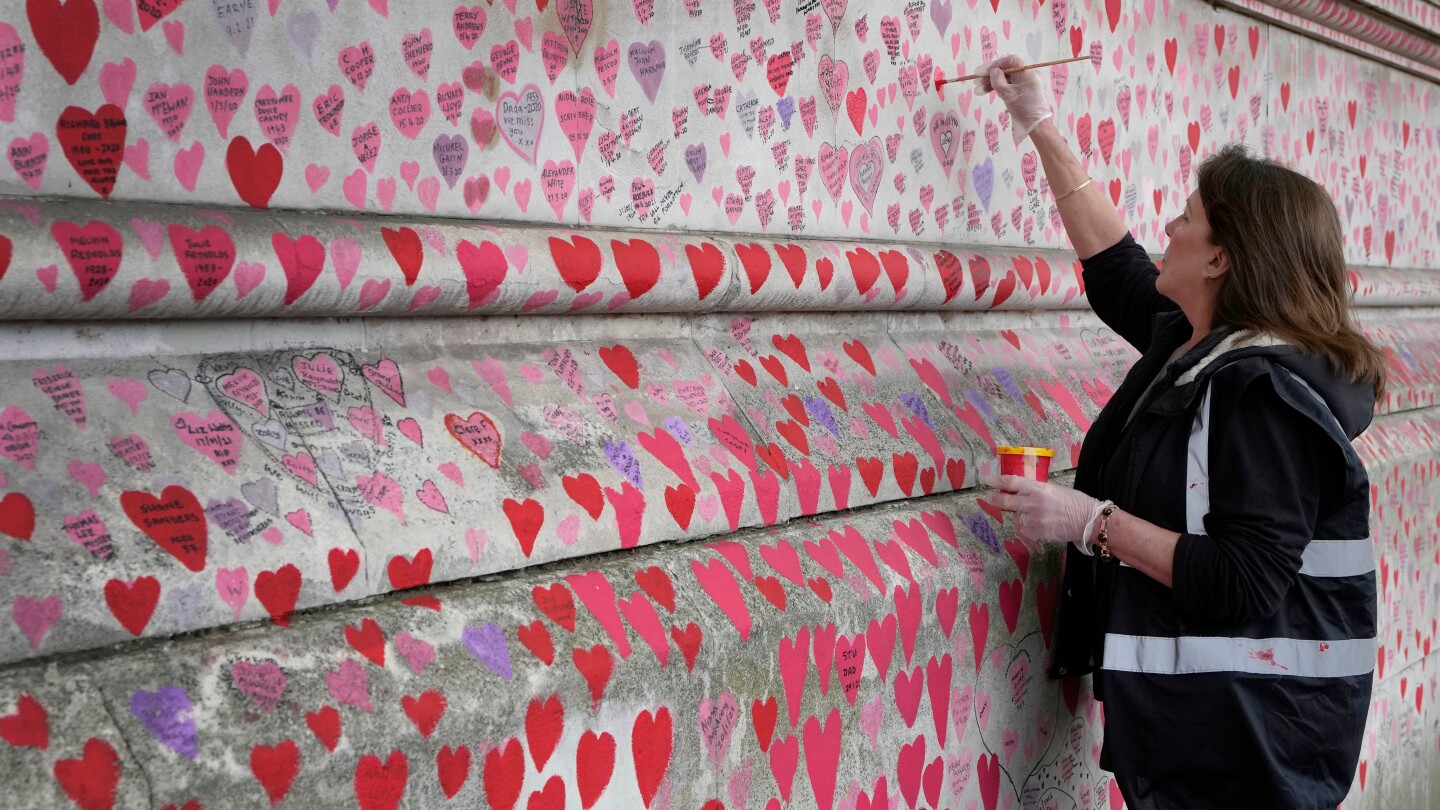
Each life lost during the pandemic is represented by a hand-painted heart, creating a striking visual testament to the scale of Britain’s loss. The wall has become a deeply significant site for bereaved families, many of whom were unable to say proper goodbyes to loved ones due to pandemic restrictions.
“Many families did not have the opportunity to say goodbye to a loved one,” said Culture Minister Fiona Twycross. “Today, we commit to ensuring that those who died are not forgotten.”
The 8-foot-high Portland stone wall was established by the advocacy groups COVID-19 Bereaved Families for Justice and Led by Donkeys. It is now maintained by dedicated volunteers known as The Friends of the Wall, who meticulously refresh the painted hearts weekly using long-lasting masonry paints.
Walking the entire length of the heart-covered memorial takes approximately 10 minutes, offering visitors a powerful physical experience of the pandemic’s devastating impact on British society. The memorial has become a focal point for public grief and remembrance.
In addition to preserving the London memorial, the government announced plans to support annual days of reflection each March and to back the creation of new spaces for remembrance across the country, including additional memorial walls in other locations.
The United Kingdom suffered one of Europe’s deadliest COVID-19 outbreaks. The country’s response to the pandemic under former Prime Minister Boris Johnson’s Conservative government drew significant criticism, particularly regarding the delayed implementation of the first national lockdown on March 23, 2020. That decision is believed by many public health experts to have contributed to the UK’s high death toll.
However, other aspects of Britain’s pandemic response received international praise, notably the country’s rapid development and deployment of vaccines. The UK was among the first nations to begin mass vaccination, with Margaret Keenan receiving the world’s first approved COVID-19 vaccine outside of clinical trials in December 2020.
The preservation of the memorial comes as the country continues to process the collective trauma of the pandemic. A comprehensive national inquiry examining all aspects of the UK’s pandemic handling – from initial preparedness to government decision-making – began two years ago and is expected to continue until 2027. The inquiry is currently focusing on the pandemic’s impact on children and educational services.
Twycross described the wall as “a poignant and powerful reminder of the scale of loss of life to the pandemic,” adding that it is “right” that the country appropriately remembers those who died.
The decision to preserve the memorial represents a significant acknowledgment by the current Labour government of both the immense loss suffered during the pandemic and the important role public commemorations play in national healing. For many families who lost loved ones, the wall stands as both a place of personal mourning and a reminder that their individual losses are part of a shared national experience.
Fact Checker
Verify the accuracy of this article using The Disinformation Commission analysis and real-time sources.

12 Comments
Ensuring the longevity of this COVID memorial wall is a thoughtful gesture. It will allow future generations to understand the scale of the pandemic’s impact and pay respects to those who were lost.
Absolutely. Preserving this wall as a permanent fixture is the right thing to do to honor the memory of those who tragically passed away.
Preserving the COVID memorial wall is an important gesture of compassion and recognition for the families who lost loved ones. It’s heartening to see the government take this step to ensure it remains a place of remembrance.
The COVID-19 memorial wall is a poignant and visually striking tribute. I’m glad the government has committed to preserving this deeply meaningful site for bereaved families and the public to visit and reflect.
The scale of the loss represented by this wall is truly staggering. I’m glad the government is committed to ensuring it remains as a lasting memorial to honor those who died.
Agreed. It’s vital that we never forget the immense human toll of this pandemic and continue to support the families left behind.
While nothing can truly heal the pain of losing loved ones to COVID-19, this memorial wall offers a place for the public to collectively mourn and pay respects. I’m glad the government is committed to preserving it.
While nothing can replace the loss of loved ones, this memorial wall provides a powerful and tangible way for the public to recognize the sacrifices made during the COVID-19 crisis. Its preservation is an important act of solidarity.
This COVID memorial wall is a poignant and meaningful tribute to those lost during the pandemic. Preserving it as a permanent fixture is an important gesture of respect and remembrance for the bereaved families.
The COVID memorial wall is a profoundly moving and meaningful tribute. Ensuring its longevity is an important way to keep the memory of those lost alive and provide comfort to the bereaved.
This memorial wall serves as a powerful and sobering reminder of the immense human toll of the COVID-19 pandemic in the UK. I’m glad the government recognizes its importance and has committed to its preservation.
This COVID memorial wall is a deeply poignant and impactful public art installation. Maintaining it as a permanent fixture is the right decision to honor those who tragically passed away.