


Listen to the article
U.S. Economy Grows at 2% Rate in First Quarter as War Clouds Outlook
The U.S. economy expanded at a modest 2% annual rate in the first quarter of 2026, rebounding from sluggish growth at the end of 2025, according to Commerce Department figures released Thursday. The improvement follows recovery from last fall’s 43-day federal government shutdown, but growing tensions in the Middle East cast a shadow over future economic prospects.
Federal government spending played a significant role in the quarter’s growth, increasing at a 9.3% annual rate and adding more than half a percentage point to GDP. This marks a sharp reversal from the fourth quarter of 2025, when government shutdown effects subtracted 1.16 percentage points from economic expansion.
Consumer spending, which drives approximately 70% of U.S. economic activity, showed signs of cooling. It grew at just 1.6% in the first quarter, down from 1.9% at the end of 2025. Notably, spending on goods, including essentials like food and clothing, experienced a slight decline, while service sector spending also decelerated.
“This is a split-screen economy,” noted Heather Long, chief economist at Navy Federal Credit Union. “Companies and investors involved in AI are on fire. Meanwhile, middle and moderate income households are struggling with high gas prices… Consumption is slowing as people are struggling to manage all their bills and growing more concerned about the future.”
Business investment emerged as a bright spot, increasing at an impressive 8.7% pace, with analysts pointing to substantial spending on artificial intelligence technologies. When housing is excluded, nonresidential investment surged 10.4% – the largest jump in nearly three years.
The housing sector continues to struggle, with residential investment dropping at an 8% annual rate – the fifth consecutive quarterly decline and the steepest fall since late 2022. The persistent weakness in housing represents an ongoing drag on overall economic performance.
An unexpected surge in imports, which rose at a dramatic 21.4% rate during the January-March period, subtracted more than 2.6 percentage points from first-quarter growth, partially offsetting gains in other sectors.
Despite these mixed signals, a key measure of the economy’s underlying strength – which includes consumer spending and private investment while excluding more volatile components like exports, inventories and government spending – grew at a solid 2.5% rate. This represents an acceleration from the 1.8% pace recorded in the fourth quarter of 2025.
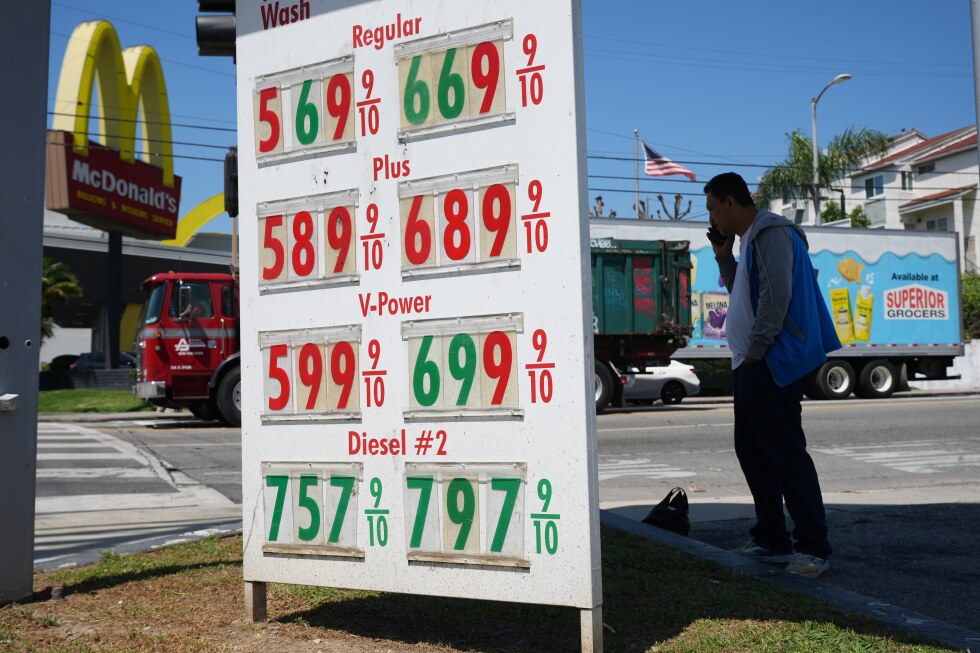
The ongoing conflict in Iran has emerged as a significant economic concern. Iran’s blockade of the Strait of Hormuz, through which approximately one-fifth of the world’s oil and liquefied natural gas passes, has driven energy prices higher. This surge has exacerbated inflation and reduced consumer purchasing power.
The Federal Reserve acknowledged these geopolitical risks in its policy announcement Wednesday, citing “a high level of uncertainty” stemming from the conflict as it kept interest rates unchanged.
Some economists have expressed difficulty in forecasting economic performance amid the current geopolitical instability. Carl Weinberg, chief economist at High Frequency Economics, declined to predict first-quarter GDP growth, writing, “President Donald Trump’s war with Iran has led to a total blockade of the Strait of Hormuz. We do not know how to model the impact of that event, as we have never seen anything quite like it.”
Thursday’s Commerce Department report represents the first of three GDP estimates for the quarter, with revisions expected in the coming months as more complete data becomes available.
The mixed economic signals reflect an economy at a crossroads – showing resilience in some sectors while facing mounting pressures from geopolitical tensions, energy price volatility, and shifting consumer spending patterns.
Fact Checker
Verify the accuracy of this article using The Disinformation Commission analysis and real-time sources.

8 Comments
The slowdown in consumer spending is worrying, as that is the engine that drives much of the U.S. economy. Hopefully, it’s just a temporary blip, but the Iran situation is a wild card that could significantly impact economic sentiment and activity.
The 2% growth rate is decent, but not exactly stellar. The economy seems to be treading water rather than surging ahead. I hope the underlying fundamentals remain strong enough to withstand the potential shocks from the Middle East.
That’s a fair assessment. Modest growth is better than contraction, but the economy could certainly use more dynamism. Navigating geopolitical risks will be critical in the quarters ahead.
It’s a mixed bag – some signs of resilience, but also clear headwinds. The Iran situation is particularly concerning, as escalating military tensions could disrupt energy markets and broader economic activity. Policymakers will need to strike the right balance.
It’s encouraging to see the U.S. economy regaining momentum after the federal shutdown. However, the tensions in the Middle East are certainly a concerning cloud on the horizon. I wonder how that may impact consumer and business confidence going forward.
Agreed. The geopolitical uncertainty will likely weigh on economic growth if it continues to escalate. Policymakers will need to carefully navigate these challenges to support stability and confidence.
The recovery in government spending is a positive sign, but the moderation in consumer activity is a bit worrying. It will be interesting to see if that trend persists or if it was just a temporary blip.
Absolutely. Consumer spending is the backbone of the U.S. economy, so any sustained weakness there could be problematic. Monitoring the consumer sector will be crucial in the months ahead.