


Listen to the article
The Trump administration has announced plans to crack down on foreign tech companies accused of exploiting American artificial intelligence models, specifically targeting China amid growing tensions in the global AI race.
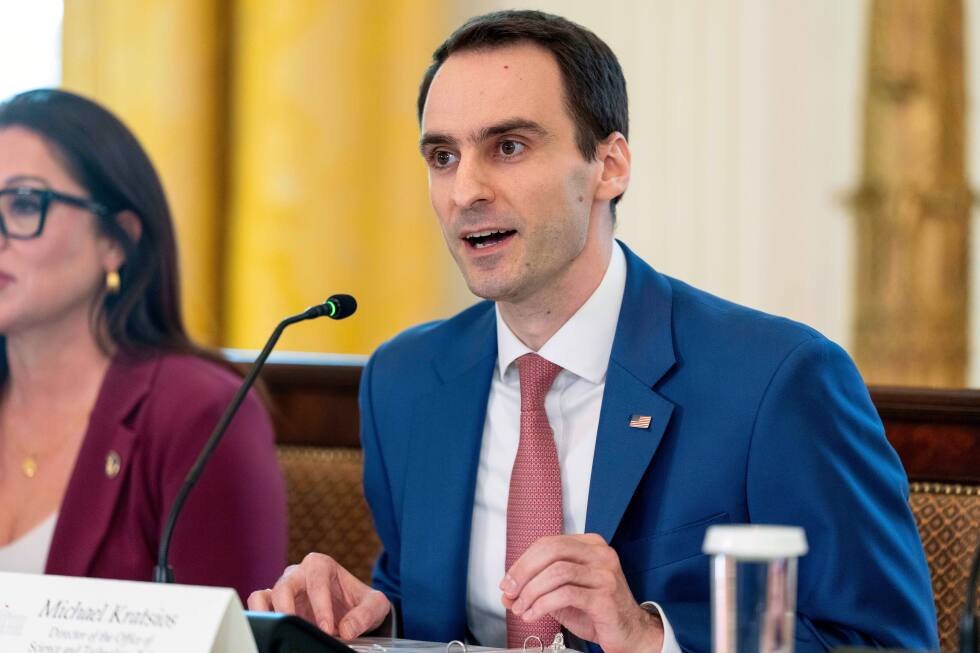
In a memo released Thursday, Michael Kratsios, President Trump’s chief science and technology adviser, accused Chinese entities of conducting “deliberate, industrial-scale campaigns” to extract capabilities from leading U.S. AI systems. The administration vows to work with American AI companies to identify such activities, build defensive measures, and develop punishment mechanisms for offenders.
This aggressive stance comes as China rapidly closes the technology gap with the United States in artificial intelligence development. According to a recent report from Stanford University’s Institute for Human-Centered AI, the performance difference between top U.S. and Chinese AI models has “effectively closed,” raising concerns about America’s ability to maintain its competitive edge in this strategically critical field.
The Chinese embassy in Washington quickly responded to these allegations, with spokesperson Liu Pengyu stating that China “opposes the unjustified suppression of Chinese companies by the U.S.” He emphasized China’s commitment to “promoting scientific and technological progress through cooperation and healthy competition” and highlighted the country’s attention to intellectual property rights protection.
From Beijing, China’s Foreign Ministry spokesperson Guo Jiakun further rejected the U.S. claims, characterizing them as groundless accusations that smear the achievements of China’s AI industry. “We urge the U.S. to respect facts, discard prejudice, stop suppressing China’s technological development, and do more to promote scientific and technological exchange and cooperation between the two countries,” Guo stated.
The administration’s announcement coincides with bipartisan action in Congress. This week, the House Foreign Affairs Committee unanimously supported legislation establishing a process to identify foreign actors extracting “key technical features” of closed-source, U.S.-owned AI models. The bill, sponsored by Rep. Bill Huizenga (R-Mich.), would enable punishment including sanctions against violators.
“Model extraction attacks are the latest frontier of Chinese economic coercion and theft of U.S. intellectual property,” Huizenga said. “American AI models are demonstrating transformative cyber capabilities, and it is critical we prevent China from stealing these technological advancements.”
The issue gained prominence last year when Chinese startup DeepSeek released a large language model comparable to U.S. offerings but at significantly lower cost. David Sacks, then serving as Trump’s AI and crypto adviser, suggested the company had copied U.S. models, specifically claiming DeepSeek “distilled the knowledge out of OpenAI’s models.”
Major U.S. AI developers have made similar accusations. In February, OpenAI wrote to lawmakers arguing China should not be permitted to advance “autocratic AI” by “appropriating and repackaging American innovation.” That same month, Anthropic, creator of the Claude chatbot, accused DeepSeek and two other Chinese AI laboratories of “illicitly extract[ing] Claude’s capabilities to improve their own models” through distillation techniques.
Distillation involves training less capable models on the outputs of more sophisticated ones. While this can be a legitimate training method, Anthropic argues it becomes problematic when competitors “use it to acquire powerful capabilities from other labs in a fraction of the time, and at a fraction of the cost, that it would take to develop them independently.”
However, technology transfer isn’t exclusively one-directional. San Francisco-based startup Anysphere recently acknowledged that its latest coding tool was based on an open-source model developed by Chinese company Moonshot AI, creator of the Kimi chatbot.
Kyle Chan, a fellow at The Brookings Institution and expert on Chinese technology development, notes the difficulty in identifying unauthorized distillation amid legitimate data requests, comparing it to “looking for needles in an enormous haystack.” He suggests improved information sharing and coordination among U.S. AI labs could help address the issue, with the federal government facilitating these anti-distillation efforts.
Despite the aggressive rhetoric, analysts question how far this crackdown might progress, particularly with President Trump reportedly planning a state visit to Beijing in mid-May. The timing suggests potential diplomatic constraints on any immediate, severe actions against Chinese tech companies.
Fact Checker
Verify the accuracy of this article using The Disinformation Commission analysis and real-time sources.

9 Comments
As someone who follows the mining and commodities space, I’m curious how this AI model dispute could impact critical industries like rare earth elements and battery minerals. Maintaining US technological superiority is vital, but we must be mindful of broader geopolitical and economic implications.
That’s a good point. The AI battle could have ripple effects across strategic industries and global supply chains. It will be important to consider the broader ramifications as this situation evolves.
The Trump administration’s tough stance on protecting US AI models is understandable, but I hope they can find a way to balance security concerns with continued scientific and technological cooperation. Isolationism rarely leads to positive outcomes in the long run.
As someone interested in the energy and mining sectors, I’ll be watching closely to see how this AI model dispute impacts related industries and technologies. Maintaining US leadership in critical areas is important, but we must ensure a balanced, strategic approach that avoids damaging global cooperation.
This is an interesting development in the ongoing AI race between the US and China. It’s important to ensure fair and ethical use of AI models, but a heavy-handed approach could backfire. I’m curious to see how this plays out and what the long-term impacts will be.
You make a good point. Finding the right balance between protecting US interests and fostering international cooperation in AI will be crucial.
This is a complex issue without easy answers. While I support efforts to safeguard American AI capabilities, I’m concerned about the potential for escalating tensions and trade disputes. Thoughtful diplomacy and multilateral collaboration may be more effective than unilateral actions.
The exploitation of US AI models by foreign entities is a concerning issue that needs to be addressed. However, I’m wary of overly aggressive tactics that could further escalate tensions. A measured, multilateral approach may be more effective in the long run.
Agreed. Maintaining American leadership in AI is important, but unilateral actions could damage international cooperation and technological progress overall.