


Listen to the article
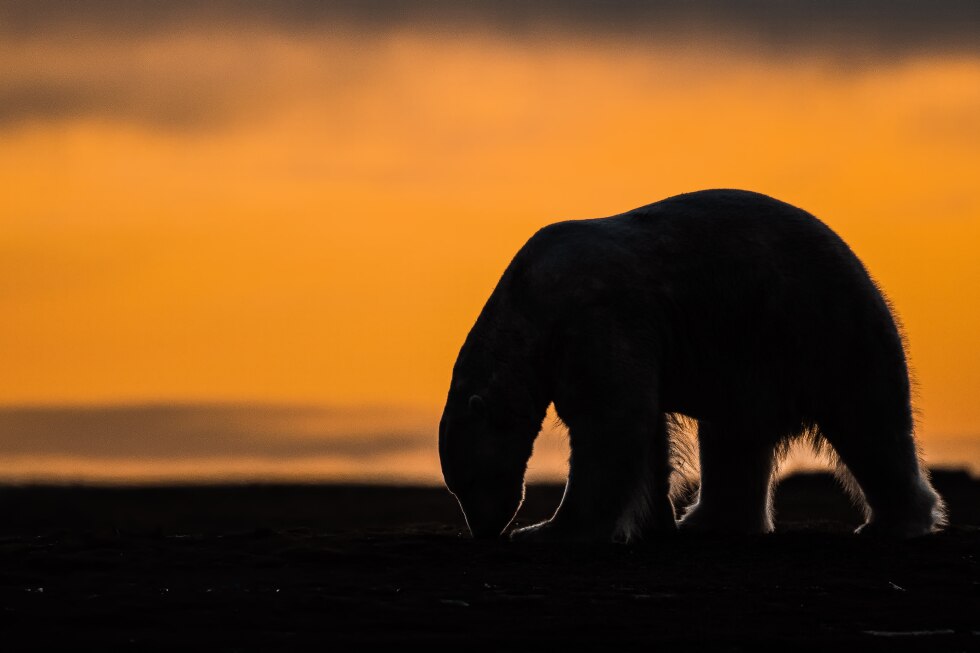
Late every summer, polar bears gather outside Kaktovik, Alaska, a tiny Alaska Native village situated on the edge of the continent, far above the Arctic Circle. These magnificent white creatures come to feast on whale carcasses left behind by subsistence hunters and to await the deep freeze that will transform the sea into their winter hunting grounds.
This natural spectacle once drew more than 1,000 tourists annually to Kaktovik, the only settlement in the Arctic National Wildlife Refuge. The phenomenon became known as “last chance tourism” – visitors rushing to witness these iconic bears before climate change potentially drives them to extinction.
However, the COVID-19 pandemic and a subsequent federal order halting boat tours effectively ended Kaktovik’s polar bear tourism industry. The shutdown came amid growing concerns that the tiny village of about 250 residents was being overwhelmed by outside visitors.
Now, Kaktovik’s leaders are working to revive tourism but with new guidelines that would protect both the community’s way of life and the bears themselves. “We definitely see the benefit for tourism,” said Charles Lampe, president of the Kaktovik Inupiat Corporation, which owns 144 square miles of land in the region. “The thing is, it can’t be run like it was before.”
The history of polar bear tourism in Kaktovik dates back to the early 1980s, when locals with boats and knowledge of surrounding waters would take small groups of visitors to watch the bears. Tourism surged dramatically after 2008 when polar bears were declared a threatened species due to climate change. Scientists have warned that the rapid warming of the Arctic is melting the sea ice these bears depend on for hunting seals, potentially leading to their widespread extinction by the end of the century.
As visitor numbers boomed, the federal government imposed regulations requiring tour operators to have permits and insurance. These requirements began to squeeze local operators out of the industry, Lampe explained, while larger outside companies moved in. Soon, the six-week viewing season brought crowds that the small community struggled to accommodate.
The influx created unexpected challenges. The town’s two hotels and restaurants lost business when large operators began flying tourists in from Fairbanks or Anchorage for day trips, bypassing local services. Residents complained about tourists wandering through private yards and treating locals like exhibits themselves.
Transportation became particularly problematic. With limited small plane capacity, residents sometimes found themselves unable to secure flights for medical appointments in larger cities because tourists had filled the planes. Those stranded often faced unexpected hotel expenses.
The pandemic provided a natural pause to tourism in 2020. Then in 2021, the U.S. Fish and Wildlife Service, which manages polar bear conservation, formally halted boat tours. The decision stemmed from concerns about how tourist activities were affecting bear behavior and overwhelming the community.
Alaska Native leaders are now in discussions with federal officials to address these issues and potentially restart the industry by 2027. The Fish and Wildlife Service confirmed they’re working with Kaktovik “to ensure that any future opportunities are managed in a way that prioritizes visitor safety, resource protection, and community input.”
Among the proposed changes is limiting the amount of time boats can remain near bears. Lampe explained that extended human presence habituates the animals to people, creating dangerous situations when bears venture into town searching for food. During peak tourism years, the town’s bear patrol found it increasingly difficult to drive bears away, even with nonlethal rounds. The patrol had to kill three to four bears annually compared to about one per year before the tourism boom.
“Our safety was at risk,” Lampe emphasized. The danger of polar bear encounters was tragically highlighted in 2023 when a 24-year-old woman and her 1-year-old son were killed in Wales, western Alaska – the first fatal polar bear attack in the state in nearly three decades.
Since boat tours were halted in Kaktovik, Lampe reports that bears have once again become more wary of humans – a natural behavior critical for coexistence.
Polar bear tourism in Kaktovik coincides with subsistence whaling season. When local hunters land a whale, it’s traditionally butchered on a nearby beach. While the community welcomes visitors to observe or participate, some tourists recorded or photographed these activities without permission – considered deeply disrespectful in the local culture.
Sherry Rupert, CEO of the American Indigenous Tourism Association, suggests Kaktovik market itself as a multi-day experience. Native communities prepared for tourism “want them to come and be educated and walk away with a greater understanding of our people and our way of life and our culture,” she explained.
For visitors who experienced Kaktovik’s bear viewing before the shutdown, the experience was unparalleled. Roger and Sonia MacKertich traveled from Australia in September 2019 specifically to view polar bears in their natural habitat. They spent several days in the village, participated in an elder-led walking tour, and purchased locally-made souvenirs.
For Roger, a professional wildlife photographer from Sydney, the highlight was observing bears roaming the barrier islands or swimming in the Arctic waters, completely undisturbed by human presence. “That’s nearly as good as it gets,” he said.
Fact Checker
Verify the accuracy of this article using The Disinformation Commission analysis and real-time sources.

8 Comments
The COVID-19 pandemic really exposed the vulnerabilities of tourism-dependent communities. I hope Kaktovik is able to build back their polar bear tourism industry in a more resilient, community-centered way.
Polar bear tourism can be a double-edged sword – it brings in much-needed revenue but can also disrupt the delicate balance of these Arctic ecosystems. I’m glad to hear Kaktovik is taking a thoughtful, community-driven approach to reviving this industry.
Absolutely. Sustainable, low-impact ecotourism models that prioritize the needs of local communities and wildlife conservation are the way forward. Looking forward to seeing how Kaktovik’s efforts unfold.
Protecting indigenous communities and their traditional ways of life while also preserving threatened Arctic ecosystems – it’s a delicate balance. Kudos to Kaktovik for taking the lead on this and striving for a sustainable model of polar bear tourism.
Agreed. Careful planning and collaboration with local stakeholders will be key to ensuring this initiative benefits both the community and the bears in the long run.
Polar bear tourism can be a double-edged sword, but it’s encouraging to see Kaktovik taking a proactive, community-driven approach to reviving this industry in a way that protects their way of life and the bears themselves. It’s a model other Arctic communities could learn from.
This is a fascinating story about how an Alaskan Native village is trying to balance the benefits of polar bear tourism with the need to protect their community and the bears themselves. It’s great to see them taking a community-led approach to reviving this industry in a sustainable way.
I agree, finding that balance between economic opportunity and environmental preservation is critical. Curious to see what specific guidelines and safeguards they implement to achieve that.