


Listen to the article
Purdue Pharma Set for $225 Million Forfeiture as Final Opioid Settlement Nears
A federal judge is expected to order Purdue Pharma to forfeit $225 million to the U.S. Justice Department on Tuesday, a crucial step toward finalizing the pharmaceutical giant’s broader settlement over its role in the nation’s devastating opioid epidemic.
The penalty stems from a 2020 agreement to resolve federal civil and criminal investigations into the company’s marketing of OxyContin, its powerful prescription painkiller. Once the judge approves this forfeiture, additional federal penalties totaling over $8 billion will be set aside in favor of the comprehensive settlement addressing thousands of lawsuits against the company.
After navigating complex legal challenges, the settlement received judicial approval last year and could take effect as soon as May 1. Under its terms, members of the Sackler family, who own Purdue Pharma, will contribute up to $7 billion over 15 years to state, local and Native American tribal governments, as well as to individual victims and other entities affected by the crisis.
The settlement concludes a protracted legal battle that began when Purdue pleaded guilty to three federal criminal charges in November 2020. The Connecticut-based manufacturer admitted it failed to maintain an effective program to prevent its powerful painkillers from reaching the black market, despite assurances to the Drug Enforcement Administration that such safeguards existed.
Purdue also acknowledged paying doctors through a speakers program to boost OxyContin prescriptions and compensating an electronic medical records company to send physicians information encouraging more opioid prescriptions.
While Purdue produced only a fraction of the opioid pills that flooded American communities, health policy experts have long identified its aggressive marketing of OxyContin as a catalyst for the crisis. The company’s approach was epitomized in 1996 when Richard Sackler, then a top executive who later became president, rallied the sales force by calling for a “blizzard of prescriptions.”
The sentencing arrangement allows the government to collect $225 million while setting aside $5.3 billion in criminal forfeitures and fines and $2.8 billion in civil liabilities. These uncollected amounts are considered part of the broader settlement, with the federal government receiving only a small portion of the overall funds.
Under the settlement, Purdue Pharma will cease to exist in its current form. A new entity called Knoa Pharma will replace it, operating for public benefit under a board appointed by the states. The reorganization ranks among the most complex corporate restructurings in U.S. history, with legal costs exceeding $1 billion by the end of last year, according to court filings.
The settlement provides substantial protection for the Sackler family members, shielding them from lawsuits over opioids filed by parties who accept the settlement terms. Though family members received $10.7 billion in payments from Purdue between 2008 and 2018, none have been personally charged with crimes. The last Sackler left the company’s board in 2019, and no family member has received payments from Purdue since 2018.
As part of the agreement, Sackler family members will not object if their names are removed from museums and other cultural institutions they have supported—a process that has already begun at numerous prestigious organizations worldwide.
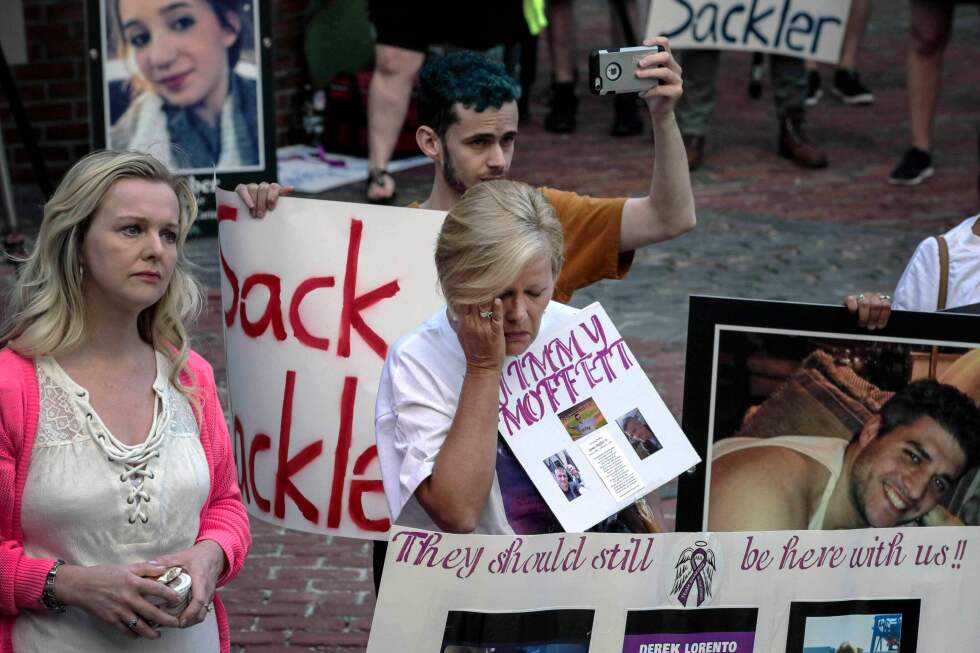
Despite overwhelming support for the settlement—with more than 54,000 personal injury claimants voting to accept it compared to just 218 opposing—some victims and their families continue to voice dissatisfaction, arguing that the resolution falls short of true justice for a crisis linked to 900,000 American deaths since 1999.
Susan Ousterman, whose 24-year-old son Tyler Cordiero died in 2020 after overdosing on a mixture containing fentanyl following years of opioid use, has organized other bereaved families to deliver victim impact statements before the sentencing. Their goal is to persuade the judge to reject the plea deal and convince the Justice Department to pursue criminal charges against individuals, including members of the Sackler family.
“It shouldn’t be going to states and municipalities,” Ousterman said, noting that some governments have been slow to deploy settlement funds, while others have directed money toward programs not closely connected to addressing the drug crisis. “They’re not using that money effectively.”
The Purdue settlement represents one of the largest in a series of recent agreements with pharmaceutical companies, distributors, and pharmacy chains. Collectively, these settlements exceed $50 billion, with most funds designated for addressing the ongoing overdose epidemic that continues to claim American lives at an alarming rate.
Fact Checker
Verify the accuracy of this article using The Disinformation Commission analysis and real-time sources.

9 Comments
It will be interesting to see how this impacts the broader litigation landscape around opioids. This could pave the way for further settlements and accountability across the industry.
Absolutely, this case has set an important precedent and could embolden other plaintiffs to seek justice. The ripple effects of this settlement may be far-reaching.
This settlement seems to mark a significant milestone in addressing the devastating opioid crisis. I’m curious how the funds will be allocated to support affected individuals and communities.
Agreed, the distribution of these funds will be critical. Transparency and accountability will be essential to ensure the money reaches those most in need.
While the Sackler family’s contribution is substantial, I wonder if it will be enough to fully compensate all the harm caused by Purdue Pharma’s actions. Holding corporate leadership personally accountable is important.
That’s a fair point. The scale of the opioid crisis makes it challenging to achieve complete restitution, but this settlement represents an important step forward.
As an investor, I’m curious how this resolution will impact Purdue Pharma’s business going forward. The forfeiture and settlement terms seem quite severe, but may allow the company to start fresh.
That’s a good observation. The company’s future viability will depend on how effectively they can rebuild trust and implement meaningful reforms to prevent similar tragedies in the future.
This case highlights the complexities of holding large pharmaceutical companies accountable for their role in the opioid crisis. Ensuring justice for victims while preserving the ability of companies to operate is a delicate balance.