


Listen to the article
Americans Increasingly Frustrated with Tax Burden Despite Trump’s Tax Reforms
Most Americans continue to view their taxes as excessive, according to recent polling data, even after the implementation of President Donald Trump’s tax legislation last year. The growing dissatisfaction reflects broader economic anxieties as citizens grapple with inflation and sluggish economic growth.
A new Fox News poll conducted in late March reveals that approximately 70% of registered voters believe their taxes are “too high,” a significant increase from about 60% who expressed this sentiment last year. This frustration spans the political spectrum, with notable increases among very liberal voters and Democratic men. The poll also shows rising discontent among demographic groups Republicans hope to court in upcoming midterm elections, including moderates, rural voters, and white voters without college degrees.
This upward trend in tax dissatisfaction has been building for several years. Gallup’s March polling found roughly 60% of U.S. adults consider their federal income tax burden “too high,” approaching levels of discontent last seen before President George W. Bush’s tax cuts in 2001 and 2003. The sentiment crosses party lines, with about half of Democrats and approximately 60% of Republicans expressing frustration with their federal tax obligations.
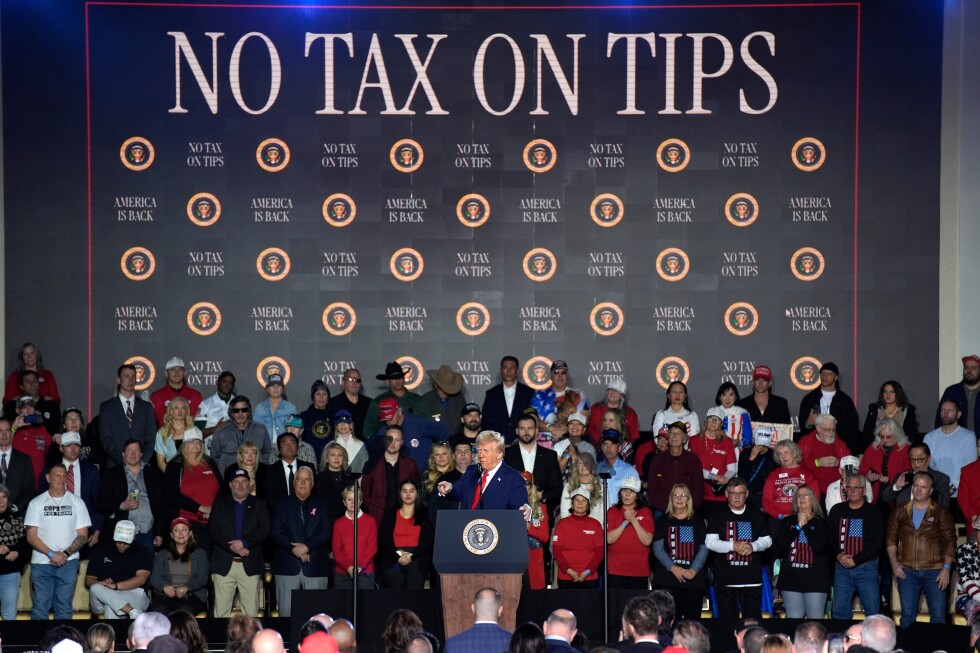
The tax and spending cut bill championed by Trump and congressional Republicans last year included various tax breaks, such as an enhanced child tax credit and new deductions for tips and overtime pay. While tax refunds have increased this season and many households are expected to see more income as a result of these changes, the Congressional Budget Office has estimated that the wealthiest Americans will ultimately receive the largest benefits from the legislation.
Despite Republican claims that their policies are making life more affordable for working families, polling suggests many Americans aren’t feeling relieved, especially as inflation erodes the value of their tax refunds. The disconnect between policy promises and public perception represents a potential vulnerability for the president’s party.
Beyond personal tax burdens, many Americans express concerns about perceived inequities in the tax system. A January poll by the Pew Research Center found approximately 60% of Americans are significantly bothered by the belief that wealthy individuals and corporations aren’t paying their fair share of taxes, a sentiment that has remained relatively stable in recent years. This view is particularly strong among Democrats, with about 80% expressing substantial concern, compared to roughly 40% of Republicans.
Government spending efficiency also emerges as a major concern. The Fox News poll revealed that 75% of registered voters—with similar numbers among Republicans—believe “almost all” or “a great deal” of government funding is wasteful and inefficient. This suggests that for many Americans, frustration stems not just from how much they pay, but from perceptions about how tax dollars are utilized and whether the tax burden is equitably distributed.
The rising tax discontent presents a challenge for the Trump administration. The Fox News poll indicates about 64% of registered voters disapprove of Trump’s handling of taxes, up from 53% last April. This disapproval has increased most dramatically among independents but has risen across party lines. The findings align with broader concerns that Trump hasn’t effectively addressed inflation, with an AP-NORC poll from January showing most Americans believe Trump has negatively impacted the cost of living during his second term.
The polling data reveals a complex picture of American attitudes toward taxation. While personal tax burdens remain a significant concern, many citizens are equally or more troubled by perceived systemic inequities and government inefficiency. As economic pressures continue to mount for many households, tax policy is likely to remain a contentious political issue heading into the upcoming election cycle.
These findings are based on multiple surveys conducted earlier this year, including a Fox News poll of 1,001 registered voters (March 20-23), a Gallup poll of 1,000 U.S. adults (March 2-18), a Pew Research Center poll of 8,512 U.S. adults (January 20-26), and an AP-NORC poll of 1,203 U.S. adults (January 8-11).
Fact Checker
Verify the accuracy of this article using The Disinformation Commission analysis and real-time sources.

23 Comments
It’s telling that tax dissatisfaction is increasing even among liberal voters. That points to a broader economic malaise that transcends ideological divides.
Exactly. The tax issue seems to be morphing into a populist concern that is resonating beyond traditional party lines.
The data indicates the Trump tax cuts didn’t fully alleviate the public’s tax burden concerns. Lawmakers may need to consider more targeted relief measures.
The data suggests the Trump tax cuts didn’t fully address the public’s tax concerns. Policymakers may need to take a closer look at the tax burden facing middle- and working-class Americans.
The data highlights the persistent challenges policymakers face in calibrating the tax burden. Striking the right balance is clearly an ongoing struggle.
Absolutely. Managing the tax system to meet the public’s expectations is a delicate and politically fraught task.
It’s curious to see tax dissatisfaction rising even among traditionally Republican-leaning demographics like rural voters and those without college degrees. That could signal broader economic unease.
Good observation. If those key voting blocs are expressing more frustration with taxes, it may create openings for Democrats to make inroads in traditionally red areas.
The rising tax dissatisfaction across demographic lines suggests a growing economic unease that goes beyond party affiliation. Policymakers may need to take a more holistic approach.
Agreed. Addressing the underlying economic challenges facing households could be more impactful than partisan tax policy proposals.
The poll results underscore how economic factors can outweigh the political messaging around tax policy. Voters seem to be more focused on their personal financial situation than partisan talking points.
That’s a fair point. Voters tend to prioritize their pocketbook issues when it comes to taxes and the economy.
The polling data highlights the populist undertones in the public’s views on taxation. Politicians who can tap into that sentiment may find receptive audiences.
Good point. Tax policy has become a key battleground in the populist vs. establishment political dynamics.
Interesting to see that tax dissatisfaction remains high despite the new tax law. It seems many Americans are feeling the pinch from inflation and the sluggish economy, not just the tax burden itself.
That’s a good point. The broader economic challenges facing households likely play a big role in shaping views on taxes.
The tax burden is clearly an ongoing source of concern for many Americans. Policymakers will have to grapple with this sentiment as they consider future tax reforms.
It’s intriguing to see tax dissatisfaction rising among liberal voters. That suggests the tax issue may be transcending traditional party lines to some degree.
Yes, the bipartisan nature of the tax frustration is noteworthy. It could be a sign of broader economic discontentment cutting across ideological lines.
The poll results highlight the political challenges around tax policy. Taxes are a sensitive issue that can impact voting behavior, so politicians have to tread carefully.
Absolutely. Taxes are a perennial hot-button issue, so it will be interesting to see how it factors into the upcoming midterm elections.
The polling results suggest the tax issue will be a key battleground in the upcoming elections. Candidates who can effectively address voters’ concerns may gain an advantage.
It will be fascinating to see how the tax issue plays out in the upcoming midterm elections. Candidates who can credibly address voters’ tax concerns may have an advantage.