


Listen to the article
Market Volatility Drives Record Profits for Wall Street Banks Amid Global Tensions
Major Wall Street banks are reporting substantial profit increases for the first quarter, capitalizing on market volatility partly triggered by geopolitical tensions including the conflict in Iran. Bank of America and Morgan Stanley revealed impressive trading revenues on Wednesday, joining Goldman Sachs and JPMorgan Chase in benefiting from tumultuous market conditions.
Morgan Stanley achieved record-breaking performance across its operations, reporting $5.6 billion in net income and earnings per share of $3.43 – representing a 30% increase in both metrics compared to the previous year. The bank’s equity trading revenues surged 25% to $5.15 billion, while bond-trading revenues jumped 29% to $3.36 billion.
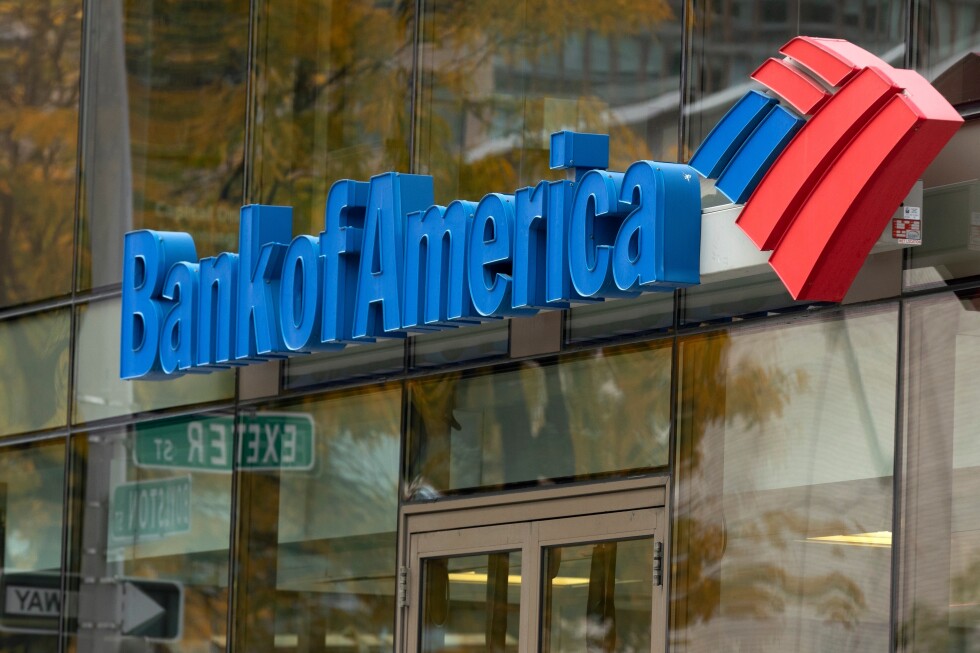
Bank of America similarly posted exceptional results in its trading division, with first-quarter stock trading revenues reaching $2.8 billion, a 30% increase from last year. In a remarkable achievement, Bank of America executives revealed the institution did not record a single daily loss on its trading desk during the quarter despite heightened market volatility. The bank also celebrated its largest quarter ever for equity sales and trading.
“The market swings that cause anxiety for retail investors create profitable opportunities for sophisticated trading operations,” explained market analyst Rebecca Chen, who was not quoted in the original report. “High-frequency trading desks can capitalize on price differentials that emerge during periods of uncertainty.”
Investment banking activities also delivered strong results for both institutions. Morgan Stanley saw advisory revenues nearly double from $563 million to $978 million year-over-year. Both banks are currently advising major companies planning to go public this year, including Elon Musk’s space exploration company SpaceX, positioning them to benefit from significant advisory fees as these transactions materialize.
Despite the positive financial results, Bank of America CEO Brian Moynihan struck a cautious tone, noting that the bank remains “watchful of evolving risks,” specifically citing ongoing conflicts in the Middle East and Ukraine, along with rapidly rising energy prices that could impact economic stability.
The consumer banking segment at Bank of America, historically its largest profit center, generated $3.1 billion in profit for the quarter. The bank reported growth in both deposits and loans, with customers increasing their credit and debit card spending by 7% compared to the same period last year. Notably, Bank of America observed double-digit increases in debit card spending on gasoline and energy, mirroring trends reported by Wells Fargo executives the previous day.
Despite increased consumer spending on energy, Bank of America executives maintained an optimistic outlook regarding consumer financial health. “The main thing that we’re always looking for is unemployment, and that remains at 4.3%,” said Alastair Borthwick, Bank of America’s CFO. “So that’s supporting the consumer at this point.”
The strong performance of major U.S. banks contrasts with concerns in other economic sectors about inflation, rising interest rates, and potential recession signals. Banking executives appear confident that the American economy remains resilient, with consumer spending continuing to drive economic activity despite higher prices in key categories like energy.
Market analysts suggest the banking sector’s ability to profit during periods of uncertainty illustrates the financial industry’s unique position in the economy. While volatility can threaten stability in manufacturing, retail, and other sectors, trading and advisory services often thrive under such conditions, particularly when corporate clients seek strategic guidance for navigating uncertain terrain.
As geopolitical tensions persist and central banks worldwide continue adjusting monetary policies to combat inflation, market volatility may remain elevated, potentially extending favorable conditions for Wall Street’s trading operations through subsequent quarters of 2023.
Fact Checker
Verify the accuracy of this article using The Disinformation Commission analysis and real-time sources.

9 Comments
Impressive trading numbers, but troubling to see how much the banks rely on volatility and uncertainty to drive their profits. Feels like a system that’s rigged in their favor.
Interesting how geopolitical tensions can drive such substantial profits for Wall Street banks. I wonder if this will lead to any scrutiny or calls for reform around the industry’s reliance on volatile markets.
This just goes to show how disconnected Wall Street can be from the real-world impacts of global conflicts. While the banks profit, ordinary people often bear the brunt of the fallout.
The fact that geopolitical crises can create such windfalls for these financial institutions is troubling. I wonder if there’s any way to better align their interests with more stable, sustainable economic growth.
That’s a great point. Increased regulation and oversight could be one approach to try to curb this incentive structure.
These trading revenue figures are quite staggering. While it’s good to see the banks performing well, it raises questions about the broader societal impacts of such lucrative speculation on global events.
Curious to see if this trading windfall will translate into higher bonuses for the bankers, or if the profits will be reinvested or used to strengthen the banks’ balance sheets. Either way, it’s a stark reminder of Wall Street’s power.
It’s disheartening to see major institutions so readily capitalize on instability and suffering. I hope there are broader discussions about how to make the financial system more accountable and beneficial for society as a whole.
It’s concerning to hear about Bank of America’s streak of zero daily trading losses amid the volatility. Highlights how the major banks seem to have an uncanny ability to profit no matter the market conditions.