


Listen to the article
Officials Ignored Years of Warnings Before Cheboygan Dam Crisis
Local, state and federal officials were aware of dangers posed by the Cheboygan Lock and Dam for years before recent floodwaters pushed it to the brink of collapse, according to public records.
Despite numerous warnings, authorities failed to compel private owners to repair the nonfunctional hydroelectric plant connected to the publicly-owned dam—a critical component for passing floodwaters downstream. Now taxpayers are funding an emergency effort to bring the plant back online before the dam fails and sends a wall of water toward downtown Cheboygan.
“I’m very concerned that this was not handled properly,” said Richard Sangster, a Cheboygan County commissioner and former mayor, criticizing federal regulatory actions over several years.
The property is currently owned by Hom Paper XI, LLC, a business controlled by former NFL linebacker Thomas Homco, who did not respond to requests for comment. Cheboygan County Sheriff Todd Ross defended local and state officials, saying, “We didn’t wait ’til the last minute. It’s privately owned. There’s only so much we can do.”
The exact taxpayer costs for the round-the-clock repair operation remain unknown, though previous estimates suggested the plant needed at least $1 million in repairs.
Records show the Federal Energy Regulatory Commission (FERC), which primarily regulates hydropower dams, sent warning letters for years to a revolving door of owners while granting multiple extensions for required repairs. As early as 2019, regulators warned about cracked concrete, damaged retaining walls, and gates crucial for flood management.
In 2021, FERC told the plant’s then-owners that “multiple items are overdue and completion dates are rapidly approaching.” The facility was cited 16 times in just 10 months for safety violations by the Occupational Safety and Health Administration before a fire closed it completely in September 2023.
That fire triggered more repair orders and extensions from FERC. State officials acknowledged awareness of the issues but claimed they had no enforcement authority.
“Safety concerns have been raised many times,” Sangster noted, adding that “you wouldn’t even be able to measure how detrimental” a dam failure would be to the community. “In my eyes, it appears like total neglect on their behalf,” he said of FERC’s oversight.
FERC spokesperson Celeste Miller declined to answer specific questions about the agency’s oversight, instead issuing a statement about FERC’s role in the ongoing emergency response.
The crisis comes six years after privately-owned dams failed in Midland following a similar pattern of regulatory delays. Michigan legislators vowed to prioritize dam safety after that disaster but ultimately failed to implement proposed reforms.
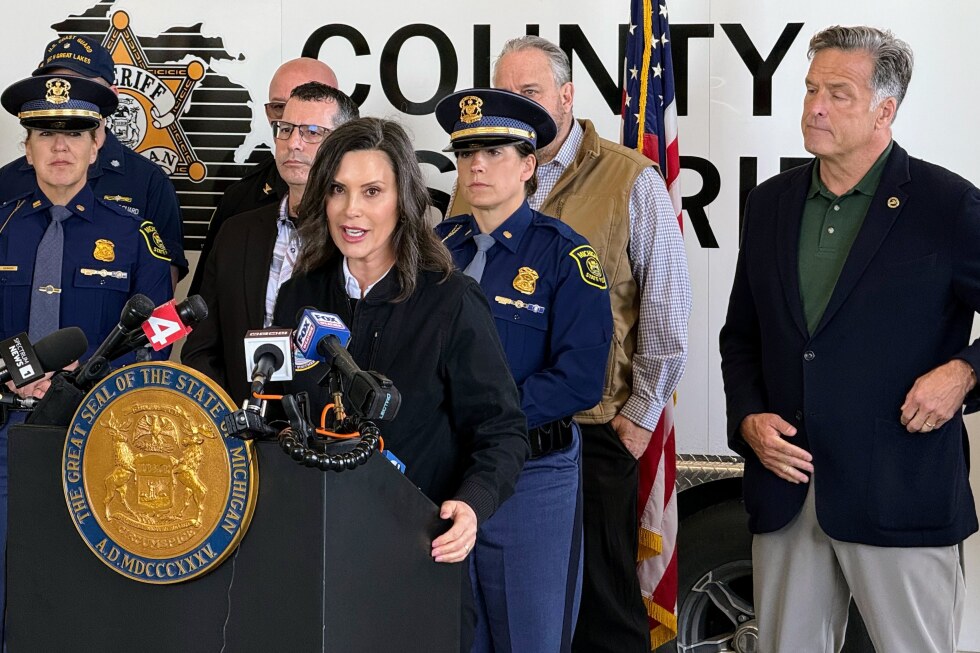
State Sen. John Damoose, R-Harbor Springs, who toured the dam with Gov. Gretchen Whitmer, said the solution “keeps getting kicked down the road… now we’ve got a whole community in peril because it was mismanaged by private owners.” He warned, “This is a problem that could happen all over the state. It got our attention a few years ago in Midland, but now we’re seeing that it was not an isolated thing.”
Governor Whitmer acknowledged the complexity of the situation, citing a “complicated web of privately owned and publicly owned dams,” though she noted the state has “made some long overdue investments in some of our infrastructure.”
The Cheboygan dam complex, like many in Michigan, was originally owned by utilities for power generation. Consumers Energy sold it to the state for $1 in 1967 when it stopped generating power, but the resulting deeper Cheboygan River had become valuable as a link between Lake Huron and the popular 40-mile Inland Waterway.
In 1983, Procter & Gamble took over the hydroelectric portion, securing a FERC licensing exemption while the state retained some control over water flows. The company invested millions in upgrades but shuttered operations in 1990, eliminating 300 jobs and beginning the facility’s slow decline.
Great Lakes Tissue later acquired the plant and faced years of FERC pressure to make repairs. The company sold the business before a June 2022 deadline to ensure proper functioning of the water-flow gates, but it’s unclear whether the work was completed or if federal regulators were aware of subsequent ownership changes. Remarkably, Great Lakes Tissue was still listed as the owner on FERC’s license exemption well into 2025.
After the 2023 fire left the hydro side of the complex idle, the Department of Natural Resources warned that its closure would hamper water management in the Cheboygan River, as the plant had previously handled about 30% of the river’s flow to Lake Huron.
Federal officials continued pressing current and former owners about unresolved safety issues, many dating back years, while trying to determine who was actually in charge—a process complicated by legal disputes between stakeholders in the failing business.
When Hom Paper finally emerged as the recognized owner, FERC ordered the company to either restore the plant or risk losing its license exemption. The company initially responded that operation was “no longer economically feasible” but later sought extensions while working on a potential sale to HydroMine Cheboygan LLC, a Wyoming corporation led by Roy Davis, who has restarted power operations at other aging Michigan dams.
As of Thursday night, the plant remained nonfunctional, reducing the dam’s ability to pass floodwaters that had climbed within five inches of its crest. Residents in the flood zone have been urged to prepare for evacuation.
Approximately 75 Consumers Energy workers have been working to get the privately owned plant running, with signs Thursday evening indicating restoration might be imminent, according to Consumers’ incident commander Bruce Straub.
Local business owner Sharen Lange noted that preserving dam integrity across northern Michigan remains crucial for the region. “We know that it being in private hands has produced a really bad result,” Lange said, reflecting community discussions about future ownership and management of the vital infrastructure.
Fact Checker
Verify the accuracy of this article using The Disinformation Commission analysis and real-time sources.

8 Comments
It’s concerning that the dangers of the Cheboygan Dam were known for years but not properly addressed. Taxpayers shouldn’t be left holding the bag for private owners’ neglect. Hopefully this prompts stronger regulations and enforcement going forward.
The Cheboygan Dam situation is a cautionary tale about the risks of deferred maintenance and lack of regulatory enforcement. Curious to see if there are broader lessons learned for other aging dams and infrastructure across the country.
Yes, this event should prompt a closer look at the condition and oversight of other dams, especially those in private hands. Preventing major failures needs to be a higher priority.
The Cheboygan Dam crisis underscores the need for better coordination and accountability when it comes to critical infrastructure, even if privately owned. Curious to see if this leads to any policy changes or new oversight measures in the region.
Appreciate the detailed reporting on the long history of issues with the Cheboygan Dam. Glad to see the authorities are now taking emergency action, but it’s unfortunate it had to reach this point. Hopefully some important lessons can be learned.
This highlights the need for better oversight and enforcement when it comes to critical infrastructure like dams. Private owners can’t be allowed to ignore safety concerns for years on end.
Agreed. The public authorities need to be more proactive in ensuring these facilities are properly maintained and repaired, even if privately owned. Waiting until the last minute is unacceptable.
Troubling to hear about the long-standing issues with the Cheboygan Dam. Taxpayers shouldn’t have to foot the bill for private owners’ negligence. Hopefully the emergency repairs can prevent a catastrophic failure.