


Listen to the article
Kosovo Businesses Struggle Amid Fuel Price Surge Triggered by Iran Conflict
In Pristina, Kosovo, local businesses are feeling the pinch as fuel prices soar due to the ongoing conflict in Iran. For Kushtrim Ajvazi, a manager at Pestova, one of Kosovo’s most successful snack producers, the economic ripple effects from a distant war have created unforeseen challenges.
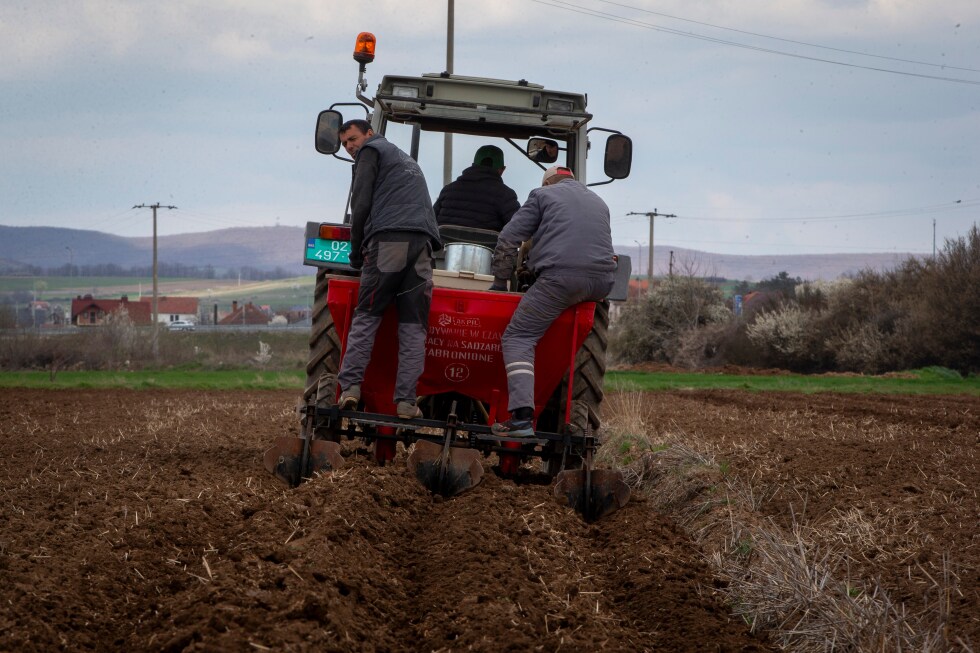
Pestova, which produces potato chips under the brand name Vipa, has seen wholesale fuel prices jump from 1.10 euros ($1.27) to 1.7 euros ($1.96) per liter. This surge is particularly problematic for a company that cultivates nearly 100 acres of potato fields in eastern Kosovo and depends heavily on fuel for both production and distribution.
“We need a lot of fuel, so costs are extremely high,” Ajvazi explained. The timing couldn’t be worse as spring marks potato planting season, a crucial period for the company’s annual production cycle.
Kosovo, one of Europe’s poorest nations, lacks domestic fuel production capacity. Importers determine fuel prices, with profit margins capped at 12%. This dependency makes the country particularly vulnerable to international market fluctuations.
The impact extends beyond Pestova’s operations. The company exports approximately 40% of its production to 23 different countries, including several European markets. These exports operate on prearranged contracts with fixed prices that require 90 days’ notice for any changes, complicating the company’s ability to absorb sudden cost increases.
“We are analyzing and calculating every additional cost, and if we see that this process of rising costs continues, we will be forced to adjust our prices,” Ajvazi said. While fertilizer prices have also increased, the company had reserves to cushion that impact temporarily.
Unlike neighboring Balkan countries, Kosovo’s government has yet to implement relief measures. Romania, Hungary, and Serbia have introduced special diesel pricing for farmers or reduced state tax income to ease the burden. Kosovo’s government did not respond to inquiries about potential interventions.
Economic experts warn that without urgent government action, further price increases could cause significant economic damage across multiple sectors. “There is not one sector that is not affected by the price increase,” noted economist Safet Gerxhaliu.
The fuel crisis has also hit everyday citizens hard. Bardh Mehmeti, an IT professional from Pristina, reports that filling his tank now costs 100 euros ($115), up from 80 euros ($92) before the crisis. The sharp increase has him “seriously considering” switching to an electric vehicle.
Kosovo’s economy has faced persistent challenges since declaring independence from Serbia in 2008 following conflict. Serbia’s refusal to recognize Kosovo’s independence has created ongoing tensions that have stalled both countries’ progress toward European Union membership.
Compounding these issues, Kosovo experienced prolonged political instability throughout much of last year, operating without a fully functioning government. Even now, Prime Minister Albin Kurti’s administration faces challenges, including a stalemate over the election of a new president.
The Democratic Party, Kosovo’s main opposition, has criticized what it characterizes as government inaction and called for temporary tax cuts to alleviate pressure on citizens and businesses during this crisis.
For companies like Pestova, which represent rare success stories in Kosovo’s challenging economic landscape, the government’s response in the coming weeks could prove crucial. Ajvazi’s plea to authorities is straightforward: “We call on the government to ease this phase for us.”
As global energy markets remain volatile due to the Iran conflict, Kosovo’s vulnerable position as a fuel importer without protective policies leaves its businesses and citizens particularly exposed to international instabilities far beyond their borders.
Fact Checker
Verify the accuracy of this article using The Disinformation Commission analysis and real-time sources.

11 Comments
Interesting to see how the conflict in Iran is rippling through to Kosovo’s economy. This just shows how interconnected global supply chains and commodity markets have become these days.
Very true. Even a distant war can have major economic impacts across borders and industries. Kosovo will need to find ways to build more resilience.
The fuel price surge must be really difficult for Kosovo businesses that rely heavily on transportation and distribution. I hope the government can provide some relief or assistance to help offset these unexpected costs.
Agreed, it’s a tough situation for them. Depending on imports makes Kosovo very vulnerable to global market fluctuations.
The timing of these fuel price increases couldn’t be worse for Pestova, with potato planting season just getting underway. That’s a critical period for their annual production cycle, so the higher costs will really hurt.
It’s concerning to hear that Kosovo lacks domestic fuel production capacity. That really leaves them at the mercy of international market fluctuations and import prices. Diversifying their energy sources would help build more resilience.
Absolutely. Investing in domestic renewable energy production could be one way for Kosovo to reduce its vulnerability to global fuel price swings.
The potato chip producer Pestova seems to be really feeling the squeeze from these higher fuel costs. I wonder if they’ll have to raise prices or find ways to cut costs elsewhere to maintain their margins.
Good point. Passing on the higher costs to consumers may be difficult, so they’ll likely have to get creative to manage this. Efficiency improvements could help offset the fuel price hikes.
It’s interesting to see how this conflict halfway across the world is impacting a small business like Pestova in Kosovo. Globalization can be a double-edged sword, exposing companies to international shocks.
Well said. Kosovo’s fuel import dependence makes it highly susceptible to geopolitical events. Diversifying energy sources and strengthening domestic industry could help insulate the economy.