


Listen to the article
Japan Abandons Lethal Weapons Export Ban in Major Policy Shift
Japan on Tuesday overturned its long-standing ban on lethal weapons exports, marking a significant departure from its post-World War II pacifist stance. The policy change comes as the nation seeks to strengthen its arms industry amid growing concerns over Chinese and North Korean military activities in the region.
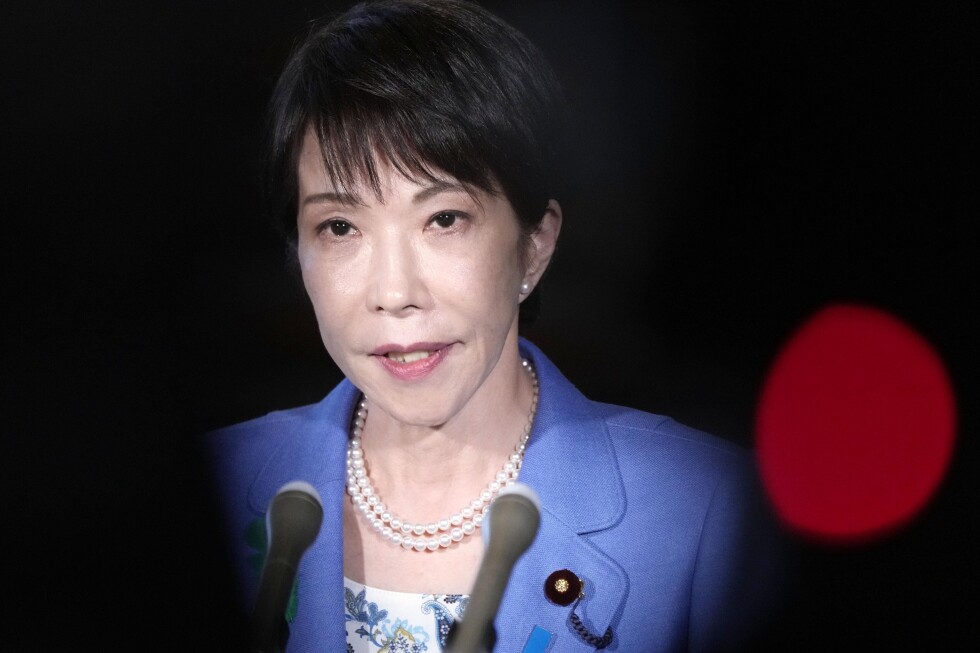
Prime Minister Sanae Takaichi’s Cabinet approved new guidelines that remove decades-old restrictions, paving the way for Japanese companies to sell sophisticated military hardware including warships, combat drones, and other weapons systems to international partners.
“The new policy will ensure safety for Japan and further contribute to the peace and stability in the region and the international society as the security environment around our country rapidly changes,” Chief Cabinet Secretary Minoru Kihara told reporters. “The government will strategically promote defense equipment transfers to create a security environment that is desirable for Japan and to build up the industrial base that can support fighting resilience.”
While China has criticized the policy shift, it has garnered positive reception from defense partners such as Australia and sparked interest among nations in Southeast Asia and Europe. Critics within Japan argue that the change violates the country’s pacifist constitution and could escalate global tensions while potentially endangering Japanese citizens.
Under Japan’s previous restrictions, military exports were limited to five non-combat areas: rescue, transport, alerts, surveillance, and minesweeping. The new guidelines eliminate these constraints, allowing for the export of combat equipment including fighter jets, missiles, and naval destroyers.
This represents a dramatic shift from Japan’s current exports, which have mainly consisted of non-lethal equipment such as flak jackets and gas masks sent to Ukraine, and intelligence radars sold to the Philippines.
Initially, these exports will be limited to 17 countries with which Japan has signed defense equipment and technology transfer agreements. Each transaction will require approval from Japan’s National Security Council, with continued monitoring of how the weapons are managed after sale.
Japanese officials emphasized that strict screening and export controls to third countries will remain in place, and the government will generally not provide lethal weapons to nations engaged in active conflicts. However, they acknowledged that exceptions to this limitation could be made in certain circumstances.
The groundwork for this change began in 2014 when Japan first permitted exports of non-lethal military supplies. A significant revision in December 2023 allowed Japan to sell U.S.-designed Patriot missiles back to America to offset munitions Washington provided to Ukraine.
Last year’s revision also facilitated Japan’s participation in joint development of a sixth-generation fighter jet with Britain and Italy. It further enabled Japan’s largest-ever arms deal, formalized last week with Australia, involving the delivery of three Japanese-designed frigates worth $6.5 billion, with plans for eight more to be jointly built in Australia.
Japan’s domestic defense industry has historically been viewed as an unattractive investment, limited to serving only the Self-Defense Force and Defense Ministry. This perception led dozens of defense contractors to abandon the market entirely.
However, that landscape is rapidly changing as Japan accelerates the expansion of its military and defense sector in response to perceived threats from China, North Korea, and Russia. Under Takaichi’s government, the defense industry has been designated as one of 17 strategic growth areas, attracting interest from major corporations and startups, particularly in dual-use technologies and drone development.
To stimulate growth in this sector, the government has increased funding for startups and academic research related to defense technologies.
The new arms transfer policy is already bearing fruit. Australia signed an agreement Saturday for three Mitsubishi Heavy Industries’ upgraded Mogami-class frigates, with plans to jointly produce eight more. New Zealand has also expressed interest in acquiring Japanese frigates, while the Philippines is seeking to purchase used destroyers.
Last week, a delegation of 30 NATO representatives visited Japan to explore deeper defense ties, particularly as uncertainty surrounds U.S. commitment to its alliances. The delegation visited a Mitsubishi Electric Corp. subsidiary involved in the trilateral fighter jet project and known for its satellite technology.
This policy shift represents Japan’s most significant departure from its post-war pacifist principles as it positions itself as a more active player in regional security amid an increasingly volatile geopolitical landscape in the Indo-Pacific region.
Fact Checker
Verify the accuracy of this article using The Disinformation Commission analysis and real-time sources.

22 Comments
This is a major policy shift for Japan, moving away from its post-WWII pacifist stance. It will be interesting to see how this impacts the regional security dynamics and Japan’s defense industry.
Japan is likely trying to strengthen its geopolitical influence and military capabilities in response to growing concerns over China and North Korea.
This is a bold move by Japan, signaling a departure from its post-WWII pacifist stance. It will be interesting to see how Japan’s neighbors and the international community respond to this policy shift.
While this decision may strengthen Japan’s defense industry, it also raises concerns about the potential for increased regional arms race and instability.
Japan’s decision to overturn its long-standing ban on lethal weapons exports is a bold move that could reshape the regional security landscape. The implications will be closely watched.
This policy shift highlights Japan’s desire to play a more assertive role in regional security, but it also carries significant risks that will need to be carefully managed.
The lifting of the lethal weapons export ban is a significant shift in Japan’s defense posture. It reflects the country’s evolving strategic priorities in a changing security environment.
While this move may strengthen Japan’s defense industry, it also raises concerns about the potential for increased regional tensions and arms proliferation.
The lifting of the weapons export ban reflects Japan’s evolving security priorities and its efforts to strengthen its defense industry. However, the potential consequences will require close monitoring.
Japan will need to ensure its exports do not exacerbate regional tensions or contribute to the proliferation of advanced military capabilities.
The lifting of Japan’s weapons export ban is a major shift in its defense policy, reflecting the country’s desire to play a more assertive role in regional security. However, this move also raises complex ethical and geopolitical concerns.
Japan will need to balance its economic and security interests while upholding strict export controls and transparency to mitigate the risks of this policy change.
The removal of the lethal weapons export ban could open up new economic opportunities for Japanese defense companies, but it also raises ethical concerns about the potential proliferation of advanced military hardware.
Japan will need to carefully balance its economic and security interests while ensuring responsible exports that don’t destabilize the region.
I’m curious to see how this policy change will be received by Japan’s neighbors and the international community. Transparent oversight and strict export controls will be crucial.
This is a significant shift in Japan’s postwar security policy. It reflects the changing regional dynamics and Japan’s efforts to assert a stronger global role.
This policy change demonstrates Japan’s desire to play a more active role in regional security and defense cooperation. However, the potential risks will need to be closely monitored.
It will be important for Japan to develop robust export control mechanisms to prevent misuse of its military technology and equipment.
While Japan’s security concerns are understandable, the decision to lift the weapons export ban raises complex ethical and geopolitical questions that will need to be carefully navigated.
Japan will need to ensure its exports do not contribute to regional tensions or the proliferation of dangerous military capabilities.
Japan’s decision to lift its ban on lethal weapons exports represents a significant milestone in the country’s evolving security strategy. The implications of this policy change will be closely watched.
It will be crucial for Japan to develop robust export control mechanisms and ensure its military technology and equipment are not misused or diverted to destabilizing ends.