


Listen to the article
U.S. wholesale prices jumped significantly last month as the ongoing conflict in Iran pushed energy costs higher, adding new pressure to an already challenged economy.
The Labor Department reported Tuesday that its producer price index—a key measure of inflation at the wholesale level—increased by 0.5% from February and rose 4% compared to March 2025, marking the largest year-over-year gain in more than three years. Energy prices were the primary driver, surging 8.5% month-over-month.
When volatile food and energy categories are excluded, core producer prices showed more modest growth, rising just 0.1% from February and 3.8% from the previous year. These increases were actually lower than economists had anticipated, offering a slight silver lining to an otherwise concerning report.
The inflation surge creates a complicated scenario for the Federal Reserve, which faces growing political pressure from President Donald Trump to lower interest rates. However, some Fed policymakers are now considering the opposite approach—raising rates to counter the inflation threat posed by escalating energy costs.
In a welcome development for consumers, food prices declined 0.3% in March, following a 2.4% increase the previous month. This reversal could have political implications, as food affordability is expected to become a central issue in next year’s midterm elections.
“The decline in food prices is overdue, and welcome news for everyone,” noted Carl Weinberg, chief economist at High Frequency Economics. “Food price increases are at the core of political arguments over affordability.”
Economists closely monitor wholesale prices as they can signal future trends in consumer inflation. Certain components of the producer price index, particularly measurements related to healthcare and financial services, feed directly into the Federal Reserve’s preferred inflation gauge—the personal consumption expenditures price index.
The wholesale price report comes just days after the Labor Department revealed that consumer prices jumped 3.3% in March compared to a year earlier—the largest year-over-year increase since May 2024. On a month-to-month basis, consumer prices surged 0.9% from February to March, representing the biggest monthly gain in nearly four years, largely due to soaring gasoline prices.
The International Energy Agency (IEA) released a sobering forecast on Tuesday, predicting that the Iran conflict and resulting energy price hikes will lead to the first annual decline in oil demand since the COVID-19 pandemic. The agency now expects demand to decrease by an average of 80,000 barrels per day this year—a dramatic revision from its pre-war forecast of an 850,000 barrel-per-day increase.
The IEA, originally formed after the 1974 oil crisis, noted that March saw a particularly severe drop-off due to attacks on energy infrastructure and the shutdown of the Strait of Hormuz. For the current quarter, the agency anticipates a decline in demand of 1.5 million barrels.
Treasury Secretary Scott Bessent addressed the economic impact on Tuesday, telling reporters that “a small bit of economic pain for a few weeks is worth taking off the incalculable tail risk of either a nuclear Iran or a nuclear Iran that uses that weapon.”
“The conflict will end, prices will come down, and then headline inflation will come down, and with that, gasoline prices will come down,” Bessent added. “We’ve seen them edging back down in the past 10 days.”
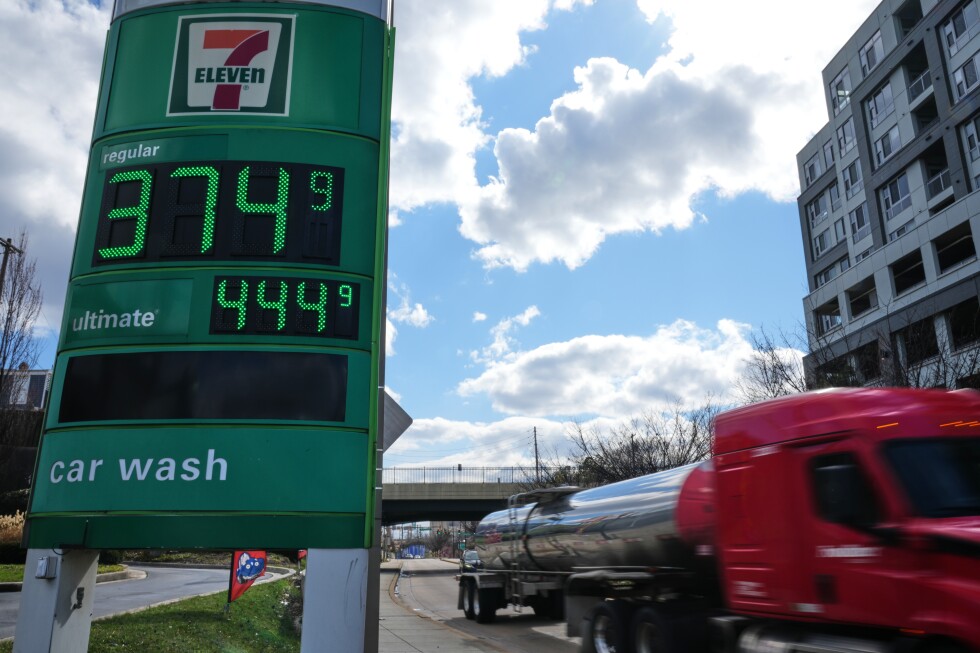
While gas prices have indeed declined slightly—about three cents per gallon in the past ten days—they remain well above $4 per gallon nationally, approximately 30% higher than at this time last year.
The conflict shows no immediate signs of resolution. Washington implemented its blockade of Iranian ports this week, while Tehran threatened retaliatory strikes across the region. Diplomatic efforts continue, with officials working to arrange a new round of peace talks between the United States and Iran.
For consumers and policymakers alike, the economic impact of the conflict presents significant challenges, potentially reshaping both monetary policy and political priorities in the months ahead.
Fact Checker
Verify the accuracy of this article using The Disinformation Commission analysis and real-time sources.

7 Comments
Interesting to see the divergence between the headline PPI number and the core measure. Falling food prices provide some offset, but the Iran-driven energy inflation is clearly the key driver here. I wonder what the Fed’s next move will be in response.
This news about escalating energy costs due to the Iran conflict is concerning. Inflation is a tricky issue for the Fed to navigate, with political pressure on one side and rising prices on the other. It will be interesting to see how they balance these competing priorities.
This is a complex situation for policymakers. On one hand, the President is pushing for rate cuts, but on the other, the Fed may feel compelled to hike to rein in the inflation threat from rising energy costs. It’s a delicate balancing act with high stakes for the economy.
The wholesale price surge is certainly an unwelcome development for the US economy. While the core inflation numbers seem more moderate, the sharp rise in energy costs is a real challenge. Consumers may feel the pinch at the pump if this trend continues.
The 8.5% month-over-month surge in energy prices is quite substantial. I’m curious to see how this plays out in terms of the downstream impacts on consumer inflation and the broader economy. Definitely a situation worth monitoring closely in the coming months.
This is certainly an unwelcome development for the US economy. The rising energy costs could put a real strain on consumers and businesses if they persist. It will be critical for policymakers to find the right balance in their response.
Interesting to see the political dynamics at play here, with the President pushing for rate cuts while the Fed may feel the need to raise rates to combat the inflation threat. It’s a delicate balancing act with high stakes for the economy.