


Listen to the article
King Charles III’s Trust Transforms Lives Across Generations
Scottish entrepreneur Mike Welch was at a crossroads after losing his job as a tire installer at age 15. Standing at a Liverpool job center, he faced two options: become a funeral director or attend a charity event for aspiring entrepreneurs. Choosing the latter changed his life forever.
Less than 24 hours later, Welch found himself pitching his business idea in an unlikely setting – a church filled with vintage furniture and friendly seniors. Though nothing like the high-pressure environment of “Shark Tank,” he felt every bit as nervous as he described his plan to sell affordable tires to niche customers.
“It wasn’t a well thought out plan, really,” recalls Welch, now based in Florida. “But they backed me. They backed my enthusiasm. And they gave me a chance.”
The organization that took a chance on him was then called The Prince’s Trust, renamed The King’s Trust when Charles III ascended to the British throne in 2023. Since its founding in 1976, when then-Prince Charles invested his Royal Navy severance pay to help young people during Britain’s economic downturn, the charity has reached more than 1.3 million young Britons. Its notable success stories include acclaimed actor Idris Elba and fashion designer Ozwald Boateng.
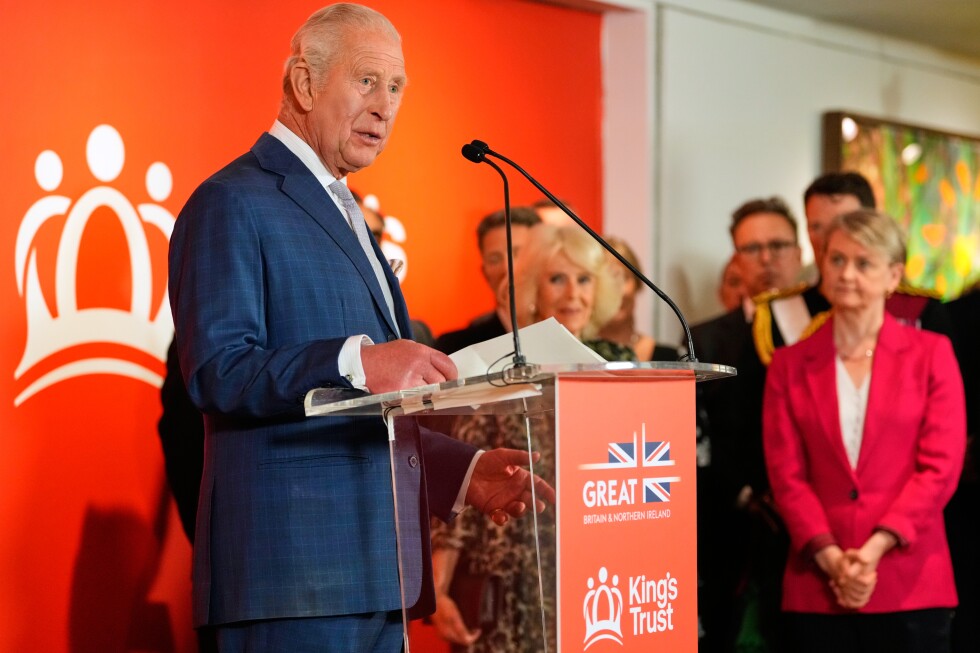
As King Charles and Queen Camilla continued their first U.S. state visit since his coronation, they hosted a gala in New York on Wednesday to highlight the charity’s expanding international footprint. The star-studded event drew prominent figures including Anna Wintour, Charlotte Tilbury, Donatella Versace, Lionel Richie and Martha Stewart.
“Potential and latent talent truly knows no bounds once you help develop it,” Charles told attendees. “I’m enormously grateful to you all for what you can all do as supporters to help this vital endeavor, to champion the next generation, ensuring their talent and ambition continue to strengthen our societies for many years to come.”
The royal family has traditionally served as patrons for various charities, but Charles’s half-century commitment to youth employment stands out as particularly significant. The trust’s comprehensive programs now reach young people through schools and established nonprofit partnerships worldwide.
Its initiatives include “Get Hired,” which helps young people secure their first jobs, and “Development Awards,” which provides grants for career-advancing purchases like laptops or professional attire. The “Enterprise Challenge” encourages students to develop businesses addressing community problems.
“What we see every time is that young people want to be helped. They want to be taken seriously,” explained Jeremy Green, a trustee of the King’s Trust Group Company and chair of the King’s Trust USA. “And it’s not just giving them money. It’s giving them opportunity.”
LaKenya Sharpe, principal of The Collins Academy High School in Chicago’s North Lawndale neighborhood, has witnessed this impact firsthand. Her students won the King’s Trust US’ Enterprise Challenge by creating a business growing and selling fresh vegetables in their food desert community.
“This shows that they can achieve anything,” Sharpe said. “Their belief now is ‘Oh, other people are watching. Other people are seeing this.’ And they ask ‘How far can this go?’ My answer is, ‘It can go as far as you guys take it. Don’t let anything limit you.'”
Wednesday’s gala aimed to showcase “the very best of British-American philanthropy through the individual arts, culture, investments between the two countries,” according to Victoria Gore, CEO of The King’s Trust USA. The timing was notable, occurring during a period of unusual tension between the elected leaders of these longstanding allies, with British Prime Minister Keir Starmer’s stance on U.S. foreign policy creating friction with President Donald Trump.
Charles emphasized the “wonderful opportunity” to celebrate “the enduring cultural bond” between the nations, describing their relationship as “rooted in shared creativity, enterprise and values.”
“Reminding us we are truly greater together. That’s the point,” the King told attendees.
While trust leaders noted these anniversary celebrations had been planned well before recent diplomatic tensions, JP Tribe, a senior lecturer in law at the University of Liverpool specializing in royal patronages, suggested the event’s emphasis on shared philanthropic ties serves as a timely reminder of the countries’ deep connection.
The King’s Trust US has set an ambitious goal to reach 1,000 young Americans this year. Their primary partner is City Year, the education nonprofit that connects schools like The Collins Academy with the trust and deploys young adults to teach in schools nationwide. They’re also collaborating with Per Scholas and Maryland school districts to pilot various programs.
Gore emphasized that participants typically focus on their immediate communities, with the trust’s goal being to show them they can create local impact. “Keeping employment in communities and keeping people in communities is actually the key to everyone’s success,” she explained.
For Welch, whose initial 500-pound ($677) grant and mentorship led to building a company he eventually sold to Michelin for 50 million pounds ($68 million), the formula for success is simple. The trust’s international expansion depends on building relationships with local partners who can reach those most in need.
“What we see in Chicago, what we see in Orlando, is really no different – with obvious local nuances,” said Welch, who now leads Anglo Atlantic advisory and investment firm. “But it’s not very different to what we see in Liverpool, Birmingham, Manchester.”
Fact Checker
Verify the accuracy of this article using The Disinformation Commission analysis and real-time sources.

10 Comments
Helping young people during economic downturns is crucial. The King’s Trust’s model of providing mentorship and funding opportunities seems well-suited to empowering the next generation of entrepreneurs.
Providing mentorship and funding to aspiring young entrepreneurs, especially during tough economic times, is a laudable mission. The King’s Trust appears to be making a real difference in people’s lives.
It’s great to see the King’s charity making a tangible difference in the lives of young Britons over the past five decades. Supporting aspiring business owners is a smart way to foster economic growth and resilience.
Backing enthusiasm and giving people a chance – that’s the kind of support that can make all the difference. The King’s Trust seems to have a track record of identifying and nurturing promising young talent.
Absolutely, and transitioning the charity from The Prince’s Trust to The King’s Trust demonstrates the continuity of this important work under the new monarch.
Interesting to see how King Charles III’s charity has made a real impact on young people’s lives over the past 50 years. Supporting aspiring entrepreneurs during tough economic times is a commendable initiative.
The charity’s approach of backing enthusiasm and giving people a chance, rather than just looking for polished business plans, seems like a wise strategy. Nurturing young talent is so important for the future.
Transitioning the charity from The Prince’s Trust to The King’s Trust is a fitting evolution as the monarchy changes hands. Maintaining this important work under the new monarch’s leadership is commendable.
The charity’s efforts to transform lives across generations through mentorship and funding opportunities are truly inspiring. It’s great to see the organization evolving with the times under the new monarch’s leadership.
Agreed, providing young people with a chance to pursue their entrepreneurial dreams is so valuable, especially for those facing challenging circumstances.