


Listen to the article
Billionaire climate activist Tom Steyer is positioning himself as a “class traitor” in his campaign for California governor, advocating for higher taxes on the wealthy and corporations despite his own $2.4 billion fortune.
“I’m the billionaire who wants to tax other billionaires,” Steyer frequently declares on the campaign trail, though his support for a billionaires’ tax initiative likely to appear on November’s ballot has remained somewhat vague.
The 68-year-old Democrat has long navigated the contradictions between his business success and his progressive political views. As founder of Farallon Capital Management in 1986, Steyer built one of the world’s largest hedge funds, which included investments in fossil fuels. Yet he later spent millions protecting California’s greenhouse gas reduction law and founded NextGen America to mobilize young voters around climate issues.
Steyer left Farallon in 2012 to focus on political activism, becoming one of the Democratic Party’s most prolific megadonors. He has contributed over $62 million to California ballot initiatives, including a successful 2016 measure taxing tobacco products to fund healthcare for low-income residents and an unsuccessful 2020 effort to preserve a law eliminating cash bail.
“I’m not one of the people who begrudges people’s success,” Steyer told The Associated Press. “If you’re going to come here and build a company and make a ton of money, great. But you’re part of a system — you’re depending on a system built by, basically, poor people. If you aren’t willing to pay your fair share, I feel like you’re spitting on those people.”
This stance has made Steyer a polarizing figure. Progressive supporters view him as an authentic ally willing to challenge the wealthy elite, while critics from both parties question his sincerity and accuse him of trying to buy the election. He’s spending nearly 30 times more on advertising than his nearest Democratic opponent ahead of the June 2 primary.
His campaign platform focuses on three primary challenges: combating climate change, addressing California’s high cost of living, and countering threats from the Trump administration. While his climate plan lacks specifics, Steyer has earned endorsements from several environmental organizations and progressive groups, including Our Revolution, which was founded by Senator Bernie Sanders.
“Tom Steyer is running on taxing the wealthy, supporting single-payer healthcare, and taking on corporate power — positions that are central to our movement,” said Our Revolution Executive Director Joseph Geevarghese. “That alignment with a pro-worker, anti-corporate agenda — and the urgency of this race — is why we are backing him.”
State Assemblyman Alex Lee, chair of the progressive caucus, supports Steyer partly due to his advocacy for government-run healthcare, a proposal that has repeatedly failed to advance in Sacramento. Though initially hesitant to back a billionaire, Lee distinguishes Steyer from other wealthy figures: “He is someone who became wealthy in his lifetime, but didn’t go off and become Zuckerberg level.”
Meanwhile, Pacific Gas & Electric has spent $10 million opposing Steyer’s candidacy after he pledged to “break up utility monopolies” to reduce California’s notoriously high electricity rates. The California Chamber of Commerce has also criticized him, arguing his policies would increase costs and drive investment away from the state.
“His policy promises will cost billions, driving investment out of California and worsening the state’s affordability crisis,” chamber spokesperson John Myers said.
This isn’t Steyer’s first bid for elected office. His 2020 Democratic presidential campaign focused on appealing to voters of color by highlighting inequalities in healthcare, environmental justice, and criminal justice. Despite spending $24 million on advertising in South Carolina alone—more than all other candidates combined—he finished third and dropped out.
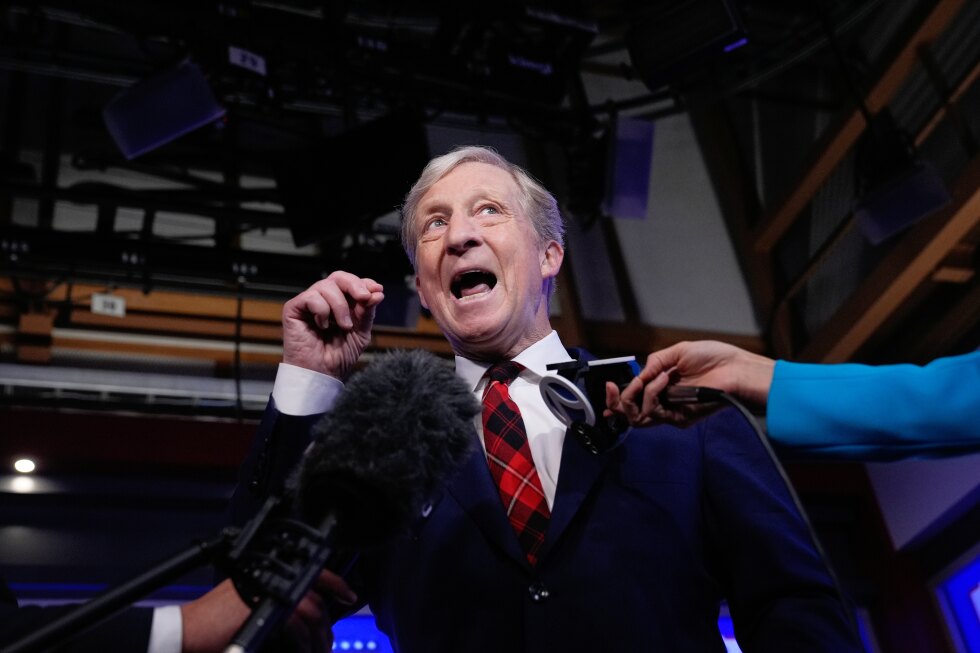
During that campaign, Steyer’s wealth became a liability as rivals like Sanders criticized billionaires’ influence in politics. He became better known for his quirky fashion choices—a signature red tartan tie and colorful belt—than his policy proposals.
For his gubernatorial campaign, Steyer has already exceeded the $100 million he planned to spend on his presidential bid. Political observers note that despite this enormous financial advantage, he hasn’t yet broken away from the pack of candidates, raising questions about whether his spending will translate into votes on election day.
As the race intensifies, Steyer continues to lean into the contradictions that define his political identity—a billionaire hedge fund founder who champions progressive taxation and environmental regulation, a wealthy insider positioning himself as an agent of change against the very system that enabled his success.
Fact Checker
Verify the accuracy of this article using The Disinformation Commission analysis and real-time sources.

10 Comments
Steyer’s willingness to take on the rich in his own class is a bold move. It will be interesting to see if his progressive economic views resonate with California voters or if his wealth becomes a liability.
The fact that Steyer has contributed millions to California ballot initiatives shows he’s willing to put his money where his mouth is on key issues. That could give him an edge in the race.
Interesting to see a billionaire like Steyer positioning himself as a ‘class traitor’ and advocating for higher taxes on the wealthy. It highlights the complex relationship between business success and progressive ideals.
I’m curious to see how Steyer’s support for a billionaires’ tax initiative plays out. It’s a bold stance given his own wealth.
Steyer’s background is certainly intriguing – building a major hedge fund but then shifting focus to climate activism and political advocacy. It will be fascinating to see how his unique perspective shapes the California governor race.
I wonder if his past investments in fossil fuels will be used against him by opponents, or if voters will appreciate his evolution on environmental issues.
As a prolific Democratic donor, Steyer’s entry into the California governor race could shake things up. His willingness to tax the wealthy despite his own net worth is a bold and potentially divisive move.
It will be interesting to see how Steyer’s progressive platform resonates with California voters, especially given the state’s history of wealth and privilege.
The contradictions in Steyer’s background – from hedge fund founder to climate activist – certainly make for a compelling political narrative. I’m curious to see how he navigates those tensions on the campaign trail.
Steyer’s stance on taxing the wealthy could be a double-edged sword. It may attract some voters but also face resistance from those who see it as hypocritical.