


Listen to the article
Consumers across the United States are feeling the financial strain as the Iran war’s disruption of global energy production enters its third month. The impact is widespread – from record-high gas prices to increased shipping costs and pricier airline tickets – as the conflict continues to throttle global oil supply chains.
The crisis escalated when Iran closed the Strait of Hormuz to oil tankers, effectively trapping them in the Persian Gulf and cutting off supply to international markets. Simultaneously, a U.S. Navy blockade has prevented Iran from selling its own oil exports. These dual constraints sparked an overnight surge in global oil prices amid growing concerns that the conflict will disrupt crude flows for an extended period.
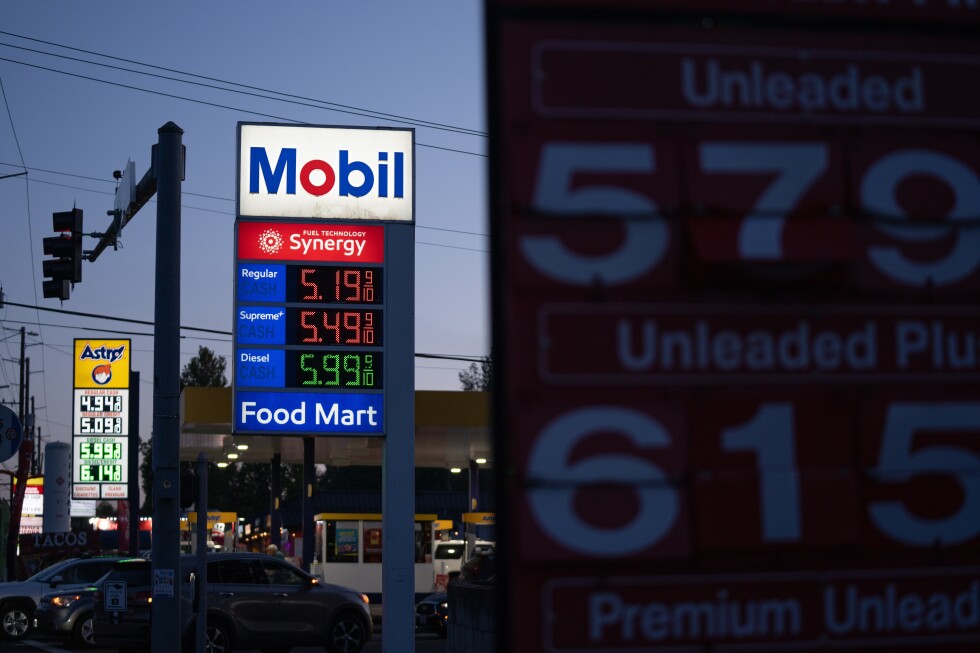
At gas stations nationwide, prices have reached their highest levels since 2022. The national average hit $4.30 a gallon on Thursday, a dramatic 44% increase from the pre-war price of $2.98, according to AAA data. This steep rise directly impacts millions of American households that rely on personal vehicles for daily transportation.
The ripple effects extend beyond personal vehicles. Diesel fuel, which powers the nation’s freight transportation system, has climbed to nearly $5.50 a gallon from $3.76 before the conflict. This 46% increase is triggering a cascade of price adjustments across various sectors.
Shipping companies have begun implementing surcharges to offset rising fuel costs. The U.S. Postal Service has added a temporary 8% charge on several services, including Priority Mail. Amazon followed suit with a 3.5% fuel and logistics surcharge on third-party sellers using its platform.
“Diesel’s the one that you want to watch out for for prices of consumer goods,” warns Peter Zaleski, professor of economics at Villanova University. The increased transportation costs eventually make their way to consumers through higher retail prices for clothing, cosmetics, furniture, and other goods.
The aviation industry has been particularly hard hit. Jet fuel prices soared to $209 a barrel in early April before easing slightly to around $179 last week – still substantially higher than the $99 price point at the end of February. Fuel represents one of the largest operational expenses for airlines, and the increased costs are being passed directly to travelers.
Major U.S. carriers including Delta, United, American, and Southwest have all raised checked baggage fees. United Airlines is expanding its “pay for what you want” model from economy to premium cabins, charging separately for options like seat selection. American Airlines has added fees for seat assignments in basic economy, even for its elite-tier loyalty members.
International carriers are implementing similar measures. Airlines across Asia and Europe have added or increased fuel surcharges, sometimes adding hundreds of dollars to long-haul ticket prices. Flight schedules are being trimmed, with less profitable routes eliminated and seat capacity reduced. Germany’s Lufthansa Group has announced plans to cancel approximately 20,000 flights across its network over the next six months.
Consumer goods companies are warning of impending price increases. Procter & Gamble, maker of household staples like Crest toothpaste and Tide detergent, estimated that the war could cause a $1 billion hit to profits during its next fiscal year if Brent crude remains around $100 per barrel. Many P&G products and packaging contain petroleum-based materials, potentially necessitating price increases for everyday items.
Similarly, London-based Unilever, which produces Dove soap and Hellmann’s mayonnaise among other products, plans to raise prices by 2% to 3% in “small doses,” according to CFO Srinivas Phatak.
While grocery prices have yet to show significant increases, experts anticipate rising costs as fuel and fertilizer supplies tighten. Fuel accounts for approximately 15% to 30% of the total cost of food production, according to the Independent Grocers Alliance. Additionally, about 30% of global fertilizer shipments typically pass through the now-restricted Strait of Hormuz.
Ken Foster, a professor of agricultural economics at Purdue University, notes there is typically a three- to six-month lag between an energy price shock and increases in retail food prices. For packaged foods with longer shelf life, this delay can extend up to a year.
The global implications are potentially devastating. The U.N. World Food Program estimates that 45 million additional people, primarily in Asia and Africa, could face food insecurity if the war doesn’t ease by mid-year. This would bring the global total of people facing hunger to 363 million – the highest level ever recorded.
“Delays and higher transport costs push up food prices, and families who spend 50% to 70% of their income on food are the first to go without,” warned Corinne Fleischer, the program’s supply chain director.
As the conflict continues with no immediate resolution in sight, consumers worldwide are bracing for additional financial pressures across virtually all sectors of the economy.
Fact Checker
Verify the accuracy of this article using The Disinformation Commission analysis and real-time sources.

7 Comments
The Iran-US conflict is really complicating the global energy landscape. With oil supply chains disrupted, we’re likely to see continued price volatility and pressure on consumers. Diversifying energy sources should be a priority.
The Iran-US tensions are really taking a toll on energy markets. Higher fuel prices will undoubtedly squeeze household budgets and add to inflationary pressures. Addressing this crisis should be a top priority for policymakers.
This is a worrying development. Disruptions to global energy supply can have far-reaching economic consequences. I hope diplomatic efforts can de-escalate the situation and restore stability to oil markets soon.
Agreed. The impact of higher energy costs will be felt by households and businesses alike. Policymakers will need to act quickly to mitigate the fallout.
This is a complex geopolitical issue with major economic ramifications. I’m curious to see how the situation develops and what measures governments take to address the energy price surge.
Agreed, the fallout could be quite severe if the disruptions persist. Hopefully cooler heads can prevail and find a diplomatic solution to restore stability in global oil markets.
This is a concerning situation that underscores the fragility of global energy supply chains. The economic ripple effects could be quite severe, especially for industries and consumers heavily dependent on oil and gas. I hope a diplomatic resolution can be reached soon.