


Listen to the article
Atlanta Fed President Raphael Bostic to Retire, Opening Key Central Bank Position
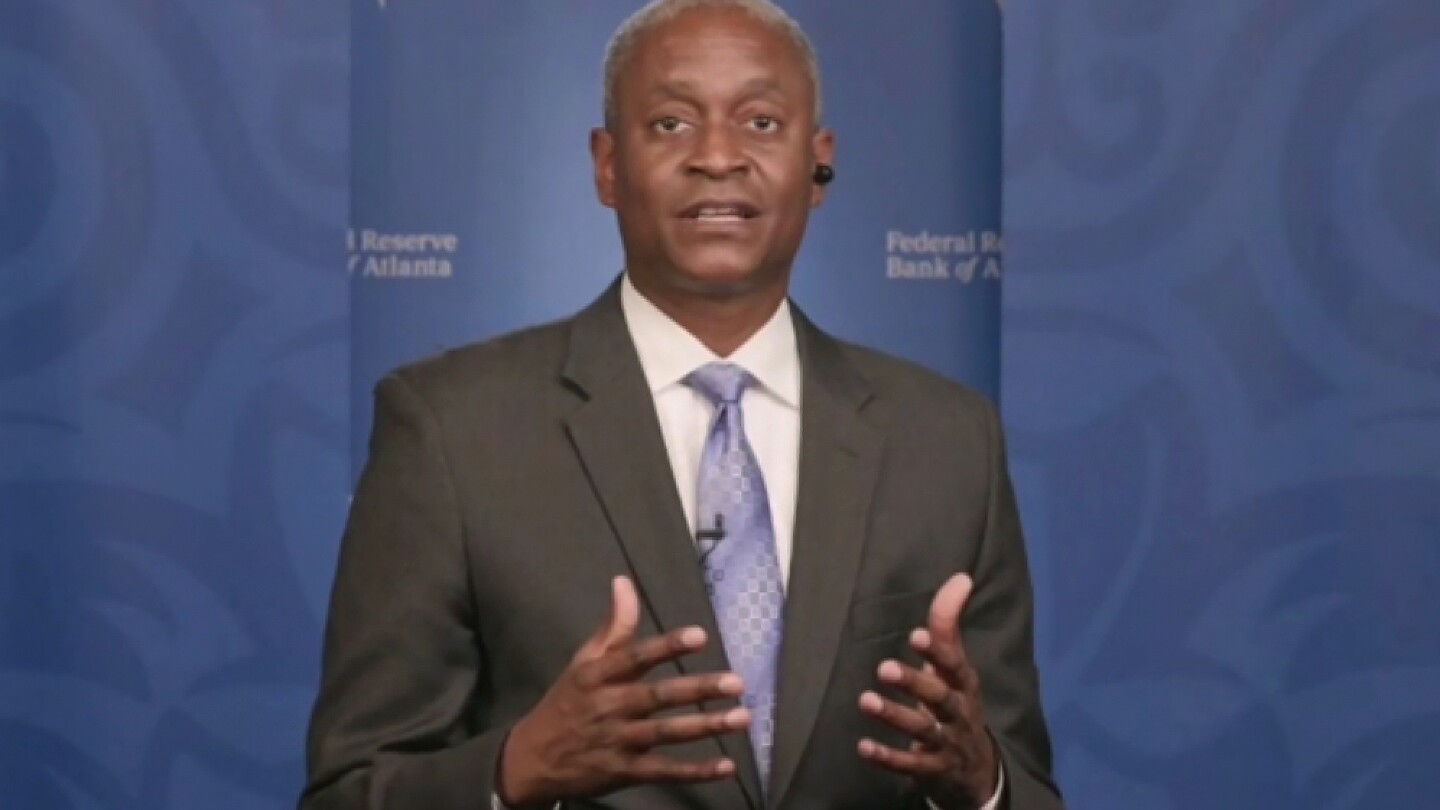
Raphael Bostic, president of the Federal Reserve Bank of Atlanta, announced Wednesday he will retire at the end of his current term in February, creating a vacancy on the Federal Reserve’s interest-rate setting committee during a politically sensitive period for the central bank.
Bostic, 59, has led the Atlanta Fed since June 2017 and made history as the first Black and openly gay president in the Federal Reserve System’s 112-year existence. His departure comes as President Donald Trump has increasingly sought to exert influence over the central bank’s operations and policy decisions.
As president of one of the Fed’s 12 regional banks, Bostic serves on the Federal Open Market Committee (FOMC), which meets eight times annually to determine interest rate policy. While the Atlanta Fed president won’t hold a voting position on the committee again until 2027, the regional bank presidents provide influential voices in monetary policy deliberations regardless of their voting status.
The selection of Bostic’s replacement will fall to the Atlanta Fed’s board of directors, comprised of local business and community leaders, rather than the Trump administration. However, the Federal Reserve Board of Governors in Washington must approve the selection, providing a potential avenue for political influence.
In recent months, Bostic has positioned himself among the more cautious Fed officials regarding interest rate reductions. While the central bank has cut rates twice this year, Bostic had indicated he supported just one rate cut in 2024, expressing ongoing concerns about inflation remaining above the Fed’s 2% target.
“I will not be complacent and simply assume another inflation outbreak won’t happen,” Bostic wrote in a September essay, describing the Fed’s key interest rate as only “marginally restrictive” on economic activity.
Bostic did not immediately provide a specific reason for his departure. The announcement follows a 2022 controversy when he acknowledged that many of his financial investments and trades in previous years had violated Fed ethics rules, requiring him to revise all financial statements dating back to 2017. At the time, he attributed the violations to transactions made by investment managers that he did not directly oversee and claimed he was unaware of the problematic trades.
The timing of Bostic’s retirement coincides with heightened tension between the Federal Reserve and the White House. Trump has repeatedly criticized the central bank for not cutting interest rates more aggressively, a stance that has intensified during the presidential campaign.
The administration has also sought to expand its influence over the Fed’s Board of Governors, attempting to remove Governor Lisa Cook, which would have created another vacancy for a Trump appointee. Cook has successfully retained her position through legal action, with the Supreme Court allowing her to remain while the case proceeds through the courts.
The regional Federal Reserve banks were established specifically to ensure geographic diversity in monetary policy discussions and to provide perspectives from outside Washington and New York. This decentralized structure has historically helped insulate the Fed from political pressure, though tensions between the central bank and political leaders have grown in recent years.
Fed Chair Jerome Powell, speaking after the central bank’s most recent rate cut in October, indicated that another reduction at the December meeting is not a “foregone conclusion,” suggesting the Fed will continue to make decisions based on incoming economic data rather than political considerations.
Market participants will closely watch the selection process for Bostic’s replacement, as it could signal the direction of future monetary policy decisions and the degree to which the Fed’s traditional independence can be maintained in an increasingly politicized environment.
Fact Checker
Verify the accuracy of this article using The Disinformation Commission analysis and real-time sources.

12 Comments
Bostic’s departure creates an opportunity for new leadership at the Atlanta Fed. I’m curious to see how the regional bank’s next president will approach their role on the FOMC.
Bostic’s retirement opens up a key role on the FOMC. It will be important for the Atlanta Fed to find a qualified candidate who can provide a strong voice on interest rates.
The political influence on the Fed is certainly a concerning trend. I hope Bostic’s replacement can maintain the central bank’s independence.
The Atlanta Fed president plays an important part in the Fed’s policymaking. Bostic’s successor will need to be someone with a strong grasp of economic conditions and the ability to provide thoughtful guidance.
Given the political sensitivities around the Fed, the Atlanta board will need to find a candidate who can maintain the central bank’s independence and credibility.
Interesting move by Bostic, the first Black and openly gay Fed president. His replacement will shape policy during a sensitive period for the central bank.
The Atlanta Fed board will have an important decision to make in selecting Bostic’s successor. I’m curious to see how the new president will approach monetary policy.
The changing of the guard at the Atlanta Fed comes at a critical time for monetary policy. I hope the board can find someone with the experience and vision to guide the regional bank.
Bostic’s departure is notable given his historic role and the importance of the Atlanta Fed’s leadership. I wonder how his successor will approach the challenges facing the Fed.
With the Atlanta Fed president not voting on the FOMC until 2027, the new leader will still have an influential voice in policy discussions. Their perspective will be closely watched.
Bostic’s retirement is a significant transition for the Fed. The Atlanta Fed’s leadership will be crucial as the central bank navigates economic headwinds and political pressures.
The selection of Bostic’s replacement will be closely watched. Their ability to maintain the Fed’s independence will be key.