


Listen to the article
Energy Crisis from Middle East Conflict Could Drive Renewable Energy Adoption
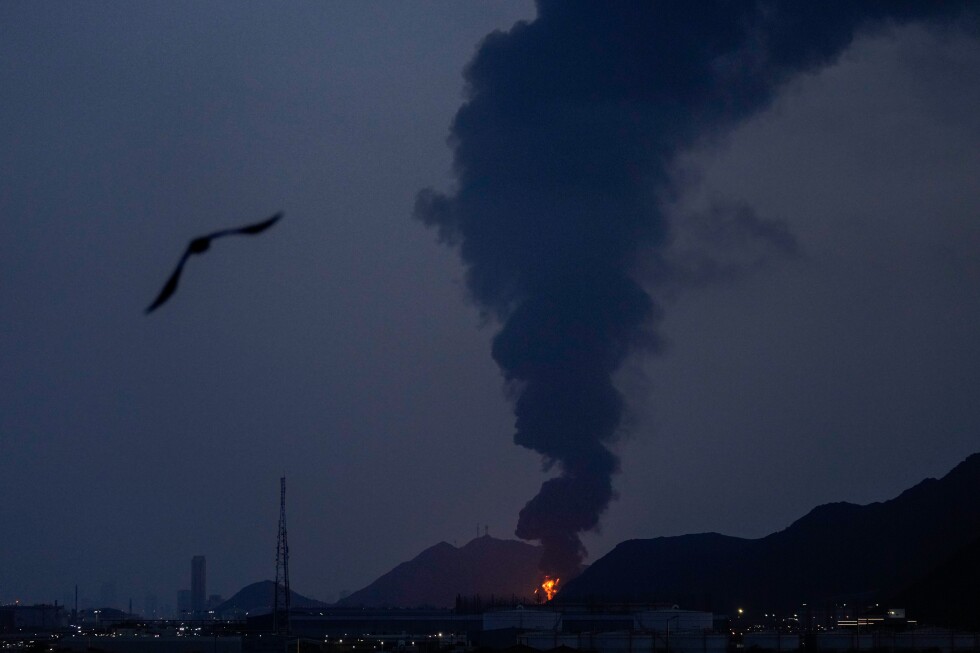
The escalating conflict in the Middle East is sending shockwaves through global energy markets, with bombed refineries, disrupted shipping channels and skyrocketing fuel prices creating widespread economic pain. While world leaders have struggled for years to advance climate action through international cooperation, some experts now suggest that national self-interest might accomplish what global climate summits have failed to deliver: accelerated adoption of renewable energy.
“The turmoil we are witnessing today in the Middle East makes it evident that we are facing a global energy system largely tied to fossil fuels — where supply is concentrated in a few regions and every conflict risks sending shock waves through the global economy,” U.N. Secretary-General António Guterres told The Associated Press ahead of planned remarks on Monday.
Guterres sees the current crisis as a potential turning point. “In past oil shocks, countries had little choice but to absorb the pain. Now they have an exit ramp. Homegrown renewable energy has never been cheaper, more accessible, or more scalable,” he said. “The resources of the clean energy era cannot be blockaded or weaponized.”
The argument is straightforward: countries dependent on imported fossil fuels are vulnerable to price shocks and supply disruptions during geopolitical conflicts. Domestically produced renewable energy offers energy independence, price stability and security benefits that might appeal to nationalist sentiments in ways that global climate cooperation hasn’t.
However, skeptics point to recent history as a cautionary tale. “Just wishful thinking,” said Stanford University climate scientist Rob Jackson, who tracks global carbon dioxide emissions. He and others recall that similar predictions followed Russia’s invasion of Ukraine, yet many European nations temporarily increased coal use – a dirtier fossil fuel – to replace Russian natural gas.
Global climate diplomacy has delivered limited results. The recent COP30 conference in Brazil ended with a statement that didn’t even mention “fossil fuels,” much less establish a timeline for reduction. Under President Donald Trump, whose recent military action against Iran has contributed to energy concerns, the United States didn’t participate in the Brazil meeting.
While renewable energy installations are growing rapidly worldwide, global emissions of heat-trapping gases continue to rise annually, driving dangerous climate extremes around the world.
“The bottom line is that for at least another five years and maybe longer, emissions reduction will in fact be dealt with largely unilaterally,” said Michael Oppenheimer, a Princeton climate and international affairs professor. “If countries see the Israel-U.S.-Iran war as a further reason to head for the exits on fossil fuels by loosening domestic opposition to the necessary policies, that will be accomplished unilaterally at the domestic level.”
Caroline Baxter, director of the Converging Risks Lab at the Council on Strategic Risks, sees real potential for a shift. “There has already been a dramatic slowdown in the movement of fossil fuels to various ports due to the conflict. And for countries like Japan or South Korea that depend on tankers arriving in their ports to deliver energy, this is a really big deal,” said Baxter, who served as U.S. deputy assistant secretary of defense for force education and training from 2021 to 2024.
Energy analyst Ana Maria Jaller-Makarewicz of IEEFA Europe predicts the war will drive increased installations of solar panels and heat pumps in coming months as countries seek greater energy security.
However, war studies lecturer Pauline Heinrichs at King’s College points to concerning patterns: “We have seen this at the European level where actors post-2022 slowly wanted to move away from the energy transition which is exactly the wrong lesson.”
Other experts warn that countries like China and India – already the world’s first and third-largest carbon emitters – might increase coal consumption in response to oil market disruptions, further exacerbating climate change.
The war itself will significantly increase emissions. Military operations are substantial contributors to climate change, with the world’s armed forces responsible for approximately 5.5% of global heat-trapping emissions annually – more than any country except China, the United States, and India.
“The consequences of war on emissions will far exceed any incremental offset in emissions due to increased enthusiasm for a green transition,” said Neta Crawford, co-founder of the Costs of War project at Brown University’s Watson Institute for International and Public Affairs.
As global leaders navigate this complex landscape, the Middle East conflict presents both a crisis and an opportunity. While the immediate emissions impact of military operations is substantial, the longer-term energy security concerns might finally create the political will for serious climate action that international cooperation has failed to achieve.
Fact Checker
Verify the accuracy of this article using The Disinformation Commission analysis and real-time sources.

9 Comments
The article raises an interesting dilemma. On one hand, the current crisis highlights the risks of relying on fossil fuels. But the transition to renewables also comes with its own economic and logistical challenges. It will be a delicate balancing act for policymakers.
The U.N. Secretary-General makes a compelling case. Renewable energy has become much more cost-effective and scalable in recent years. This crisis could be the impetus governments need to accelerate the clean energy transition and reduce dependence on unstable fossil fuel supplies.
Absolutely. Diversifying the energy mix with more renewable sources would enhance energy security and resilience, lessening the impact of geopolitical shocks. It’s a win-win for the economy and the environment.
This conflict serves as a powerful reminder that our reliance on fossil fuels, especially from turbulent regions, comes at a heavy economic and geopolitical cost. The renewable energy transition may be complex, but it’s an investment in long-term energy security and stability that’s well worth making.
I appreciate the Secretary-General’s framing of this issue. The current energy crisis underscores the systemic vulnerabilities of our fossil fuel-dependent economy. Renewable energy offers a more resilient, decentralized and sustainable alternative – if policymakers have the courage to act decisively.
Interesting perspective on how the Middle East conflict could spur greater adoption of renewable energy. The current energy crisis highlights the vulnerabilities of relying too heavily on fossil fuels from geopolitically volatile regions. Renewable sources offer more domestic, stable and sustainable energy alternatives.
I’m curious to see how governments and businesses respond to this latest energy disruption. Will they seize the opportunity to double down on renewable investments, or will the short-term costs of transitioning win out over longer-term energy security and sustainability?
Renewable energy has certainly come a long way in recent years, both in terms of cost and scalability. But the geopolitical factors at play here add another layer of complexity. This could be a pivotal moment in accelerating the clean energy transition, if leaders have the foresight to seize it.
Well said. Crises often force difficult but necessary changes. If governments can look past the short-term pain and focus on the long-term benefits of renewable energy, this could be a transformative moment for the global energy landscape.