


Listen to the article
President Trump’s administration is weighing a potential government-backed rescue of Spirit Airlines, with the president indicating Friday that negotiations remain ongoing for the financially troubled carrier currently navigating its second bankruptcy in less than two years.
“We’re looking at it. If we could do it, we’ll do it. But only if it’s a good deal,” Trump told reporters before departing the White House for Florida. He suggested an announcement could come as early as Friday or Saturday, emphasizing that any arrangement must benefit taxpayers.
The possibility of a federal bailout first emerged publicly last week when Trump floated the idea of providing Spirit a financial lifeline. Shortly after, a Spirit attorney informed a U.S. Bankruptcy Court that the airline was in advanced talks with the government about financing that could help it exit Chapter 11 protection.
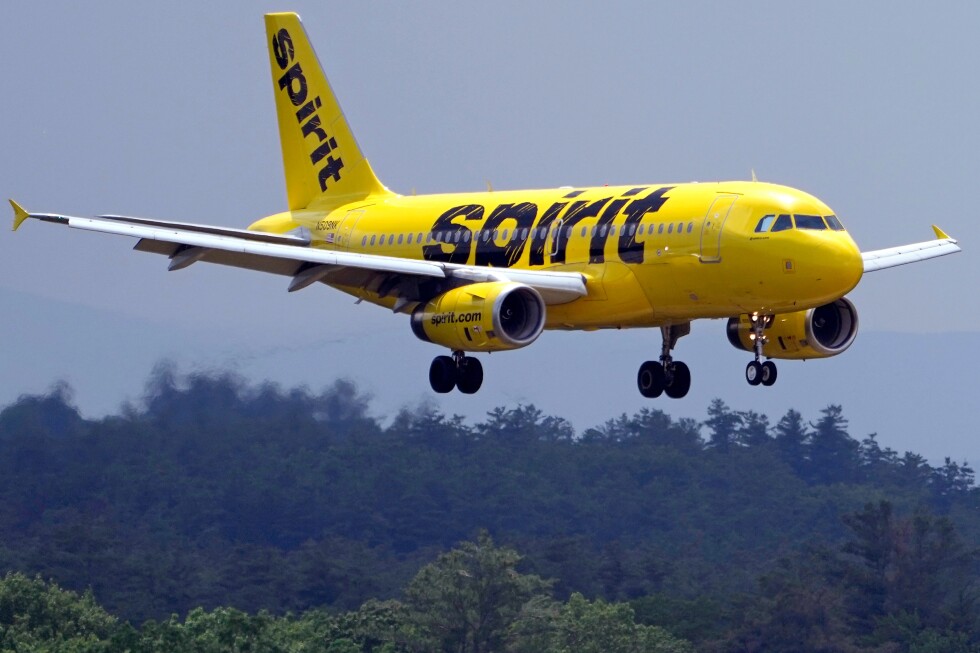
Trump indicated the government could potentially profit from acquiring and later reselling the carrier once oil prices—which have been driven up by the ongoing Iran war—eventually decrease. Known for its bright yellow planes and no-frills service model, Spirit operates approximately 1.7 million domestic flights monthly, though that represents a significant reduction from previous years.
The potential rescue has drawn criticism from lawmakers on both sides of the aisle and some administration officials, who question the appropriateness of using taxpayer funds to keep the ultra-low-cost airline operational. Meanwhile, uncertainty continues to mount as Spirit’s operating expenses and debts accumulate with each passing day.
A Spirit spokesperson declined to comment on the negotiations Friday, stating only that “Spirit is operating as usual.” Despite this assurance, passengers have flooded the airline’s social media channels with concerns about existing reservations and requests for refunds.
Competing carriers have already begun positioning themselves to capture Spirit’s market share if the airline collapses. American Airlines announced it would cap main cabin fares for flights on routes where it competes directly with Spirit, while budget carrier Frontier stated it was “ready to support customers who may be impacted if Spirit Airlines ceases operations.”
Supporters of government intervention, including labor unions representing Spirit’s workforce, argue that the airline’s collapse would eliminate approximately 17,000 jobs, reduce competition in the airline industry, and ultimately drive up fares for consumers.
Sara Nelson, president of the Association of Flight Attendants, emphasized the potential consequences in a social media post Friday: “Everyday Americans will hurt,” noting that both consumers and employees would suffer if Spirit shuts down.
Spirit passenger Caleb Euzebe, speaking at Fort Lauderdale-Hollywood International Airport after experiencing a flight cancellation, expressed support for government intervention if it preserved jobs. “Spirit’s employees have to put food on the table, keep the lights on for their homes,” he said. “So if that means that bailing them out keeps these people working, I support 100%.”
The airline’s financial troubles predate current market conditions. Spirit has struggled financially since the COVID-19 pandemic, accumulating losses exceeding $2.5 billion since early 2020. Its first bankruptcy filing came in November 2024, followed by a second Chapter 11 filing in August 2025, when court documents revealed $8.1 billion in debt against $8.6 billion in assets.
Prior to this second filing, Spirit’s parent company had expressed “substantial doubt” about the airline’s ability to remain operational over the next year, citing “adverse market conditions” including weak domestic leisure travel demand.
Earlier this year, Spirit had presented a more optimistic outlook, announcing in February a preliminary agreement with creditors that would allow it to exit bankruptcy by summer. The reorganization plan envisioned “a new Spirit”—a streamlined operation still focused on low fares but with added premium economy options and enhanced seating for passengers willing to pay more.
However, the escalation of the U.S. and Israeli military campaign against Iran has complicated this recovery path. Rising jet fuel costs tied to the conflict have generated unexpected expenses across the airline industry, prompting Spirit’s creditors to question the carrier’s viability and raising the possibility of asset liquidation.
If Spirit were to cease operations, the impact would be most acutely felt by budget-conscious travelers and in markets where the airline maintains a substantial presence, particularly Las Vegas and Florida destinations like Fort Lauderdale and Orlando. Data from aviation analytics firm Cirium shows Spirit has already significantly reduced capacity, with available seats this month down by approximately 50% compared to May 2024.
Fact Checker
Verify the accuracy of this article using The Disinformation Commission analysis and real-time sources.

10 Comments
The prospect of a Spirit Airlines bailout raises questions about the appropriate role of government in supporting private companies, especially in the volatile airline industry. Transparency and accountability will be critical if this proceeds.
Interesting that the government is considering a bailout for Spirit Airlines. It will be important to ensure any deal protects taxpayer interests and provides a path for Spirit to become financially sustainable long-term.
I agree, the government should be very cautious about any bailout and ensure it truly benefits the public, not just the airline.
Given Spirit’s recent bankruptcy filing, a government bailout raises concerns about moral hazard. However, if structured properly, it could help maintain competition and services. The details will be crucial.
Well said. Any bailout should come with strict conditions to prevent similar problems from arising in the future.
I’m curious to learn more about the specific terms being discussed for a potential Spirit Airlines bailout. Ensuring a good deal for taxpayers should be the top priority.
Agreed. The government needs to drive a hard bargain to protect public interests if they provide financial assistance to Spirit.
A Spirit Airlines bailout could be politically contentious. The administration will need to carefully weigh the pros and cons and make a case to the public for why it’s the right course of action, if they proceed.
A potential government bailout of Spirit Airlines is a complex issue. On one hand, supporting the airline could help maintain jobs and services. But taxpayers must be protected, and the long-term viability of the business model needs to be addressed.
Good point. Any bailout should come with strict conditions to prevent misuse of funds and ensure Spirit can become self-sustaining.