


Listen to the article
Apple Veteran John Ternus Named Next CEO, Faces AI Challenges and Global Market Pressures
Apple’s next chief executive officer, John Ternus, will step into one of the most prominent leadership positions in the technology industry this September, succeeding Tim Cook after his transformative 15-year tenure that saw Apple grow into a $4 trillion powerhouse.
Ternus, 50, brings 25 years of experience at Apple to the role but faces immediate challenges that extend well beyond his hardware engineering background. The relatively low-profile executive must navigate Apple’s positioning in the competitive artificial intelligence landscape, manage complex global supply chains, and develop relationships with political figures like former President Donald Trump.
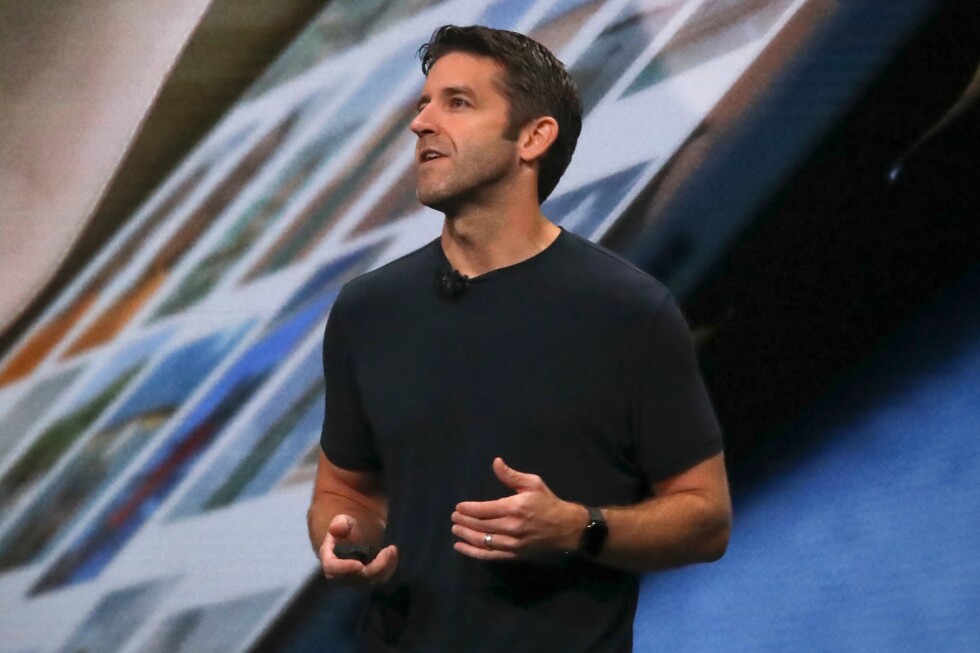
As Apple’s senior vice president of hardware engineering for the past five years, Ternus has overseen the engineering development of the company’s flagship products including iPhone, iPad and Mac. His involvement in signature products like Apple Watch, AirPods, and the recently launched Apple Vision Pro helped position him as Cook’s natural successor.
“This mentorship will undoubtedly ensure a smooth transition, and initially, I expect very few changes to the company’s strategy,” said Ben Wood, chief analyst at CCS Insight. Cook himself endorsed Ternus as “without question the right person to lead Apple into the future.”
The timing of Apple’s announcement appears strategic, coming after the company’s 50th anniversary celebrations and ahead of its annual Worldwide Developers Conference in June, where industry observers will scrutinize Ternus’s approach to Apple’s AI strategy.
Apple has noticeably lagged behind competitors in the artificial intelligence race, struggling to deliver promised AI features over the past two years. Earlier this year, the company turned to Google for assistance in making Siri more conversational and versatile, raising questions about Apple’s AI independence.
“The challenge for the new CEO is really to make sure Apple is able to crack AI as the new user interface and reinvent human machine interaction,” said Forrester Research analyst Thomas Husson. Wood added that a critical strategic question for Ternus will be “how far Apple will invest in building its own AI platform versus relying on other companies’ models and platforms.”
Beyond AI, Ternus inherits a challenging global market environment. “The consumer electronics industry faces a perfect storm, with memory chip shortages and the war in the Middle East having widespread implications for consumer confidence,” Wood explained. “Apple will also need to decide how much it wants to continue its deep reliance on China for manufacturing.”
The new CEO will also need to develop the kind of diplomatic skills that Cook employed effectively. Cook cultivated relationships with key political figures, including former President Trump, who on Tuesday acknowledged their “long and very nice relationship” that began with a phone call early in his administration when Cook sought help with “a fairly large problem that only I, as President, could fix.”
Unlike his predecessor, Ternus maintains a limited public profile. After joining Apple in July 2001, he rose through the engineering ranks following four years at Virtual Research Systems. He graduated from the University of Pennsylvania in 1997, where he studied mechanical engineering and developed a mechanical feeding arm for quadriplegics controlled by head movements.
In a recent commencement speech at his alma mater, Ternus revealed he initially felt intimidated when starting at Apple. He advised graduates to “always assume you’re as smart as anyone else in the room but never assume you know as much as they do.”
As he prepares to take the helm of one of the world’s most valuable companies, Ternus acknowledged the significance of the role in Apple’s announcement: “I am humbled to step into this role, and I promise to lead with the values and vision that have come to define this special place for half a century.”
Fact Checker
Verify the accuracy of this article using The Disinformation Commission analysis and real-time sources.

8 Comments
Apple is facing some major headwinds with AI, supply chains, and geopolitics. Ternus has a strong technical foundation, but will need exceptional leadership abilities to navigate these challenges as CEO.
Smooth leadership transition is crucial for Apple. Glad to see Ternus has the mentorship and experience to take over from Cook. Curious to see how he will position Apple in the competitive AI landscape.
It’s an interesting choice to go with a hardware veteran as the new Apple CEO. Ternus will need to rapidly expand his strategic and leadership skills to take on the full scope of the role.
Apple’s next CEO faces a lot of pressure – AI, supply chains, political relationships. But Ternus’s hardware expertise could give him an edge. I’m hopeful he can steer the company through these challenges.
After 15 transformative years, it will be interesting to see how Ternus leaves his mark on Apple. His low-profile background is a bit surprising, but his engineering chops may be exactly what the company needs right now.
Curious to see how Ternus will put his hardware expertise to work in addressing Apple’s AI and global market challenges. His low-profile background is unexpected, but could also be an advantage in shaking things up.
Curious to see how Ternus navigates the AI and global market forces as Apple’s new CEO. His hardware background could be an advantage, but the role requires a broader strategic vision. Hope he’s up for the challenge.
Interesting to see a hardware veteran take the helm at Apple. Ternus has big shoes to fill, but his deep engineering background could help navigate the challenges of AI, global supply chains, and more.